
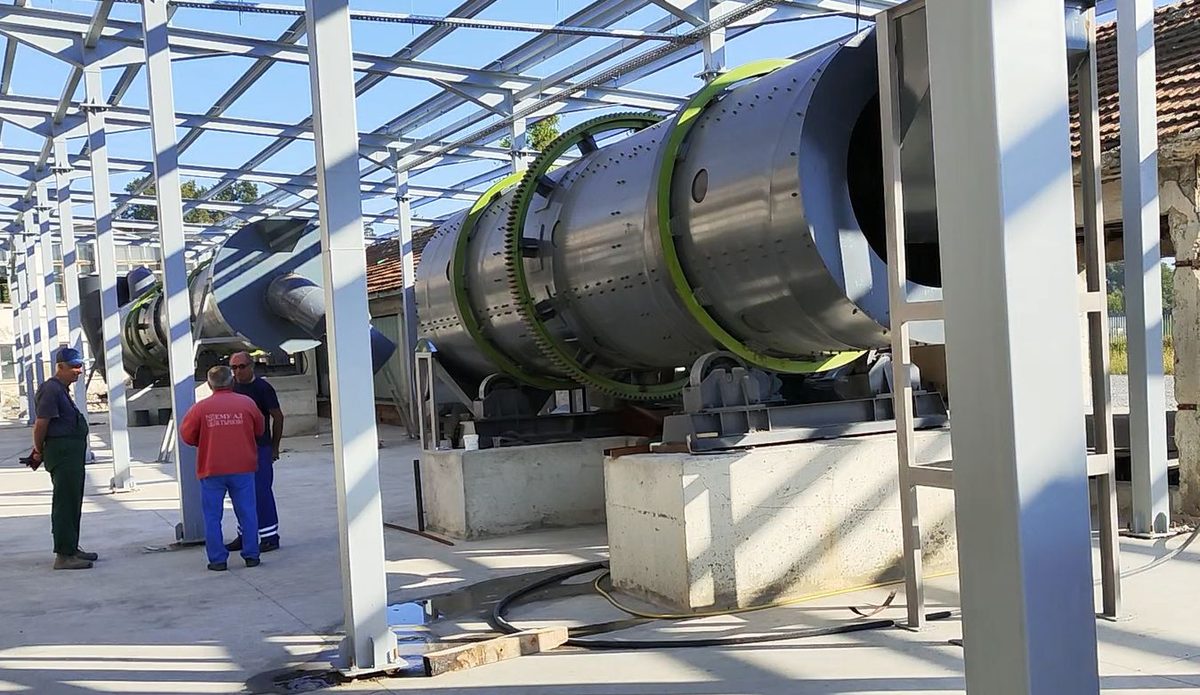
NPK Compound Fertilizer Production Line
YUSHUNXIN delivers NPK compound fertilizer plants based on rotary-drum granulation (wet route) or double-roller extrusion (dry route), covering batching, mixing, granulation, drying, cooling, screening, coating and packing. The route is selected by your formula, capacity, energy availability and budget.
1–30 t/h typical plant capacity
Rotary-drum (wet) or double-roller (dry) granulation
Automatic multi-hopper batching with PLC recipe control
Complete granulation-to-packing integration
Why choose this line
NPK compound fertilizer is a core company line that needs a competitiveness reset. A YUSHUNXIN plant rebuilds the economics with automatic PLC batching, a wet rotary-drum or dry double-roller granulation route, and a closed screening/recycle loop that cuts rework and improves granule consistency.
Is this solution for you?
Read this first: the solution fits specific customers, scenarios and project stages. If you are not the target, the configuration and quote will not be right.
Suitable for
- Distributors and producers entering NPK/compound fertilizer manufacturing
- Existing plants expanding capacity or adding a second granulation route
- Organic-inorganic compound producers needing batching, granulation and conditioning
- Agri-input companies wanting 20,000-100,000 t/y capacity with export-grade bagging
Not suitable / confirm first
- Projects that only need granulation of a single pre-mixed material (see product pages)
- Customers without confirmed formula and raw material availability for the planned capacity
- Sites without steam, electricity or water utilities for wet granulation (dry compaction route may fit instead)
What customers face before this solution
These are the real operating problems this line is designed to solve - and why they happen.
Typical problems
- Manual batching causes formula drift, so bag analysis differs from the label
- Rotary drum granulation is unstable when moisture and ammonia conditions are not controlled
- Drying and cooling are mismatched, leaving hot or damp granules that cake in storage
- Fines from screening are not recycled, lowering yield and adding waste
- Coating is skipped, so granules absorb moisture and lose quality in tropical climates
- The plant is quoted as a list of machines without a common control and interface design
Why they happen
- Batching scales are too few or too slow for the formula count, so operators shortcut the recipe
- Granulation moisture is managed by feel instead of by a controlled conditioning system
- Dryer capacity is chosen from final tons, ignoring moisture and heat load
- Screener oversize and fines have no return conveying, so yield is lost
- No coating after cooling, so anti-caking performance is poor in humid markets
- Control panels are supplied per machine with no line-level PLC, so operators cannot see the whole process
Why a complete line, not single machines
NPK granulation is a mass-and-energy balance: batching accuracy sets the formula, moisture conditioning sets granulation stability, drying removes the water, cooling locks the granule, screening recycles the fines and coating protects the bag. Every step changes the next one. Buying machines separately leaves the balance to the operator; a complete line puts it under one engineered control system.
How the line works
Automatic Batching
Multi-hopper weighing with PLC recipe management for N, P, K and fillers.
Mixing
Twin-shaft or horizontal mixers homogenize the formula before granulation.
Granulation
Rotary-drum granulator with steam/ammoniation options, or double-roller compaction for dry low-energy routes.
Drying & Cooling
Rotary dryers and coolers stabilize granules and moisture.
Screening & Recycle
Rotary screeners classify product and close the recycle loop.
Coating & Packing
Anti-caking coating followed by automatic bagging and palletizing.
What is inside the line
Each module solves one part of the chain. Open any module to see its parameters and options.
Why we configure it this way
Equipment is not a list - it is a response to your conditions. This is how your conditions change the configuration:
| When your project is... | We configure... |
|---|---|
| Large capacity, classic NPK (wet route) | Rotary drum granulator + dryer + cooler + screener with steam or ammonia conditioning |
| Low energy, moisture-sensitive formula (dry route) | Double-roller compaction with dynamic batching, no steam boiler required |
| High formula accuracy | PLC dynamic or static batching with per-ingredient scales and recipe management |
| Humid export market | Cooler + coating machine + moisture-barrier packing + desiccant option |
| Future capacity expansion | Modular batching and packing sections designed for a second granulation train |
Different projects get different configurations
We do not apply one template to every customer. Here are three common scenarios and how the configuration changes.
Regional distributor (20,000-50,000 t/y)
Focus: Fast payback, proven standard line
Rotary drum granulation with PLC batching and 25-50 kg bagging
National producer (100,000 t/y)
Focus: Stability and low unit cost
Large-silo batching + 2080/2810 drum lines + steam system + palletizing
Dry-compaction producer
Focus: Low energy and moisture-sensitive raw materials
Double-roller granulators + dynamic batching + dust control
From inquiry to commissioning
This is the delivery path we follow for every complete line project.
Confirm requirements
Raw materials, formula, capacity, bag size, utilities and site conditions are confirmed in a technical questionnaire.
Process design & layout
We produce a process flow, line layout and foundation drawings sized to your material data.
Quotation with scope
You receive a quotation with an itemized delivery scope - what is included and what is excluded.
Order & fabrication
Fabrication starts with progress updates; long-lead items are ordered first.
Factory testing
Machines are assembled and no-load tested; weighing and control systems are calibrated.
Export packing
Equipment is export-packed with anti-rust treatment and a packing list for customs.
Delivery & installation
Machines ship FOB/CIF/door-to-door; installation is supervised on site or via video guidance.
Commissioning & training
We commission the line, train your operators and stabilize process parameters.
Acceptance & after-sales
Acceptance is based on agreed metrics; spares and remote support continue after handover.
What to prepare before requesting a quote
The better your information, the closer the first quote is to the final one. Prepare these items:
- Target formula(s) and raw material sources
- Target capacity in t/h or t/y and operating hours
- Wet or dry granulation preference (or we recommend from utilities)
- Available steam, power and water (wet route)
- Bag size and packing automation level
- Coating and anti-caking requirements for the destination climate
- Site space, storage silo needs and expansion plan
Request an NPK plant configuration
To configure your NPK plant, send: target formula(s), raw material sources, capacity (t/h or t/y), preferred wet or dry route, available utilities, bag size and destination market.
Product Inquiry
Tell us about your project — we reply within 24 hours (24/7).
When this solution does not apply
Honest boundaries make a proposal credible. These conditions must be confirmed before the configuration is valid:
- Wet granulation performance depends on raw material chemistry; we design for your formula and confirm with a process basis
- Steam boiler supply is usually separate scope; confirm utilities before finalizing the wet route
- Sulfate- or chloride-based formulas may require corrosion-resistant contact parts
- Capacity figures are stated on the design moisture and formula, not on an ideal test material
- Third-party quality certificates for the final product are customer scope
How we verify the solution works
Performance is checked with measurable indicators, not adjectives. These are the acceptance checks for this type of line:
| Indicator | How it is verified |
|---|---|
| Formula accuracy | Compare actual weighed ingredient totals per batch against recipe targets |
| Granulation stability | Record granulator current and product size distribution over a shift |
| Moisture and temperature | Measure granules at dryer outlet, cooler outlet and bagger inlet |
| Yield | Track on-spec output vs input and fines recycle rate |
| Bag weight compliance | Run checkweigher audit for 20-50 consecutive bags |
What is included - and what is not
Compare quotes on the same scope. This is exactly what the project price covers.
Included
- Batching, granulation, drying, cooling, screening, coating and packing equipment
- PLC control with recipe management (optional level)
- Fines return conveying and dust collection
- Layout, foundation drawings, installation guidance and commissioning
- Operator training, documentation and spare parts
Not included (separate scope)
- Steam boiler and its piping (quoted separately)
- Raw materials, packaging materials and formulation
- Civil works and site utilities
- Local permits and third-party product certification