In-depth buying guideNew-Type Organic Fertilizer Granulator: six decisions that determine your configuration
Work through these six angles before you request a quotation. Each angle ends with a 10-second check so you can confirm fit and give our engineers the right data the first time.
1. How a new-type organic fertilizer granulator handles high-fiber manure and compost powder
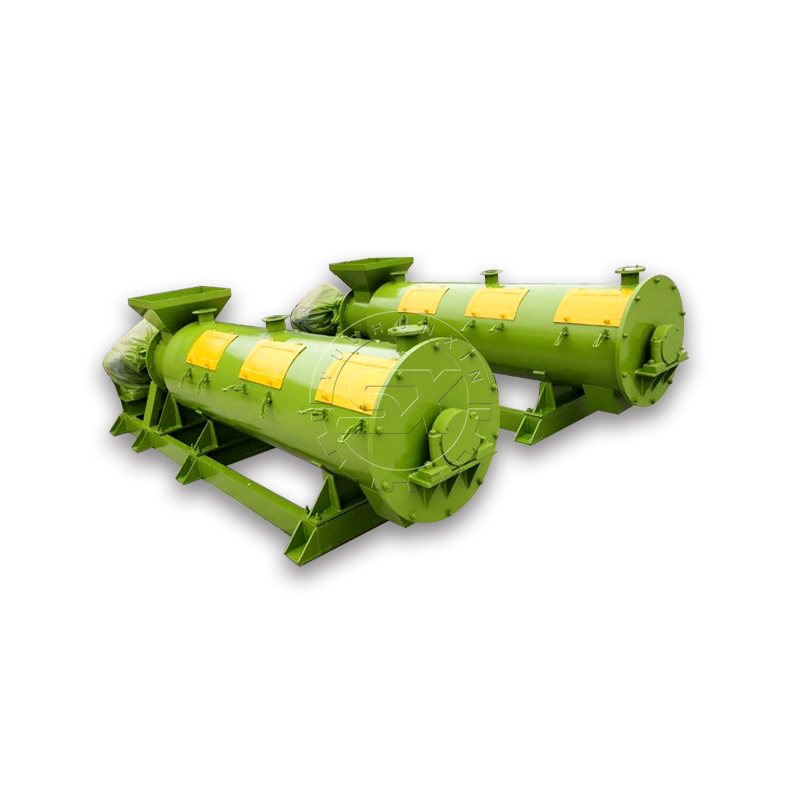
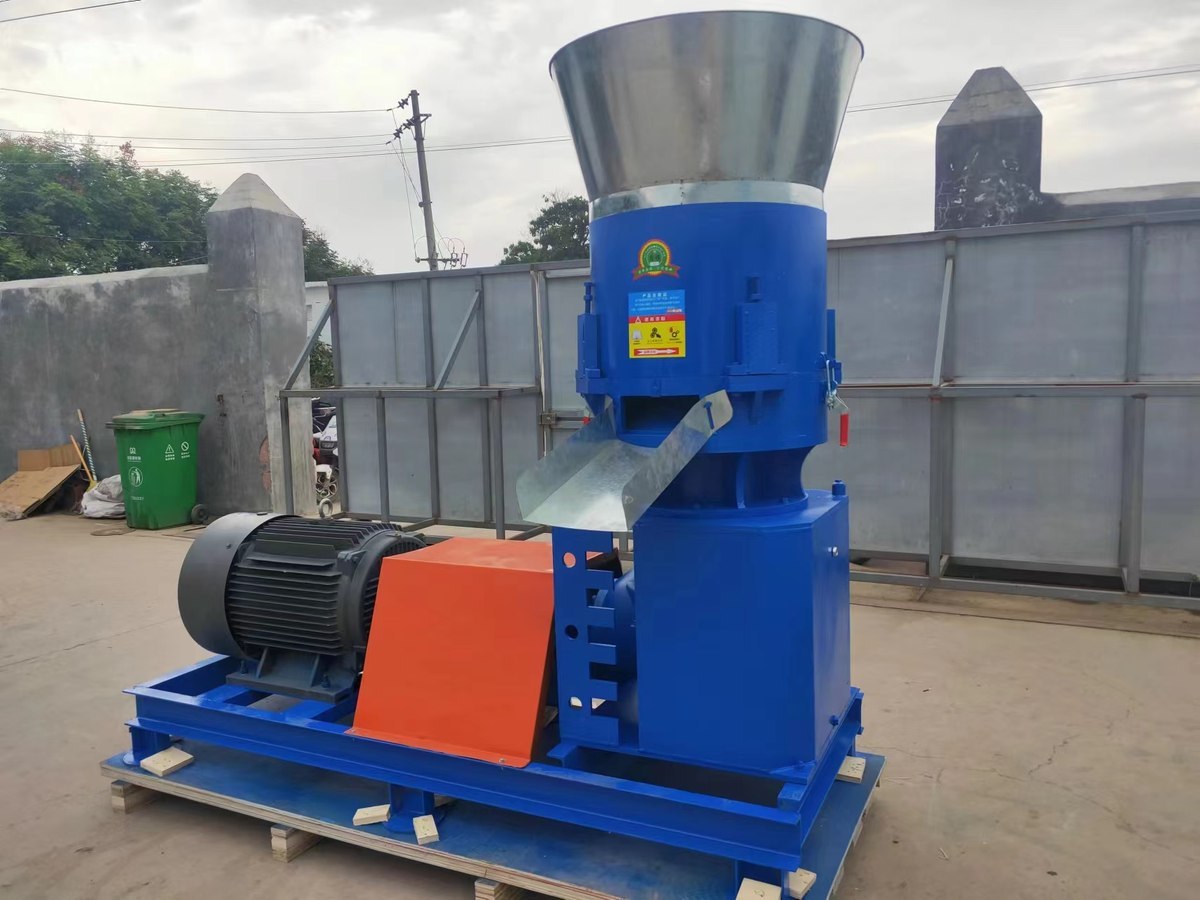
High-fiber organic powders are the hardest materials to granulate, because straw, sawdust and undigested fiber do not compact like mineral powder. The new-type organic granulator is built for exactly this: a high-speed stirring rotor inside a cylindrical body throws the moist powder against the wall and rolls it into round pellets, while the fiber is broken and wrapped into the pellet rather than blocking the machine. The clearance between the rotor and the shell is larger than on a mineral granulator, which is what prevents fiber from jamming. For very dry or very long fiber, we add a pre-crusher and pre-moistening stage upstream so the material enters the granulator in a workable band. The result is a 2-5 mm round organic granule that survives drying and screening with less dust and fewer fines.
Quick check #1Describe your raw material (chicken/cow/pig manure, compost, straw ratio) and moisture, and we will confirm whether a pre-crusher is needed in front of the granulator.
2. New-type organic fertilizer granulator moisture requirements for round pellet formation
Moisture is the single most important variable for the new-type organic granulator. The rotor needs the powder slightly plastic - usually 30-40% moisture for fermented manure - so the particles stick and roll, but not so wet that the machine pastes up. If the powder is too dry, it exits as dust with almost no pellets; if it is too wet, it clogs the discharge and the motor load spikes. The correct band is maintained by adding water or liquid binder at the inlet through a metered spray, and by controlling the upstream fermentation and drying. We always provide a starter moisture target and teach operators to adjust by observing pellet shape: smooth round pellets mean the band is right, ragged pellets mean too dry, and a pasted shell means too wet.
Quick check #2Give us your fermented material moisture and whether you can pre-dry or add water, and we will set the inlet moisture target and spray recommendation.
3. New-type organic fertilizer granulator output and balling rate for 1-5 t/h organic lines
Output and balling rate are not the same number. The machine may pass 3 t/h through the body, but if only 60% of it forms proper pellets, the rest becomes recycle and the useful output is lower. The new-type organic granulator typically achieves an 85-95% balling rate when the moisture and fiber are right, which keeps the recycle loop small and the line efficient. At 1-2 t/h a single unit is enough for most farm and small-plant projects; at 3-5 t/h we often run two units in parallel so one can be cleaned without stopping the line. We size the machine on useful output, not pass-through, and state both numbers in the quotation so you can compare honestly.
Quick check #3Tell us your target finished-pellet output (not just machine pass-through) and we will confirm the number of units and the expected balling rate.
4. New-type organic fertilizer granulator wear parts: rotor, liner and discharge screen
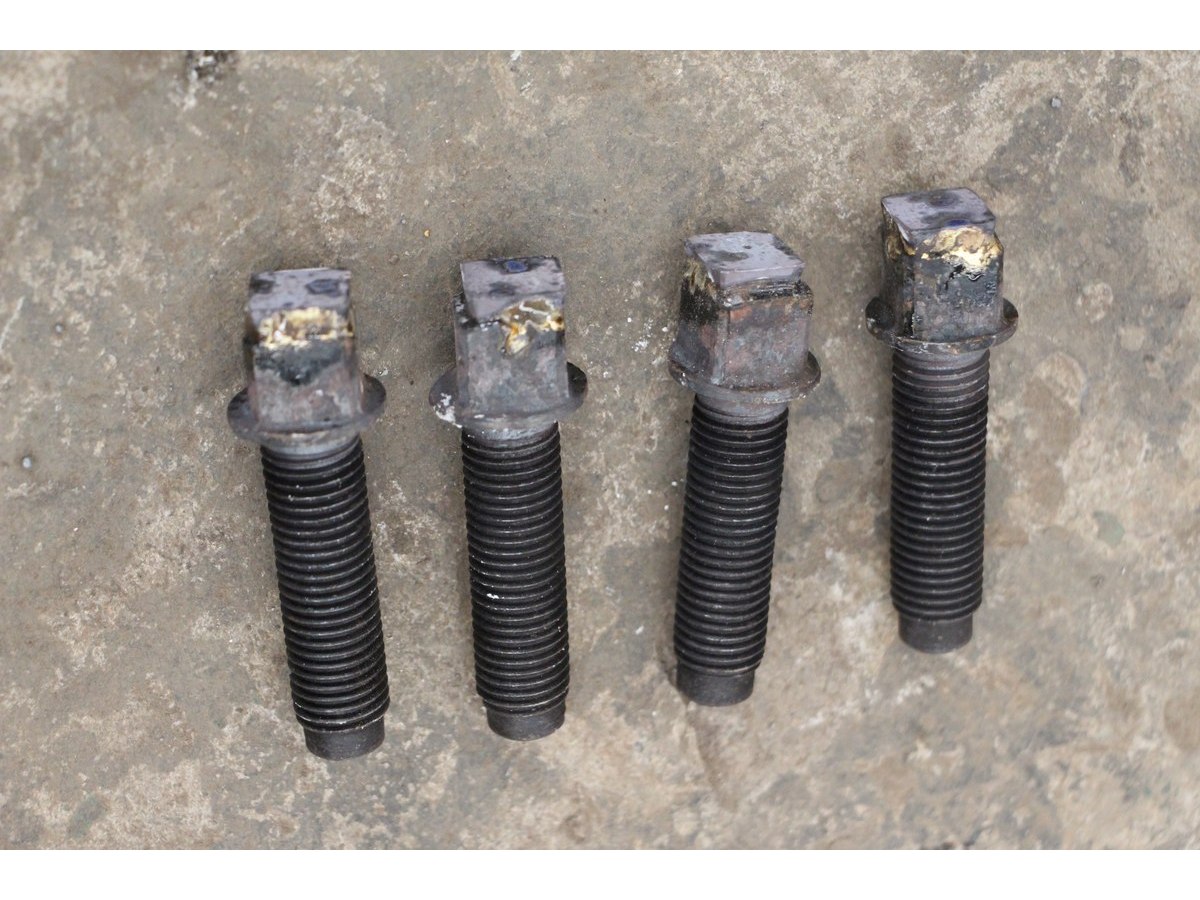
The rotor and shell liner are the two wear parts that decide the machine's service interval. Organic powder is abrasive, especially when it contains sand and grit from the farm, so we fit replaceable wear plates on the rotor tips and a replaceable liner on the shell. The discharge screen controls pellet size and is the third wear item; it should be checked weekly because a worn screen lets oversize through and changes the product band. We keep the rotor wear plates, shell liner and screens in stock, and they are simple bolt-in parts that local maintenance can replace. Checking the rotor clearance every 500 operating hours prevents the slow power creep that signals a worn rotor.
Quick check #4Ask us to include the wear-part kit in the quotation, and we will list the exact part numbers, quantities and replacement interval for your model.
5. New-type organic fertilizer granulator vs disc and drum granulators for organic pellets
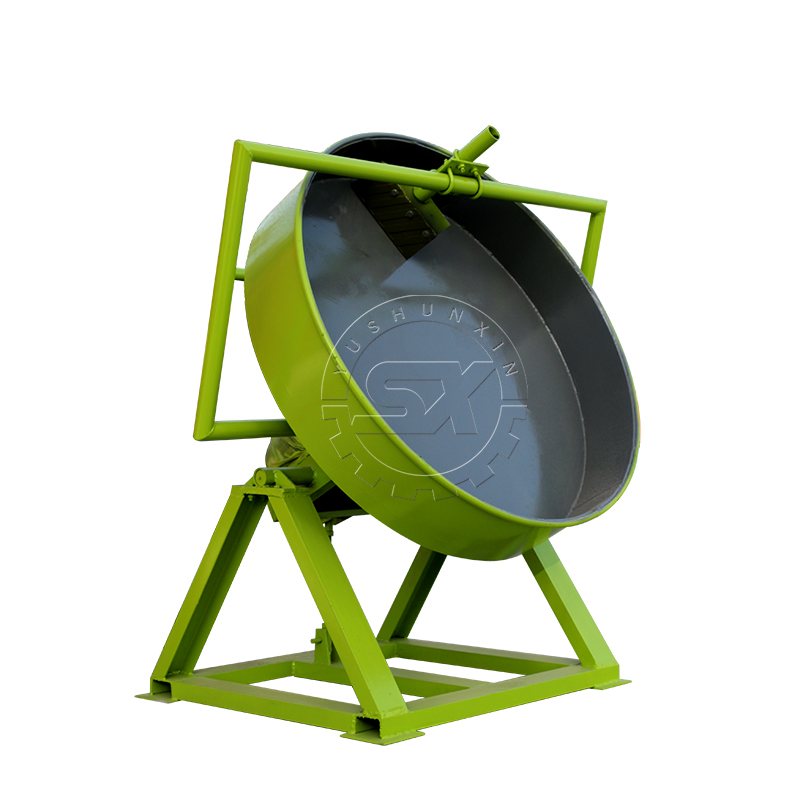
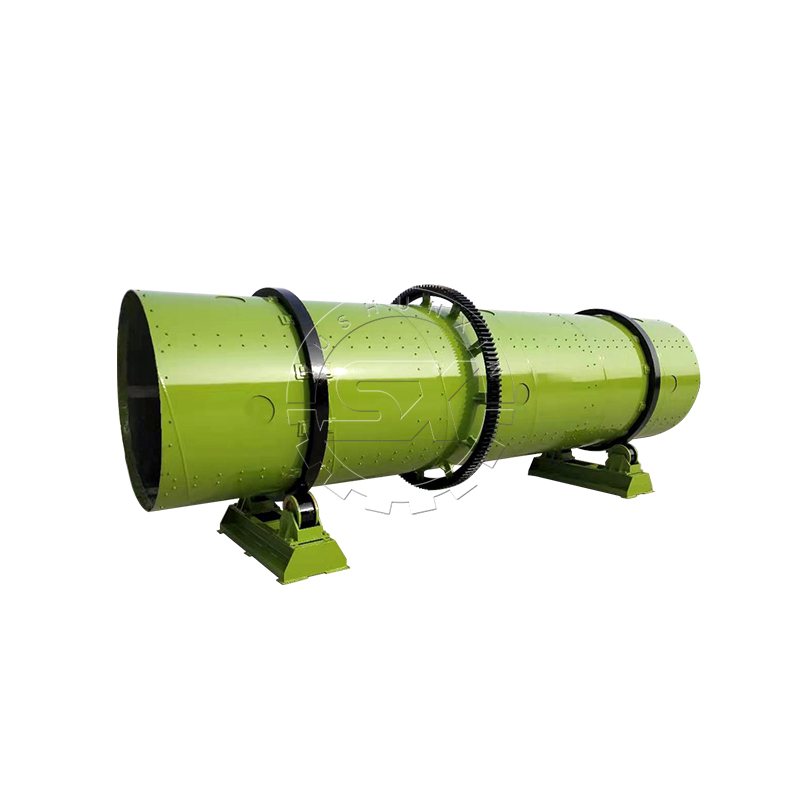
For organic pellets, the new-type stirring granulator usually beats the disc and drum on fiber handling and pellet roundness, while the disc and drum are better for mineral NPK. The disc works well on fine, non-fibrous organic powder but struggles when straw and long fiber enter the pan, and it needs more operator attention. The rotary drum handles high volume but its long residence and enclosed shell make it harder to clean between manure batches. The new-type granulator occupies the middle ground: it tolerates fiber, forms round pellets in one pass, and is simple to clean, which matters when you switch between chicken manure and cow manure. Choose it when your feedstock is fibrous organic material in the 1-5 t/h range.
Quick check #5Share your feedstock type and fiber content, and we will explain why the new-type, disc or drum granulator fits your case - with the cost difference shown.
6. New-type organic fertilizer granulator in a complete organic fertilizer production line
The granulator is the shaping stage, but a complete organic line needs the stages around it to work. Upstream, the fermented material is crushed and screened to remove stones and oversize fiber, then pre-moistened to the granulation band. Downstream, the wet pellets go to a dryer, then a cooler, then a screen that returns undersize to the granulator and sends oversize to a crusher. Coating and packing finish the product. When we configure the line we size each stage around the granulator's useful output so the dryer is not oversized and the screen recycle is stable. This is why buying the granulator alone and adding machines later often ends up more expensive than a matched complete line.
Quick check #6Send your raw material, target capacity and final pellet size, and we will return a complete-line flow with the granulator sized in the middle of it.