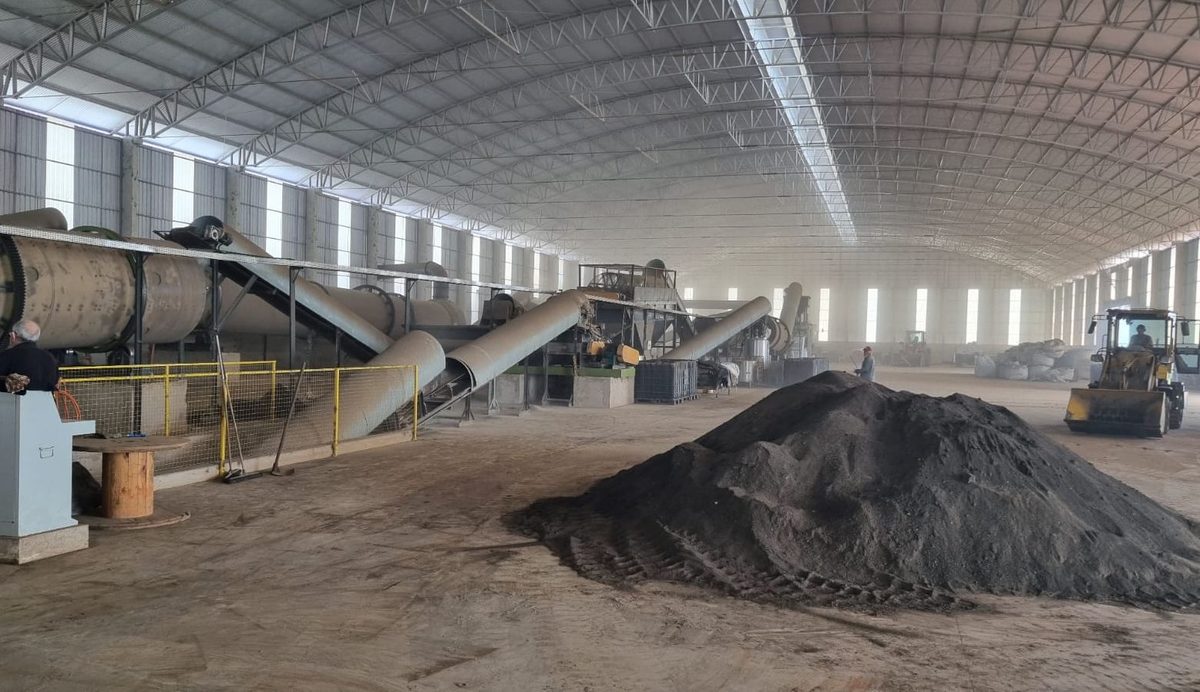
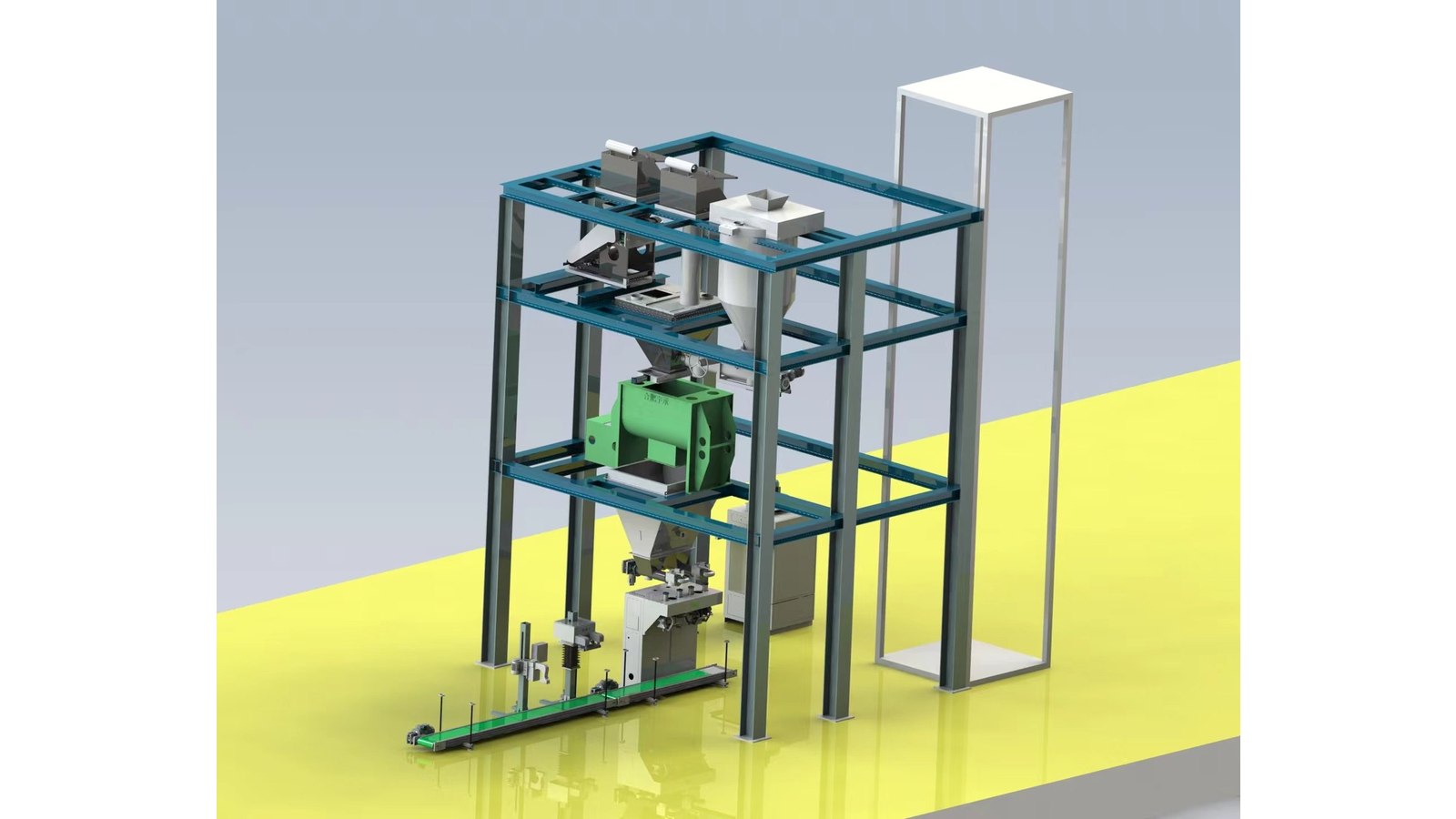
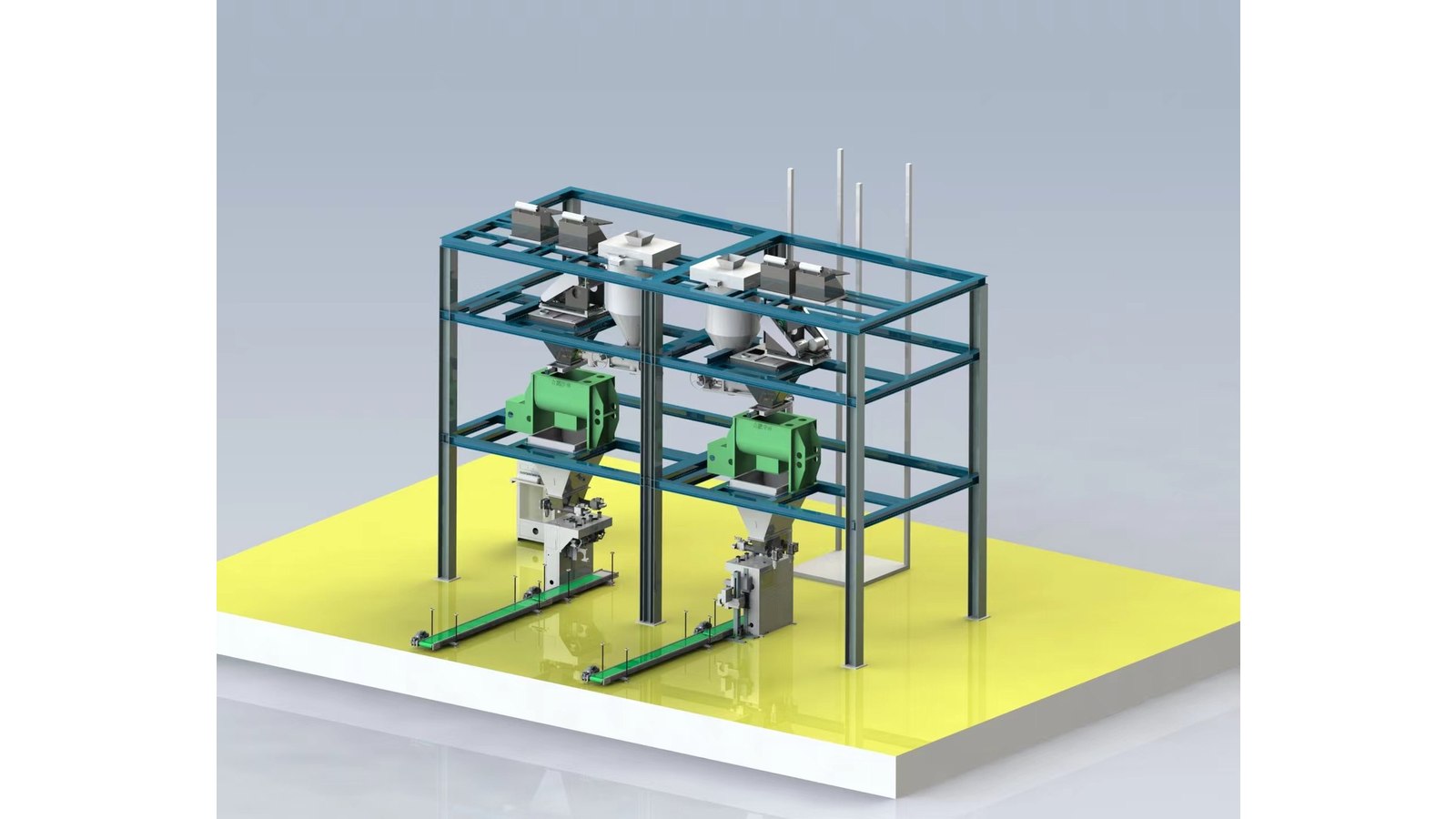
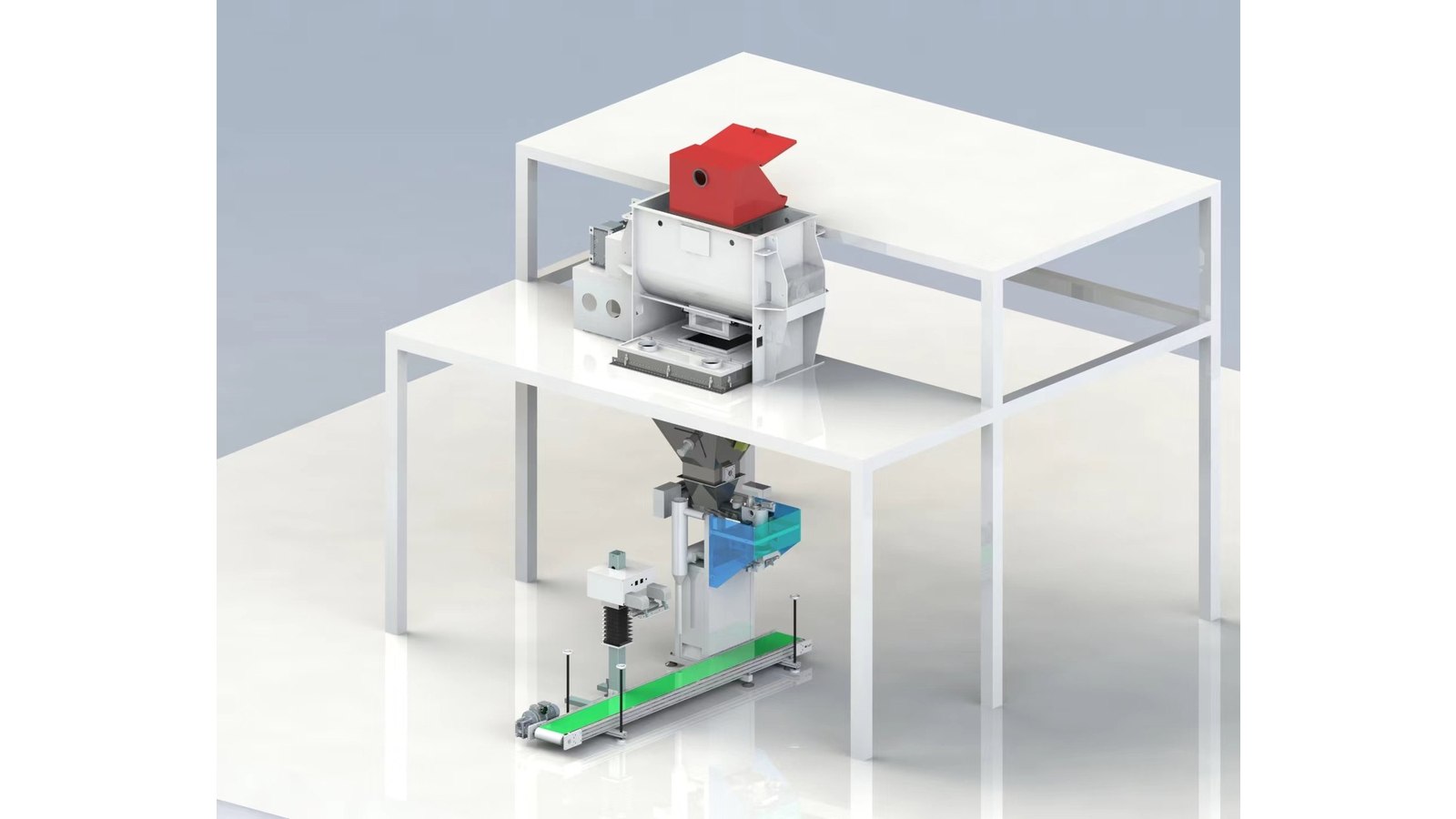
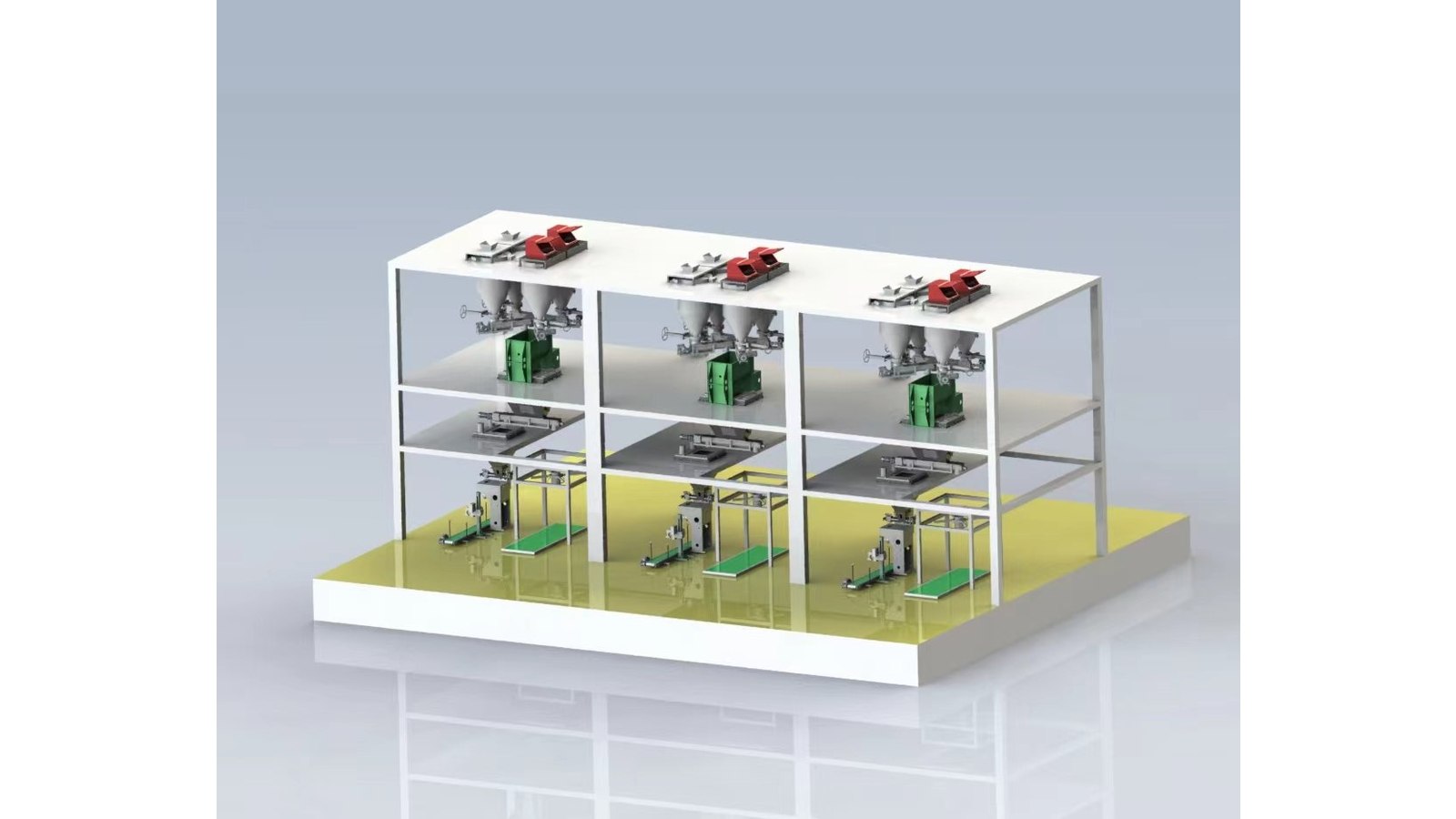
YUSHUNXIN designs recipe-based powder water-soluble fertilizer plants around five non-negotiable engineering goals: formulation accuracy, mixing uniformity, dust control, fast recipe changeover and packaging automation. The process is organized as a continuous powder train: raw material receiving & bag dumping → caked-material crushing (QL urea crusher) → multi-component metered batching → high-uniformity mixing → screening & de-dusting → anti-segregation finished-product buffer → 5–50 kg bagging or FIBC ton-bag packing → palletizing. Capacity is configured per project targets and bulk density — we never lock a single fixed capacity claim.
PLC recipe management with batch traceability
Stainless-steel contact parts for corrosive salts
Dust-controlled intake, crushing, mixing and packing
Powder WSF is the fastest-growing precision-fertilizer route for foliar and fertigation brands. Instead of manual blending, a YUSHUNXIN line locks five control points — formulation accuracy, mixing uniformity, dust control, fast recipe changeover and packaging automation — so every batch is repeatable and export-documentable.
Read this first: the solution fits specific customers, scenarios and project stages. If you are not the target, the configuration and quote will not be right.
Suitable for
Fertigation and water-soluble fertilizer brands that need repeatable, documented batch quality
Greenhouse input distributors and agronomy companies adding private-label WSF production
Existing fertilizer plants upgrading from manual batching to automated, dust-controlled lines
Producers exporting 5-25 kg, 25-50 kg or FIBC ton-bag WSF to regulated markets
Not suitable / confirm first
Customers who expect the supplier to own the chemical formulation (formulation stays with the customer or a joint process-validation project)
Projects without confirmed raw materials, bulk density or target bag size - these must be fixed before line design
Very small pilot plants below roughly 0.5 t/h that may be better served by a single mixer and bagger
The problems
What customers face before this solution
These are the real operating problems this line is designed to solve - and why they happen.
Typical problems
Batch-to-batch nutrient content varies because metering is manual and trace elements are skipped or guessed
Caked urea and brittle salts enter the mixer uncrushed, leaving lumps that fail solubility tests
Dust escapes at dumping, crushing, mixing and packing, increasing operator exposure and product loss
Mixed powder segregates in long conveyors and high-drop chutes before packing, undoing mixer uniformity
Recipe changeover is slow and residues contaminate the next batch
Packing weight compliance is poor for export markets and bag changeovers are labor-intensive
No batch record exists, so customers cannot issue a credible Certificate of Analysis (COA)
Why they happen
Weighing is manual or single-scale, so micro ingredients are never dosed at the accuracy the formula needs
Crushing is placed downstream of batching or omitted, so lumps are metered and mixed instead of being reduced first
Dust collection is added only at one point, while every transfer and open discharge generates dust
Conveying and buffering are designed for granules, not powders, so free-flowing powder segregates by particle size
Mixer internals and ducts are hard to clean, so residuals from the previous formula contaminate the next
Bagging is manual or the bagger is not integrated with a checkweigher, so weight drift is discovered late
There is no recipe database or batch log, so quality cannot be traced to a production run
Why a complete line, not single machines
A single high-uniformity mixer cannot fix upstream metering errors or downstream segregation, and a single bagger cannot fix weight drift if the product arriving at the hopper is non-uniform. A WSF line is a chain: crushing, metering, mixing, de-dusting, buffering and packing must be engineered to the same recipe and the same bulk density. When one link is undersized, the whole line underperforms - which is why we scope the complete train rather than selling machines in isolation.
Process
How the line works
1
Raw Material Receiving & Bag Dumping
Bag / FIBC dumping stations, de-dusting, magnetic separation, screw or vacuum conveying to buffer silos.
2
Caked-Material Crushing
QL series stainless steel urea crusher reduces caked urea and brittle salts to reference 20–30 mesh before metering.
3
Multi-Component Metered Batching
Loss-in-weight / gain-in-weight scales for macronutrients plus independent micro-scales for trace elements and additives.
4
High-Uniformity Mixing
Horizontal, twin-shaft or ribbon mixers sized for batch weight, uniformity target and cleaning frequency.
5
Screening & De-Dusting
Vibrating screening removes oversize and foreign matter; negative-pressure dust collection at all dusty points.
6
Anti-Segregation Buffer
Short-retention finished-product silo with low-drop conveying to keep mixed powder homogeneous before packing.
7
Bagging & Palletizing
5–25 kg or 25–50 kg automatic open-mouth baggers, FIBC ton-bag packing, checkweighing, robotic or high-level palletizing and stretch wrapping.
Solution structure
What is inside the line
Each module solves one part of the chain. Open any module to see its parameters and options.
This is the delivery path we follow for every complete line project.
1
Confirm requirements
Raw materials, formula, capacity, bag size, utilities and site conditions are confirmed in a technical questionnaire.
2
Process design & layout
We produce a process flow, line layout and foundation drawings sized to your material data.
3
Quotation with scope
You receive a quotation with an itemized delivery scope - what is included and what is excluded.
4
Order & fabrication
Fabrication starts with progress updates; long-lead items are ordered first.
5
Factory testing
Machines are assembled and no-load tested; weighing and control systems are calibrated.
6
Export packing
Equipment is export-packed with anti-rust treatment and a packing list for customs.
7
Delivery & installation
Machines ship FOB/CIF/door-to-door; installation is supervised on site or via video guidance.
8
Commissioning & training
We commission the line, train your operators and stabilize process parameters.
9
Acceptance & after-sales
Acceptance is based on agreed metrics; spares and remote support continue after handover.
Pre-purchase checklist
What to prepare before requesting a quote
The better your information, the closer the first quote is to the final one. Prepare these items:
Formula and raw material list (including trace elements and additives)
Raw material bulk density and moisture (or we help you measure them)
Target capacity in t/h or bags per hour
Bag type and weight (5-25 kg / 25-50 kg / FIBC ton-bag)
Required automation level (manual / semi-auto / full PLC with traceability)
Site voltage and frequency (e.g. 380V/50Hz, 415V/50Hz, 440V/60Hz)
Available plant footprint and floor layout
Dust-control or food-safety requirements for your market
Export packaging and destination port
Request a WSF line configuration
To configure your powder WSF line, send: formula and raw materials, bulk density (if known), target t/h, bag sizes, automation level, site voltage and destination port.
Product Inquiry
Tell us about your project — we reply within 24 hours (24/7).
Risk boundaries
When this solution does not apply
Honest boundaries make a proposal credible. These conditions must be confirmed before the configuration is valid:
Capacity claims depend on bulk density and flowability; we confirm after material data, never with an untested fixed number
Chemical formulation is not included in equipment scope unless agreed as a joint process-validation project
Hygroscopic raw materials may require dry storage and climate control outside our equipment scope
Extremely sticky or non-free-flowing powders may need pre-tests before the line is finalized
Civil works, site wiring, compressed air and building services are customer scope unless separately quoted
Effect verification
How we verify the solution works
Performance is checked with measurable indicators, not adjectives. These are the acceptance checks for this type of line:
Indicator
How it is verified
Mixing uniformity
Sample 5-10 points per batch, test N-P-K / trace element content, and compare coefficient of variation before acceptance
Line capacity
Run 3 consecutive hours at target recipe and record t/h and bags/h
Weight compliance
Check 20 consecutive bags on the checkweigher against your legal tolerance
Changeover time
Time one recipe switch including cleaning and first conforming bag
Dust control
Measure visible dust at operator positions or compare dust-collector pressure drop against design
Traceability
Generate a batch report with raw material lots, weighings and timestamp for one production run
Delivery scope
What is included - and what is not
Compare quotes on the same scope. This is exactly what the project price covers.
Included
Process design and line layout for your capacity
All equipment from bag dumping to palletizing, engineered as one train
PLC recipe management with batch logging (optional level)
Dust collection and de-dusting at process transfer points
Installation drawings, supervision or on-site commissioning
Operator training and operating documentation
Spare-parts list and long-term wear-part supply
Not included (separate scope)
Chemical formulation and raw material supply
Civil works, foundations, building and site wiring
Compressed air generation beyond the machine package
Local permits, certifications and third-party testing
Raw material storage silos outside the process train (quoted separately)
Scenario FAQ
Questions buyers ask about this solution
Can YUSHUNXIN formulate the chemical recipe for us?
We engineer the production process and equipment; the chemical formulation remains the customer's responsibility or is developed jointly in a process-validation project. We focus on accurate metering, uniform blending and repeatable batch quality.
How do you prevent caked urea from entering the mixer?
The QL series stainless steel urea crusher reduces caked urea and brittle salts to a reference 20–30 mesh before metering, protecting mixing uniformity and packing stability.
Which packing options are available?
5–25 kg automatic open-mouth baggers, 25–50 kg baggers, FIBC ton-bag packing, checkweighing, robotic or high-level palletizing and stretch wrapping — configured to your bag type and line speed.
How is capacity determined?
Capacity is configured per project target, raw material bulk density and automation level. We confirm the complete line after collecting your formula, batch size, packing size and site conditions.
What is the minimum capacity you can build?
Capacity is configured per project target, recipe and bulk density — we do not quote a single fixed capacity. Typical powder WSF plants start at pilot scale and scale to full production trains; tell us your annual tonnage and batch size.
How do you guarantee mixing uniformity?
Uniformity depends on raw-material particle size, dosing accuracy and mixer selection. We engineer the batching and mixing stages around your formula and confirm performance by trial runs before locking the line configuration.
Can a powder WSF line be upgraded to granular WSF later?
Yes. The receiving, batching, mixing and packing backbone stays; granulation, drying and cooling modules can be added when the market needs granular product. We reserve the layout and utilities at design stage.
Can you produce a pilot batch before we commit to a full line?
For non-standard or hygroscopic materials we can run process validation on small equipment or request material samples for engineering review. The outcome is a confirmed configuration, not a guess.
How long does a complete powder WSF line take to deliver?
Typical lead times are 45-75 days for a standard line and 90-120 days for highly customized or large-capacity trains, plus sea freight. The schedule is confirmed in the technical proposal with milestone dates.
What is the minimum viable investment for a WSF line?
A start-up configuration with semi-auto batching, one mixer, screening and a 5-25 kg bagger is the most economical entry; automation and palletizing can be added later. Tell us your starting budget and we will show the staged route.
Deep-dive guide
Ten angles buyers must understand before investing
Each angle is a self-contained chapter with a line illustration. Read the ones that match your project stage, then send us the data each angle asks for.
1. Why powder water-soluble fertilizer requires precision batching and micro-dosing
Water-soluble fertilizer is a formulation business: the product is a blend of macro and micro nutrients that must dissolve completely and analyze exactly as labeled. Precision batching weighs each ingredient - N, P, K sources plus chelated trace elements - into the mixer, and micro-dosing scales handle the small trace-element additions that a main scale cannot weigh accurately. A 0.5% error in a trace element is invisible to the eye but fails the lab analysis and can reject a batch. This is why the WSF line's weighing system is the most precise stage in the plant.
2. Raw material crushing and screening for fully soluble fertilizer powder
Fully soluble powder needs a fine, uniform particle size, which starts with crushing and screening the raw materials. The QL stainless steel urea crusher and similar equipment reduce the crystals to a fine powder without metal contamination, and the screen sets the maximum particle size. For WSF, stainless steel contact parts are standard because the salts are corrosive and any rust would contaminate the product. The crushing stage must also control heat so sensitive ingredients do not decompose, which is why the crusher is specified for the material, not chosen from a generic catalog.
3. High-uniformity mixing: how to avoid nutrient segregation in water-soluble fertilizer
Mixing is where the WSF formulation becomes a uniform product, and segregation is the enemy. Different ingredients have different densities and particle sizes, so a weak mixer leaves the batch stratified and the bag inconsistent. We use high-uniformity mixers with a short cycle and gentle action, and an anti-segregation buffer hopper after the mixer so the blend does not separate before packing. Batch logs record every mix so each bag can be traced to its batch, which export customers increasingly require.
4. Dust control and de-dusting in a powder water-soluble fertilizer plant
WSF powder is fine and dusty, so dust control is both a product-loss and a safety issue. The line is fitted with dust collection at the crusher, screen, mixer and packing points, and the collected dust is returned to the process so nothing is wasted. A de-dusting step before packing removes the fines that would make the bag dusty and the customer unhappy. The dust system is sized for the air volume of each point, because an undersized collector simply moves the dust problem from one machine to the next.
5. Automatic packing and palletizing for water-soluble fertilizer bags
The packing stage for WSF is usually fully automatic because the product is high-value and the bags are small - 1, 5, 10 and 25 kg. An automatic bagging machine forms, fills and seals the bags, a checkweigher verifies the weight, and a robotic palletizer stacks the bags into stable pallets. The bag material is often moisture-proof film, so the sealing method matters as much as the weighing. We configure the packing train around your bag sizes and pallet patterns, with recipe storage so changing from 5 kg to 25 kg bags is a panel selection.
6. Stainless steel construction and cleanability for water-soluble fertilizer lines
WSF products are corrosive salts, so stainless steel contact parts are the rule rather than an option. The contact surfaces must also be smooth and easy to clean, because residue from one batch can contaminate the next - a serious problem when producing different crop-specific formulas. We use 304 or 316 stainless for the contact parts, with the frame in coated carbon steel to control cost, and design the line so changeover cleaning is quick. The material of construction is stated explicitly in the quotation so buyers can compare offers fairly.
7. Batch traceability and quality records for water-soluble fertilizer export
Export WSF customers increasingly ask for a Certificate of Analysis with every batch, which means the line must record what went into each mix. The PLC stores the batching and mixing logs with time, batch number and operator, and the data can be exported for the COA. This traceability is a selling point for the plant, not just a compliance cost. We configure the data recording from the start so the plant can serve export markets without retrofitting.
8. Capacity planning for a powder water-soluble fertilizer plant: 1-10 t/h
WSF plants are usually smaller in tonnage than NPK plants because the product is high-value and formulation-driven. A 1-2 t/h line suits a regional formulator, while a 5-10 t/h line serves export volumes. The capacity decision follows the market and the number of formulas, because a small line that changes formulas frequently is often worth more than a large line running one product. We size the batching, mixing and packing stages around the peak daily output and the changeover frequency, not just the nominal t/h.
9. Investment and operating cost structure of a water-soluble fertilizer line
A WSF line costs more per ton of capacity than a granular NPK line because of the stainless construction, precision weighing and automatic packing, but the product margin is also higher. The operating cost is driven by raw material, labor and packaging film, with energy a smaller share because there is no dryer. We publish cost guide ranges and itemize the quotation so you can see exactly where the investment goes. The goal is a plant whose precision and traceability command a premium in the market.
10. Commissioning, acceptance and operator training for a WSF fertilizer plant
Commissioning proves the line with your actual formulas: batching accuracy, mix uniformity, dust levels and packing weight are checked against the acceptance list. Operators are trained on recipe change, cleaning between formulas and the traceability records, because WSF production is a discipline as much as a machine process. After handover we keep the spare-parts list and remote support, so the plant keeps producing export-grade product batch after batch.