
At a glance
Customer: Large pig farm with environmental requirements
Problem: High suspended solids overwhelmed the existing treatment system
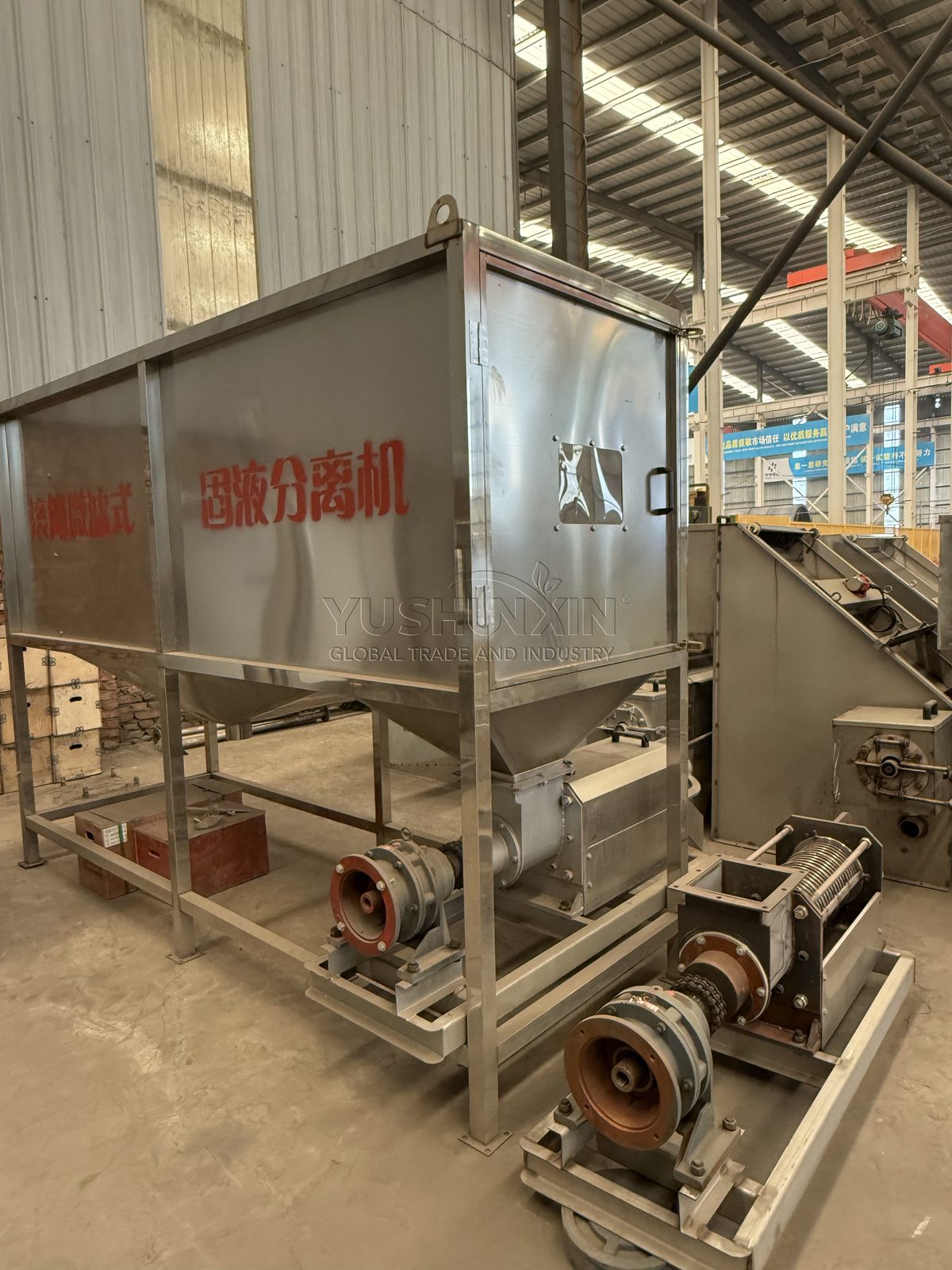
Solution: We installed a two-stage physical separation system: an inclined coarse screen for large solids, then a high-frequency fine separator at 0.3 mm for suspended solids, followed by a volute screw press for dewatering. Stain...
Result: Sharply reduced downstream solids load
| Customer type | Large pig farm with environmental requirements |
| Industry / project type | Физическое разделение животноводческих стоков |
| Capacity | 30–50 m³/h |
| Country / region | Southeast Asia |
Start a similar project
Tell us your raw materials, capacity and target market. We will compare your conditions with this project and recommend the right configuration.
Product Inquiry
Tell us about your project — we reply within 24 hours (24/7).
Why the project happened
A large pig farm needed to reduce the solids load entering its existing treatment system and recover manure solids for composting. The goal was lower downstream load, not discharge compliance from separation alone.
What the customer faced
These are the specific issues the project was built to solve.
- High suspended solids overwhelmed the existing treatment system
- Manual screening was labor-intensive and frequently clogged
- Fine particles passed the coarse screen and loaded the biological stage
- Separated solids were too wet to compost efficiently
- Carbon steel equipment corroded quickly in the aggressive liquid
Limits we designed around
Real projects are never ideal. These constraints shaped the configuration and delivery plan.
- Existing treatment train had to keep running during installation
- Solids needed to reach a moisture level suitable for composting
- Space beside the lagoon was limited
- Flow varied significantly between cleaning cycles
Why we configured it this way
We installed a two-stage physical separation system: an inclined coarse screen for large solids, then a high-frequency fine separator at 0.3 mm for suspended solids, followed by a volute screw press for dewatering. Stainless and coated contact parts were specified for corrosion resistance, and the system was piped to keep the existing treatment running during installation. Separated solids were routed to the composting area with a moisture level suitable for the organic line.
How it was delivered
From requirements confirmation to commissioning - the key nodes of this project.
Flow & solids audit
Measured flow, TS/SS and fiber content; confirmed peaks.
System design
Sized screens, separator and press; planned bypass for existing treatment.
Fabrication & delivery
Corrosion-resistant system fabricated and export-packed.
Installation
Installed with minimal disruption; existing treatment kept operational.
Commissioning
Verified SS removal and dewatered solids moisture over a full day.
Difficult points and how we solved them
Variable flow peaks
Equalization and variable-speed pumps with flow control.
Corrosion
Stainless/coated contact parts and sealed bearings specified from the start.
Solids destination
Interface with the composting area designed so separated solids feed the organic line.
What changed after delivery
Verifiable changes from this project. Where specific figures are confidential, we state the direction and the evidence.
- Sharply reduced downstream solids load
- Solids at suitable moisture for composting
- Manual screening labor eliminated
- The organic line now receives a consistent, drier feedstock
Project outcome
Резко снижена нагрузка по твёрдым; твёрдые питают линию органических удобрений.
What similar customers can learn
For farms with environmental limits, this case shows that physical separation is a load-reduction tool with an honest boundary: it protects downstream treatment and recovers solids, but discharge compliance still belongs to biological/chemical stages. Scope the interface with your treatment plant before buying.
Questions from similar projects
What solids removal can I expect?
Can the system handle flow peaks?
How wet are the separated solids?
Your conditions, our configuration
The fastest way to a useful answer is to compare your project against this one: raw materials, capacity, bag size, site and destination.
Product Inquiry
Tell us about your project — we reply within 24 hours (24/7).