
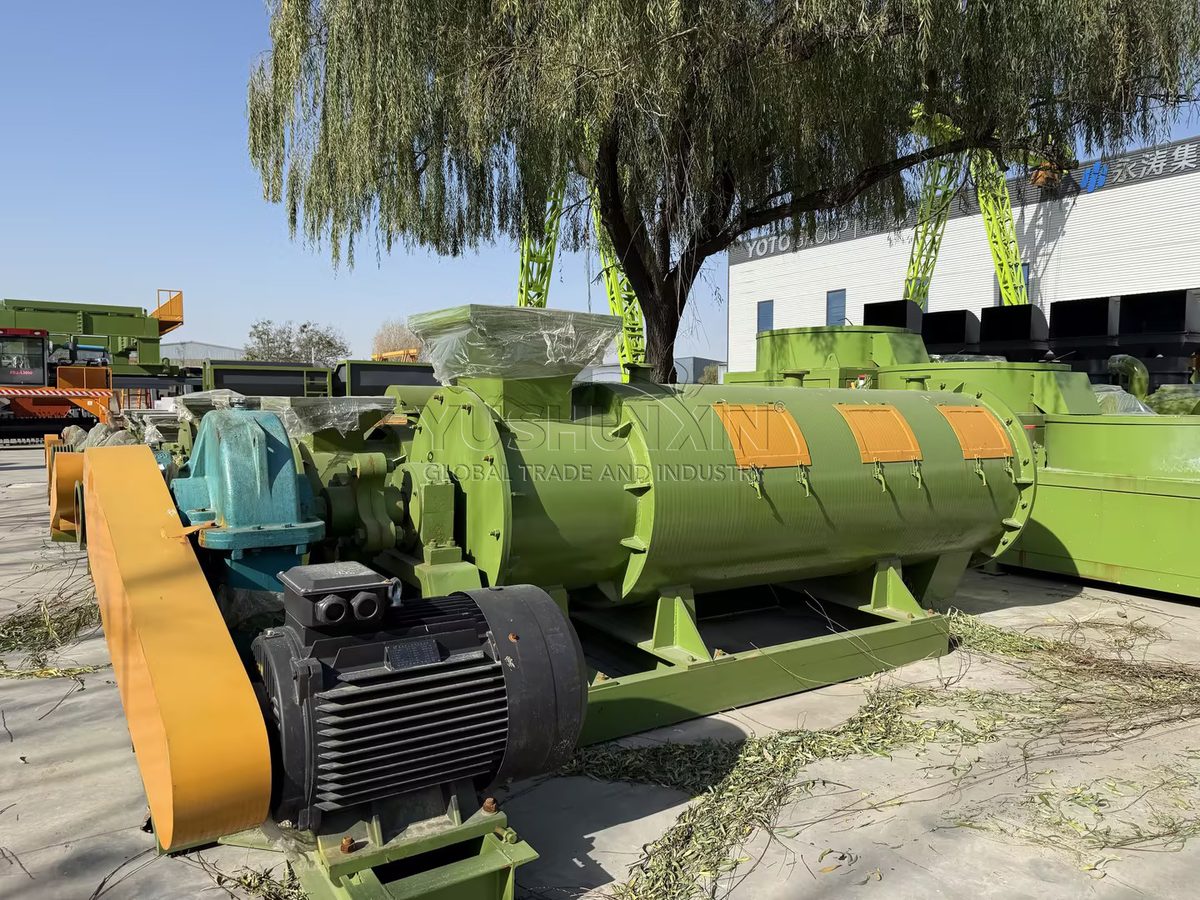
Линия грануляции технического углерода
Поддерживая экологический портфель группы YOTO, линия YUSHUNXIN превращает пиролизный технический углерод в стабильные гранулы двухвалковым или дисковым маршрутом, включая дозирование, смешивание, грануляцию, грохочение и фасовку.
Грануляция пиролизного углерода
Контроль пыли
Сухая двухвалковая грануляция
Экологическая синергия группы
Why choose this line
Carbon black granulation supports the YOTO Group's pyrolysis and environmental portfolio — one of the company's declared growth tracks. It turns dusty pyrolysis carbon black into stable, dust-controlled granules that are easier to handle, transport and sell.
Is this solution for you?
Read this first: the solution fits specific customers, scenarios and project stages. If you are not the target, the configuration and quote will not be right.
Suitable for
- Tire pyrolysis and carbon black recyclers converting fine carbon black into saleable granules
- Carbon black producers and traders needing dust-free handling and densification
- Environmental projects processing carbon black from pyrolysis plants
- Companies integrating granulation with bagging for the rubber, pigment and ink markets
Not suitable / confirm first
- Projects without a defined carbon black quality target (ash, sulfur, pH, particle size)
- Customers expecting standard fertilizer equipment to handle untreated pyrolysis carbon black without modification
- Sites without dust collection and explosion-safety review for fine carbon dust
What customers face before this solution
These are the real operating problems this line is designed to solve - and why they happen.
Typical problems
- Pyrolysis carbon black is extremely fine and dusty, causing material loss and hazardous working conditions
- Loose carbon black is difficult to dose, convey and pack accurately
- Granules from standard granulators are weak or dusty because binder and moisture are not controlled
- Carbon black clogs standard conveying and filling equipment
- No stable granule size, so customers reject inconsistent product
- Explosion risk from carbon dust is not addressed in design
Why they happen
- Particle size and surface chemistry of pyrolysis carbon black differ from standard fertilizer powders
- Binder selection and dosing are not matched to the carbon black properties
- Conveying is open or uses equipment that allows dust accumulation
- No moisture conditioning before granulation
- Granulation, drying and screening are not balanced as one process
- No ATEX-style dust control and grounding review
Why a complete line, not single machines
Carbon black granulation is a specialty line, not a generic fertilizer line. The binder system, moisture conditioning, granulator type, drying, screening and dust handling must be engineered together for this specific material. A single granulator without the conditioning and dust chain will produce dusty, weak granules and a hazardous plant.
How the line works
Metering & Dosing
Pyrolysis carbon black is metered from storage with dust control at transfer points.
Mixing & Conditioning
Mixer conditions feedstock and binder for consistent granule quality.
Dry Granulation
Double-roller extrusion compacts material into granules with low energy demand.
Screening & Recycle
Rotary screener classifies product; off-size material returns to the circuit.
Packing
Automatic bagging or ton-bag packing completes the line.
What is inside the line
Each module solves one part of the chain. Open any module to see its parameters and options.
Why we configure it this way
Equipment is not a list - it is a response to your conditions. This is how your conditions change the configuration:
| When your project is... | We configure... |
|---|---|
| Fine pyrolysis carbon black | High-shear or disc granulation with matched binder dosing and moisture conditioning |
| Dust control | Enclosed conveying, negative-pressure de-dusting and grounding |
| Market quality (rubber/ink) | Controlled granule size range, low fines, optional densification |
| Explosion safety | Dust-tight equipment, pressure relief and grounding review with your site EHS |
| High throughput | Multi-unit granulation trains with automatic bagging |
Different projects get different configurations
We do not apply one template to every customer. Here are three common scenarios and how the configuration changes.
Tire pyrolysis operator
Focus: Convert dusty by-product to saleable granules
Conditioning + granulation + drying + screening + bagging
Carbon black trader
Focus: Consistent granule quality and low fines
Tight size control + dust-free packing + QC sampling
Ink/pigment producer
Focus: Specified particle behavior
Process validation + customized binder and granulation parameters
From inquiry to commissioning
This is the delivery path we follow for every complete line project.
Confirm requirements
Raw materials, formula, capacity, bag size, utilities and site conditions are confirmed in a technical questionnaire.
Process design & layout
We produce a process flow, line layout and foundation drawings sized to your material data.
Quotation with scope
You receive a quotation with an itemized delivery scope - what is included and what is excluded.
Order & fabrication
Fabrication starts with progress updates; long-lead items are ordered first.
Factory testing
Machines are assembled and no-load tested; weighing and control systems are calibrated.
Export packing
Equipment is export-packed with anti-rust treatment and a packing list for customs.
Delivery & installation
Machines ship FOB/CIF/door-to-door; installation is supervised on site or via video guidance.
Commissioning & training
We commission the line, train your operators and stabilize process parameters.
Acceptance & after-sales
Acceptance is based on agreed metrics; spares and remote support continue after handover.
What to prepare before requesting a quote
The better your information, the closer the first quote is to the final one. Prepare these items:
- Carbon black source and production process (pyrolysis, furnace, thermal)
- Ash, sulfur, pH, particle size and moisture of the material
- Target granule size, strength and fines tolerance
- Capacity in t/h and operating hours
- Binder preference and availability
- Dust/explosion safety requirements for your site
- Packing and destination market
Request carbon black granulation validation
To validate your carbon black line, send: material source and process, ash/sulfur/pH/particle data or samples, target granule specs, capacity, binder availability and site safety requirements.
Product Inquiry
Tell us about your project — we reply within 24 hours (24/7).
When this solution does not apply
Honest boundaries make a proposal credible. These conditions must be confirmed before the configuration is valid:
- Granulation parameters are material-specific; process validation with samples is required before performance guarantees
- Explosion safety is a joint responsibility - we design dust-tight equipment and you complete the site ATEX review
- Ash and sulfur content affect granule quality and may limit some markets
- Binder cost is a recurring operating cost; we help you compare options
How we verify the solution works
Performance is checked with measurable indicators, not adjectives. These are the acceptance checks for this type of line:
| Indicator | How it is verified |
|---|---|
| Granule strength | Compression or drop test on sampled granules |
| Size distribution | Sieve analysis across a full shift |
| Fines/dust | Measure fines after screening and dust collector loading |
| Throughput | Record t/h at design conditions |
| Safety | Verify dust-tightness and grounding points in the pre-commissioning walk-down |
What is included - and what is not
Compare quotes on the same scope. This is exactly what the project price covers.
Included
- Conditioning, granulation, drying, screening, conveying, dust collection and bagging
- Process validation support with material samples
- Layout, installation, commissioning and training
- Spare parts and documentation
Not included (separate scope)
- Pyrolysis reactor and upstream carbon black handling
- Binder supply and cost
- Site ATEX certification and third-party safety audit
- Civil works and utilities