
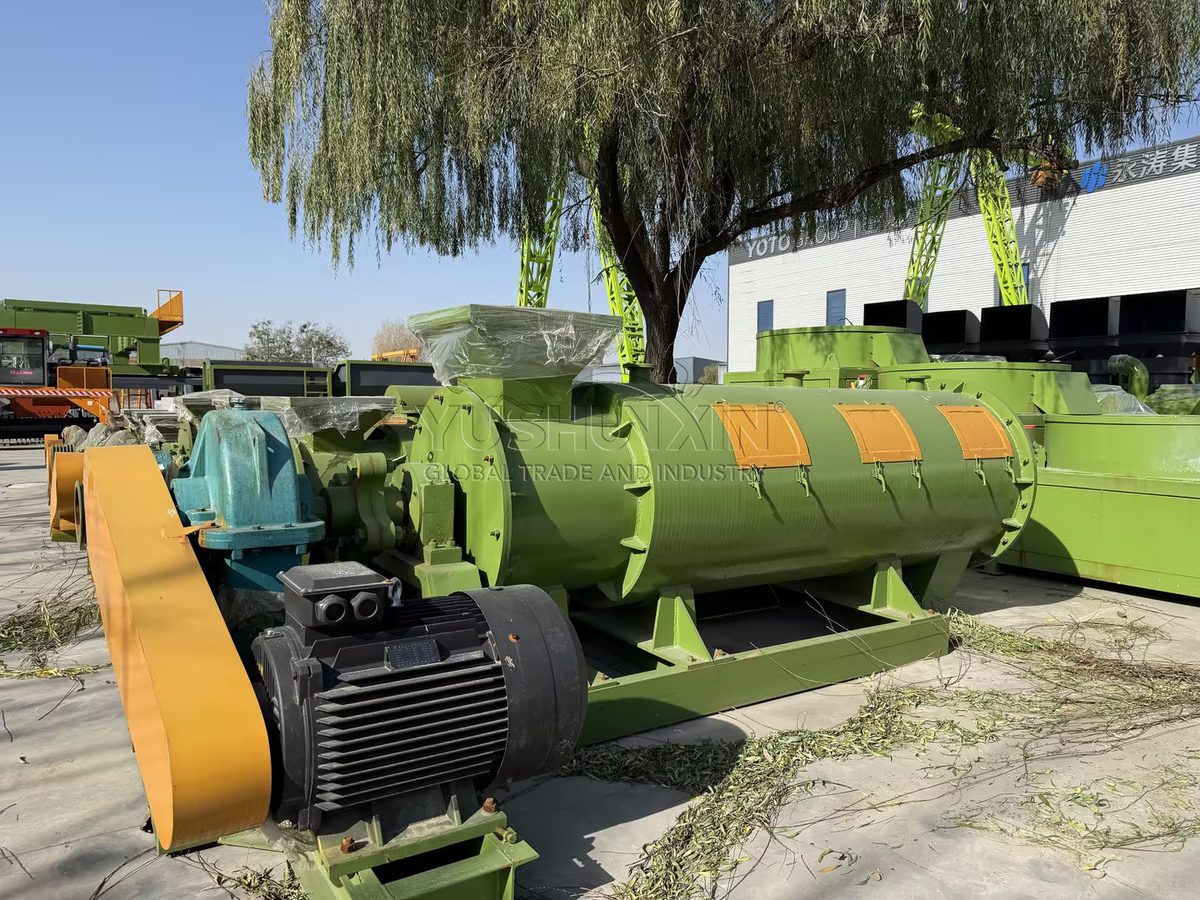
Линия производства органических удобрений
Линия органических удобрений — флагманский продукт YUSHUNXIN среди полных линий. Она охватывает ферментацию, дробление, смешивание, грануляцию, сушку, охлаждение, грохочение, обсыпку и фасовку и может быть поставлена как недорогая порошковая или высокоценная гранулированная линия. Варианты по сырью включают куриный, коровий, свиной навоз, минеральные порошки и биоорганические удобрения.
Типичная производительность 1–20 т/ч
Порошковая или гранулированная продукция
Полный цикл от ферментации до фасовки
Инжиниринг под конкретное сырьё
Why choose this line
Organic fertilizer is YUSHUNXIN's flagship and the company's first main push line. One manufacturer covers the full fermentation-to-packing process, with a low-CAPEX powder route and a high-value granular route, plus raw-material variants for chicken, cow, pig and mineral feedstocks.
Is this solution for you?
Read this first: the solution fits specific customers, scenarios and project stages. If you are not the target, the configuration and quote will not be right.
Suitable for
- Farms and farm groups converting chicken, cow, pig or sheep manure into salable fertilizer
- Waste-to-value companies processing sludge, straw, food waste or agricultural residue
- Existing organic fertilizer plants expanding from powder to granular product
- Bio-organic and mineral-organic blend producers needing fermentation-to-packing coverage
Not suitable / confirm first
- Projects without a confirmed raw material source and moisture profile
- Customers who need only one machine (a single turner, granulator or dryer) - see our product pages instead
- Sites with no available space for fermentation and curing (fermentation is the largest area consumer)
What customers face before this solution
These are the real operating problems this line is designed to solve - and why they happen.
Typical problems
- Raw manure is inconsistent in moisture and fiber, so downstream equipment clogs or produces weak granules
- Fermentation is uncontrolled: temperature and turning are irregular, causing odor, pathogen and stability issues
- Lumpy fermented material enters the granulator and breaks the pellet quality
- Moisture is too high for granulation, so the dryer becomes the bottleneck and energy cost rises
- Granules are soft, dusty or caked because screening, coating and cooling are missing
- The line is oversized or undersized because capacity was not matched to raw material moisture
Why they happen
- Composting is treated as a storage step instead of a controlled process with aeration and turning cycles
- No pre-crushing between fermentation and mixing, so lumps and fibers reach the granulator
- Moisture is adjusted at the granulator instead of upstream, forcing the dryer to remove extra water
- Dryer and cooler are sized from final tonnage without accounting for moisture removal load
- Screening and coating are treated as optional, so off-spec fines and caking reach the customer
- Raw material moisture is not measured during design, so the whole line is built on an assumption
Why a complete line, not single machines
An organic line fails at the interfaces, not inside a single machine. Fermentation output moisture decides dryer load; crushing quality decides granulator stability; screening returns decide yield; coating decides storage life. If you buy a granulator and dryer separately, these interfaces are never engineered, and the plant underperforms on day one. A complete line is the only way to guarantee the chain from raw manure to bagged granule.
How the line works
Ферментация
Ворошители компоста или вертикальные ферментеры с аэрацией и дезодорацией.
Дробление
Цепные или вертикальные дробилки измельчают ферментированный материал и разбивают комки.
Смешивание и подготовка
Горизонтальные или двухвальные смесители гомогенизируют рецептуру и регулируют влажность.
Грануляция
Дисковые, барабанные, нового типа, плоскоматричные или двухвалковые грануляторы.
Сушка и охлаждение
Барабанные сушилки и охладители снижают влажность и температуру.
Грохочение и обсыпка
Барабанные грохоты классифицируют продукт; обсыпка улучшает антислёживаемость и вид.
Фасовка
Автоматическая фасовка, FIBC и паллетирование завершают линию.
What is inside the line
Each module solves one part of the chain. Open any module to see its parameters and options.
Why we configure it this way
Equipment is not a list - it is a response to your conditions. This is how your conditions change the configuration:
| When your project is... | We configure... |
|---|---|
| High-moisture fresh manure | Groove or crawler compost turners with forced aeration and longer retention; moisture conditioning before granulation |
| Powder product / low investment | Powder route: crushing, mixing, screening, packing - no granulation/drying/cooling main sections |
| Granular product with fiber | New-type organic granulator or disc granulator matched to fiber and moisture |
| Dry mineral-organic blends | Double-roller extrusion granulation for low-energy, moisture-sensitive formulas |
| Export-grade granules | Dryer + cooler + rotary screener + coating machine + automatic bagging/palletizing |
Different projects get different configurations
We do not apply one template to every customer. Here are three common scenarios and how the configuration changes.
Poultry farm group
Focus: Odor control, pathogen reduction, consistent granules
Groove turners + vertical fermentation tanks + new-type organic granulator + drying/cooling
Waste-to-value operator
Focus: Handling mixed feedstocks (sludge, straw, food waste)
Blending + moisture conditioning + robust crushing + disc granulation
Powder-line start-up
Focus: Minimum investment, later upgrade
Powder route with expandable layout for future granular sections
From inquiry to commissioning
This is the delivery path we follow for every complete line project.
Confirm requirements
Raw materials, formula, capacity, bag size, utilities and site conditions are confirmed in a technical questionnaire.
Process design & layout
We produce a process flow, line layout and foundation drawings sized to your material data.
Quotation with scope
You receive a quotation with an itemized delivery scope - what is included and what is excluded.
Order & fabrication
Fabrication starts with progress updates; long-lead items are ordered first.
Factory testing
Machines are assembled and no-load tested; weighing and control systems are calibrated.
Export packing
Equipment is export-packed with anti-rust treatment and a packing list for customs.
Delivery & installation
Machines ship FOB/CIF/door-to-door; installation is supervised on site or via video guidance.
Commissioning & training
We commission the line, train your operators and stabilize process parameters.
Acceptance & after-sales
Acceptance is based on agreed metrics; spares and remote support continue after handover.
What to prepare before requesting a quote
The better your information, the closer the first quote is to the final one. Prepare these items:
- Raw material type, collection method and daily quantity
- Moisture content and C/N ratio (or samples for analysis)
- Target product: powder or granular, and final moisture requirement
- Target capacity in t/h or tons per day
- Fermentation method preference and available land
- Bag type and packing automation level
- Site power, water and road access for raw material
- Odor and environmental requirements for the local site
Request an organic line design
To design your organic line, send: raw material type and daily quantity, moisture, target product (powder/granular), capacity, available land for fermentation, and packing requirements.
Product Inquiry
Tell us about your project — we reply within 24 hours (24/7).
When this solution does not apply
Honest boundaries make a proposal credible. These conditions must be confirmed before the configuration is valid:
- Capacity and layout depend on available fermentation area; we size the line after your site plan
- Feedstock chemistry (salts, antibiotics residue, heavy metals) can limit organic certification - this is outside equipment scope
- Drying energy depends on raw moisture; we state the design basis in the proposal so you can compare fairly
- Bio-organic certification usually requires third-party process validation, which is customer scope
- Very abrasive feedstocks may require hardened wear parts and a higher maintenance budget
How we verify the solution works
Performance is checked with measurable indicators, not adjectives. These are the acceptance checks for this type of line:
| Indicator | How it is verified |
|---|---|
| Granule quality | Check granule size distribution, strength and fines rate on the screener after commissioning |
| Moisture control | Measure inlet/outlet moisture of dryer and final product moisture over a full shift |
| Line throughput | Record tons produced over 3 consecutive shifts at the design moisture |
| Fermentation maturity | Track temperature curve and turning count; verify stability and odor reduction |
| Yield | Compare screened on-spec output vs total line input |
What is included - and what is not
Compare quotes on the same scope. This is exactly what the project price covers.
Included
- Fermentation, crushing, mixing, granulation, drying, cooling, screening, coating and packing equipment
- Process flow design and layout for your raw material scenario
- Foundation drawings and installation guidance
- Commissioning and operator training
- Wear-part list and after-sales support
Not included (separate scope)
- Civil works, sheds, fermentation tanks civil structure (tanks supplied as equipment, installation is customer or quoted)
- Odor treatment beyond standard bio-filter interface
- Raw material logistics and waste disposal
- Organic certification auditing