Home/Solutions/Línea de Producción de Recubrimiento de Urea de Liberación Controlada
Línea de Producción de Recubrimiento de Urea de Liberación Controlada
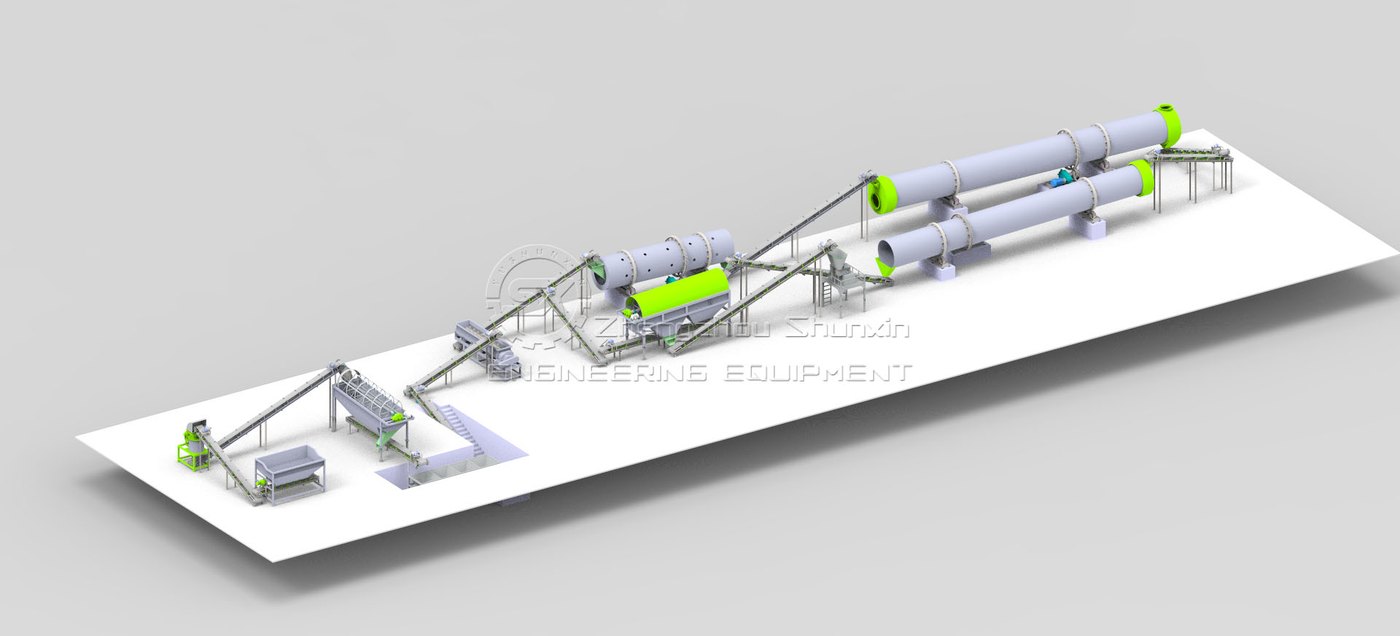
Urea de liberación controlada recubierta con azufre o resina para gránulos grandes de urea — fusión, pulverización, curado, enfriado y envasado diseñados, con una línea de referencia de recubrimiento de azufre de 10 t/h.
North AmericaEuropeJapan / KoreaChinaSoutheast AsiaMiddle East
Solution at a glance
Línea de Producción de Recubrimiento de Urea de Liberación Controlada
YUSHUNXIN construye líneas de recubrimiento de urea de liberación controlada con dos químicas probadas: urea recubierta de azufre (SCU) y urea recubierta de resina (RCU/PCU). La línea parte de urea granulada grande, la precalienta y criba, y luego aplica una cáscara de azufre fundido con sello de cera, betún o aceite vegetal, o una película polimérica multicapa con curado controlado. La masa de recubrimiento, el número de capas y el curado se diseñan para ventanas de liberación de 30 a 180 días. La configuración de referencia es una línea de recubrimiento de azufre de 10 t/h; las líneas de resina se dimensionan por proyecto.
Dos rutas: urea recubierta de azufre (SCU) o urea recubierta de resina (RCU/PCU)
Ventanas de liberación diseñables de 30 a 180 días
Línea de referencia de recubrimiento de azufre de 10 t/h
Fusión, pulverización, curado, enfriado y envasado en un solo tren
Controlled-release urea is a premium upgrade to large granular urea: it reduces nitrogen loss, smooths supply across the crop cycle and supports one-pass basal application. The engineering choice between sulfur and resin is a cost-versus-stability trade, and we keep both on one platform so the line is matched to the market segment rather than forced into a single coating chemistry.
Read this first: the solution fits specific customers, scenarios and project stages. If you are not the target, the configuration and quote will not be right.
Suitable for
Large granular urea producers and exporters
Controlled-release fertilizer brands
BB blend and basal-application compound producers
Agricultural input groups entering slow-release products
Not suitable / confirm first
Standard anti-caking coating only (choose the fertilizer coating machine)
Projects without a target release window or granule-size specification
Small-volume research without production-scale throughput
The problems
What customers face before this solution
These are the real operating problems this line is designed to solve - and why they happen.
Typical problems
Bare large granular urea releases too fast and risks nitrogen loss
Sulfur shells crack under rough blending, transfer or spreading
Resin films release unevenly when curing is not controlled
Coated granules arrive warm, sticky or out of size without post-coating cooling and screening
Why they happen
Coating mass and layer count not matched to the release window
Sulfur shell treated as a single thick layer instead of layered spraying with a seal
Resin curing temperature and residence time not controlled
No screening loop after coating, so agglomerates and undersize reach the bag
Why a complete line, not single machines
Controlled-release performance is the product, not the coating machine alone. Melting or resin preparation, metering, spraying, curing, cooling and screening must be one balanced line; a machine bought in isolation cannot hold the release window.
Process
How the line works
1
Recepción, cribado y precalentamiento del gránulo
La urea granulada grande se criba para uniformidad de tamaño y se precalienta para que los materiales de recubrimiento se adhieran uniformemente.
2
Ruta de azufre: pulverización de azufre fundido
El azufre fundido se dosifica y pulveriza en capas finas sobre la superficie del gránulo en movimiento para formar una cáscara rígida de azufre.
3
Capa de sellado de azufre
Se aplica cera, betún o cera de aceite vegetal sobre la cáscara de azufre para sellar microporos y microgrietas y ajustar la liberación inicial.
4
Ruta de resina: pulverización multicapa de polímero
Una solución de resina (poliuretano, poliolefina o resina degradable) se pulveriza en películas finas sucesivas para formar una membrana continua y flexible.
5
Curado y formación de película
La temperatura y el tiempo de residencia se controlan para que cada película cure uniformemente y el perfil de liberación sea repetible.
6
Enfriado y cribado
Los gránulos recubiertos se enfrían a temperatura de manejo y se criban para retirar sobretamaños, aglomerados y finos.
7
Pesaje y envasado
La urea de liberación controlada terminada se ensaca en 25–50 kg o se envasa en big bags FIBC para almacenamiento y mezcla.
Solution structure
What is inside the line
Each module solves one part of the chain. Open any module to see its parameters and options.
Equipment is not a list - it is a response to your conditions. This is how your conditions change the configuration:
When your project is...
We configure...
Sulfur route, cost-sensitive market
Layered molten-sulfur spraying plus wax or oil sealing, sized at 10 t/h reference
Resin route, premium precision release
Multi-layer resin spraying with controlled curing and solvent recovery where required
Both products on one line
Separate sulfur and resin preparation, metering and spraying systems with changeover plan
Long-season crops or one-pass basal use
Longer release window through higher coating mass or more resin layers
Scenario differences
Different projects get different configurations
We do not apply one template to every customer. Here are three common scenarios and how the configuration changes.
BB blend producer
Focus: Cost-stable controlled-release base granules
Sulfur route with sealing, cooling and screening feeding the blender
Premium resin brand
Focus: Smooth 30-180 day release curves
Multi-layer resin route with tight curing and film-control instrumentation
Urea exporter adding value
Focus: Premium product from standard large granular urea
Coating, cooling and packing module added after existing urea handling
Implementation
From inquiry to commissioning
This is the delivery path we follow for every complete line project.
1
Confirm requirements
Raw materials, formula, capacity, bag size, utilities and site conditions are confirmed in a technical questionnaire.
2
Process design & layout
We produce a process flow, line layout and foundation drawings sized to your material data.
3
Quotation with scope
You receive a quotation with an itemized delivery scope - what is included and what is excluded.
4
Order & fabrication
Fabrication starts with progress updates; long-lead items are ordered first.
5
Factory testing
Machines are assembled and no-load tested; weighing and control systems are calibrated.
6
Export packing
Equipment is export-packed with anti-rust treatment and a packing list for customs.
7
Delivery & installation
Machines ship FOB/CIF/door-to-door; installation is supervised on site or via video guidance.
8
Commissioning & training
We commission the line, train your operators and stabilize process parameters.
9
Acceptance & after-sales
Acceptance is based on agreed metrics; spares and remote support continue after handover.
Pre-purchase checklist
What to prepare before requesting a quote
The better your information, the closer the first quote is to the final one. Prepare these items:
Urea granule size, hardness and temperature
Coating chemistry: sulfur, resin, or both
Target release window (30, 60, 90, 120 or 180 days)
Capacity t/h and operating hours
Resin type, degradability and solvent recovery
Packing size and destination market
Request a controlled-release urea coating assessment
Send granule size, coating chemistry, target release window, capacity and packaging; our engineers will return a line configuration and reference parameters.
Product Inquiry
Tell us about your project — we reply within 24 hours (24/7).
Risk boundaries
When this solution does not apply
Honest boundaries make a proposal credible. These conditions must be confirmed before the configuration is valid:
Sulfur shells are brittle - gentle conveying and handling are part of the scope
Release performance must be confirmed by product trials and the customer's acceptance method
Resin type and degradability are customer-selected; microplastic claims require third-party evidence
Coating mass changes capacity and raw-material cost - confirm the release window before sizing
Effect verification
How we verify the solution works
Performance is checked with measurable indicators, not adjectives. These are the acceptance checks for this type of line:
Indicator
How it is verified
Release window
Water or soil incubation trial per the agreed method
Coating mass and uniformity
Weighing and visual/instrument inspection per batch
Granule size after coating
Sieve analysis after cooling and screening
Throughput
Record t/h at design conditions
Delivery scope
What is included - and what is not
Compare quotes on the same scope. This is exactly what the project price covers.
Included
Urea coating, curing, cooling, screening and packing modules
Metered sulfur melting or resin solution system
PLC recipe management for coating layers
Layout, installation supervision, commissioning and training
Not included (separate scope)
Urea feedstock supply
Resin and solvent supply
Civil works and utilities
Third-party environmental or agronomic certification
Scenario FAQ
Questions buyers ask about this solution
What is the difference between sulfur-coated and resin-coated urea?
Sulfur-coated urea uses a molten sulfur shell plus a wax, bitumen or vegetable-oil seal; the shell is brittle but low-cost and adds sulfate. Resin-coated urea uses a continuous, flexible polymer film in multiple layers; it is more expensive but gives smoother, temperature-driven release and does not add sulfur.
What release periods can you design?
By adjusting coating mass, layer count and resin formulation we can design common 30, 60, 90, 120 and 180 day windows. The target release is confirmed by product trials, not by a single machine setting.
What coating mass is typical?
Sulfur shells usually make up 15–30% of granule mass because thickness controls release duration. Resin films are typically 3–8% of granule mass.
Can one line coat with both sulfur and resin?
Yes. We can configure a line for both routes with separate preparation, metering and spraying systems, or optimize for one chemistry. The choice depends on your product mix and changeover needs.
Is sulfur-coated urea fragile?
The sulfur shell is a rigid inorganic layer and can crack under rough blending, transfer or mechanical spreading. We size gentle conveying and handling, and the sealing layer reduces micro-cracks, but the limitation is real and is part of the engineering discussion.
Does the coating add nutrients?
The sulfur route supplies crop-available sulfate as the shell oxidizes in soil. The resin film itself supplies no nutrient.
What do you need for a quotation?
Urea granule size and hardness, coating chemistry, target release window, capacity and packaging. We also confirm resin type and any solvent-recovery or degradable-resin requirements.
Which route should I choose, sulfur or resin?
Sulfur is the lower-cost route and adds sulfate but is more brittle; resin gives smoother, temperature-driven release and better mechanical durability at a higher cost. We recommend after confirming your market position and release target.
Can I start at 10 t/h for sulfur coating?
The sulfur route is referenced at 10 t/h for large granular urea. Resin lines and other capacities are sized per project from the same module set.
Deep-dive guide
Ten angles buyers must understand before investing
Each angle is a self-contained chapter with a line illustration. Read the ones that match your project stage, then send us the data each angle asks for.
1. Materia prima de la línea de recubrimiento de urea de liberación controlada
La línea de recubrimiento de urea de liberación controlada parte de urea granular grande y la convierte en un producto de liberación lenta mediante dos químicas probadas: urea recubierta de azufre (SCU) y urea recubierta de resina (RCU/PCU). La urea granular debe ser de tamaño uniforme para que la capa sea pareja, y la química del recubrimiento decide el tren. Caracterizamos el gránulo y la ventana de liberación antes de configurar, porque la masa y el espesor de capa se fijan desde ellos.
2. Recubrimiento de azufre vs resina en la línea de urea
El recubrimiento de azufre construye una cáscara rígida de azufre fundido sellada con cera, de bajo costo y con sulfato aprovechable, pero puede agrietarse en mezcla o transporte brusco. El de resina forma una película polimérica flexible en varias capas, con liberación más suave y mejor durabilidad mecánica a mayor costo. La línea puede configurarse para una o ambas rutas, y la elección sigue al mercado: azufre para cultivos de campo y mezclas BB, resina para productos premium de precisión.
3. Precalentamiento y preparación del gránulo de urea
La urea entra a la línea y se precalienta antes del recubrimiento, porque una superficie templada acepta la capa de forma uniforme. La preparación retira los finos y el polvo que estropearían la capa, y el gránulo limpio y templado es la base del recubrimiento. Esta etapa decide la adherencia y la uniformidad de la capa.
4. Aplicación de la capa y control de masa de recubrimiento
La capa se aplica en un tambor de recubrimiento mientras los gránulos voltean, con la masa típica de 15-30% para azufre y 3-8% para resina. La masa y el espesor se controlan para que la ventana de liberación sea predecible. La uniformidad de la capa es lo que hace consistente la liberación, y se verifica con los gránulos reales.
5. Ventanas de liberación de la urea recubierta
Las ventanas de liberación se diseñan a 30, 60, 90, 120 o 180 días según el cultivo y el manejo. La ventana la fijan la química, la masa y el espesor de capa, y se declara en la especificación para que el costo y el perfil sean visibles antes del pedido. La línea se configura para la ventana que el mercado compra.
6. Enfriado y estabilización de los gránulos recubiertos
Tras el recubrimiento, los gránulos se enfrían para fijar la capa y evitar que se peguen en el empaque. El enfriado estabiliza la película de resina o la cáscara de azufre, y es la etapa que deja el producto listo para almacenar. La temperatura se controla para no dañar la capa recién aplicada.
7. Cribado y control de calidad de la urea recubierta
La urea recubierta se criba para retirar los grumos y el polvo de la etapa de recubrimiento, y se comprueba la uniformidad de la capa. El control de calidad verifica la masa de recubrimiento y la ventana de liberación, que son los parámetros que el cliente mide. Es la puerta que garantiza un producto de liberación predecible.
8. Empaque y manejo suave de la urea recubierta
El producto recubierto se empaca con manejo suave para no agrietar la capa, y la línea minimiza las caídas y las transferencias bruscas. La bolsa protege la cáscara de azufre o la película de resina en el transporte. Es la etapa que protege la liberación del producto hasta la finca.
9. Inversión y costo operativo de la línea de recubrimiento de urea
La inversión la fijan la química de recubrimiento, el tambor y el sistema de pulverización, y el costo operativo lo domina el agente de recubrimiento - el azufre es más barato que la resina. La ventana y la masa de recubrimiento cambian el costo por tonelada. Publicamos la guía y desglosamos la cotización.
10. Puesta en marcha y aceptación de la línea de recubrimiento de urea
La puesta en marcha prueba la línea con la urea real y la química elegida. Corremos a la salida acordada, comprobamos la masa de recubrimiento y la ventana de liberación frente a la lista, y capacitamos en el control de la capa. Los criterios son medibles. Tras la entrega mantenemos los repuestos y el soporte remoto.