Sistema Automático de Dosificación | YUSHUNXIN Fertilizer Machinery
Solicite listas de precios y cotizaciones por correo Exportamos a más de 60 países
Menú
Home/Products/Sistema Automático de Dosificación

Sistema Automático de Dosificación

The Sistema Automático de Dosificación is a automation machine engineered by YUSHUNXIN for Compound fertilizer plants, BB fertilizer plants and WSF plants. It is used for multi-element formulas, batch production, quality traceability. Engineered for Global — factory-direct pricing, short lead times and complete integration with YUSHUNXIN lines.

AutomatizaciónA++Multi-element formulasBatch productionQuality traceability
What is this

Sistema Automático de Dosificación

Pesaje multicanal con gestión de recetas PLC para plantas NPK, BB y WSF — dosificación exacta y repetible.

Why buyers choose it

Clear automation pain point

Supports high-value contracts

Why choose YUSHUNXIN

Engineered for Global — factory-direct pricing, short lead times and complete integration with YUSHUNXIN lines.

How it works

Working principle of the Sistema Automático de Dosificación

1

Step 1

Recipe and target values are set on the PLC / touchscreen

2

Step 2

Load cells and feeders dose each material automatically

3

Step 3

Material is conveyed/mixed and transferred between process stages

4

Step 4

System logs batches for quality traceability

Models

Model options & specifications

ModelTypePowerCapacityDimensionsWeightNote
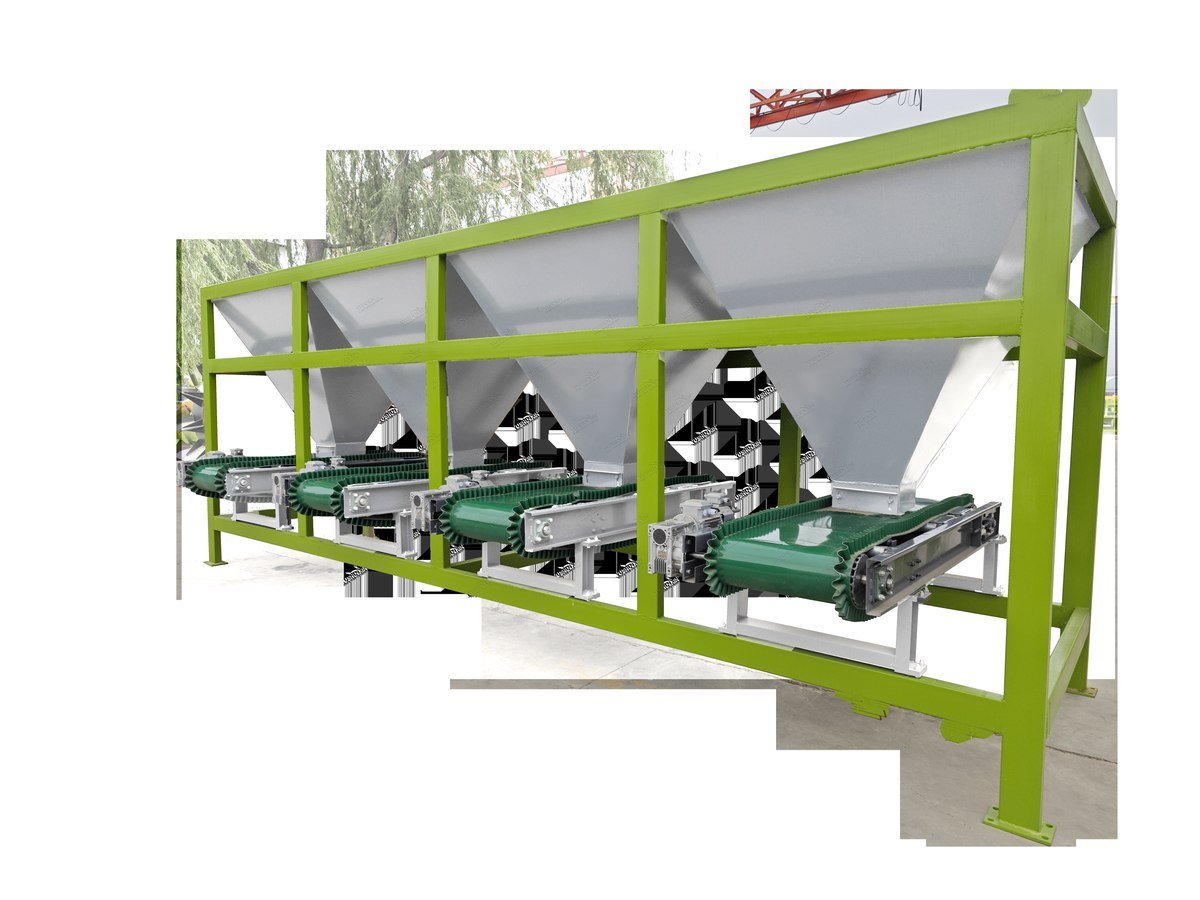
SXBC-3Automatic batching machineby modelby modelsilo 1.5×1.5 m—Silo 1.5 m³ · error ±0.2% · PLC control panel · belt 550 mm × 0.5 m · silo qty customizable
Static / dynamic dosingDosing systemsby modelby modelby model—Static parallel or continuous dynamic dosing per line

How to choose a model

Models are sized by throughput. Pick the model whose rated capacity is closest to your target output with 15–20% headroom. If your project falls between two models, our engineers will recommend the most economical option — oversizing is rarely the cheapest answer.

Key components

What the machine is made of

Core structure and sub-systems of the Sistema Automático de Dosificación — every part is selected for fertilizer-duty reliability.

Weighing & load cells

±0.5% class sensors for accurate dosing

PLC & touchscreen

Siemens-class control with recipe management

Feeders & conveyors

Screw, belt, bucket or disc feeding matched to flow

Silos & hoppers

Buffer storage with level control

Frame & guarding

Safety interlocks and clean layout

Configuration

Standard vs optional configuration

Standard configurationFull machine assembly, matched motor & reducer, operation manual, export packing
Stainless steel option304/316 contact parts for corrosive or water-soluble material
Control levelManual / semi-auto / Siemens PLC with recipe management
Branded componentsValue package (W/N motors, Guomao gearboxes, ZWZ bearings) or premium package (Siemens, SEW, SKF)
Voltage & frequency380V/50Hz standard; 415V, 440V/60Hz, 525V, 660V customized
Installation & utilities

What to prepare on site

Power supply

Installed drive by model; confirm voltage/frequency with our engineers

Footprint

Reference dimensions silo 1.5×1.5 m (per model); site layout confirmed before delivery

Operators

1 operator can manage the whole line

Site preparation

Stable 3-phase power; optional UPS for PLC; earthing per electrical drawing.

Spare parts

Recommended wear parts

We keep long-term stock for these consumables and ship them worldwide with any complete-line or spare-parts order.

Load cellsConveyor beltsReducer oil sealsProximity sensorsVFD units

View spare-parts & service support

In-depth buying guide

Sistema Automático de Dosificación: six decisions that determine your configuration

Work through these six angles before you request a quotation. Each angle ends with a 10-second check so you can confirm fit and give our engineers the right data the first time.

1. Cómo un sistema automático de dosificación mejora la precisión de fórmula y la trazabilidad de lotes

Un sistema automático de dosificación pesa cada ingrediente en el mezclador según una receta almacenada, en lugar de que un operador pese a mano. La diferencia es precisión y repetibilidad: el sistema pesa a una tolerancia definida, registra cada lote y cambia de receta con una selección en el panel. Para NPK y fertilizante soluble, es la diferencia entre un producto que coincide con la etiqueta y uno que falla el análisis. El sistema guarda decenas de recetas, de modo que una planta que produce muchos grados cambia en minutos en lugar de reiniciar básculas. Los registros de lote dan la trazabilidad del Certificado de Análisis.

Quick check #1

Díganos sus ingredientes, fórmulas y si necesita registros de lote para exportación, y configuraremos el sistema de pesaje y recetas.

2. Precisión de pesaje del sistema automático para la dosificación de materias primas

La precisión de pesaje es el núcleo de un sistema de dosificación, y se fija por la calidad de la célula de carga, el control de alimentación y la disposición de las básculas. Los ingredientes principales se pesan en básculas mayores con tolerancia gruesa, mientras que los microelementos necesitan microescalas dedicadas, porque una báscula principal no puede pesar con precisión una adición de 2 kg. La alimentación de cada tolva se ralentiza cerca del peso objetivo para evitar el rebasamiento, y el sistema comprueba el peso final antes de liberar el lote. Un error de 0,5% en los principales es visible en el análisis final.

Quick check #2

Dé su fórmula con la cantidad del ingrediente más pequeño, y especificaremos los tamaños de báscula y la precisión que cada ingrediente necesita.

3. Gestión de recetas y cambio de grado del sistema de dosificación para plantas multigrado

Una planta que produce muchos grados necesita gestión de recetas, no solo pesaje. El sistema guarda cada fórmula con sus ingredientes y tolerancias, y un operador cambia de grado seleccionando la receta. Esto acorta el cambio de una hora de ajuste manual a una selección en el panel, y elimina los errores de transcripción. El sistema también registra qué receta produjo cada lote, de modo que la planta sabe exactamente qué produjo y cuándo. Ese registro es la base tanto del control de calidad como del COA que ve el cliente.

Quick check #3

Díganos cuántos grados produce y con qué frecuencia cambia, y configuraremos el almacenamiento de recetas y el flujo de cambio.

4. Sistema automático de dosificación vs pesaje manual: economía de producción

El pesaje manual es más barato de comprar y más caro de operar. Es más lento, su precisión depende del operador y no produce un registro de lote útil. Un sistema automático cuesta más al inicio pero elimina la mano de obra de pesaje, fija la precisión y da los registros que exigen los sistemas de exportación y calidad. El retorno viene de menos lotes rechazados, menos sobreentrega de ingredientes caros y una línea más rápida. Para una planta que corre varias t/h o varios grados, la dosificación automática suele pagarse rápido; para una operación diminuta de una sola fórmula, la manual aún puede tener sentido.

Quick check #4

Comparta su producción, número de fórmulas y costo de mano de obra, y compararemos la dosificación manual y automática con el retorno.

5. Control PLC e integración del sistema de dosificación con el mezclador y el empaque

El sistema de dosificación no es una báscula aislada; forma parte del bucle de control que también corre el mezclador y la línea de empaque. El PLC secuencia el pesaje, libera el lote al mezclador, espera la mezcla y permite el siguiente ciclo, para que la línea no pueda descargar un segundo lote antes de que el mezclador esté listo. Este enclavamiento evita los derrames y lotes cortos. El mismo PLC registra la producción y las alarmas. Configuramos la dosificación, la mezcla y el empaque como un solo alcance de control.

Quick check #5

Envíe su disposición de mezclador y empaque, y definiremos el enclavamiento PLC entre dosificación, mezcla y empaque.

6. Configuración de tolvas y alimentadores del sistema de dosificación para polvos fluidos y con puenteo

El diseño de la tolva y el alimentador sigue al material. Los gránulos fluidos se dosifican fácilmente con una compuerta simple, mientras que los polvos finos puentean en la tolva y necesitan un agitador o un tornillo para mantener el flujo. El puenteo es la causa más común de errores de dosificación, porque una tolva que se cuelga hambrea la báscula y luego descarga un golpe. Seleccionamos la forma de la tolva, el revestimiento y el tipo de alimentador para la fluidez de cada ingrediente, y donde el material es corrosivo usamos partes de contacto de acero inoxidable.

Quick check #6

Díganos la fluidez de sus ingredientes y si algún polvo puentea, y especificaremos la tolva y el alimentador para cada uno.

Applications

Where it is used — and how to confirm it fits

This Sistema Automático de Dosificación fits when your project matches one of these use cases. Tell us your raw material, target capacity and moisture so we confirm the configuration before quoting:

Multi-element formulasBatch productionQuality traceability

Best suited for

  • Compound fertilizer plants
  • BB fertilizer plants
  • WSF plants

Where it is delivered

Global

Factory-direct pricing, short lead times and complete line integration — wherever your project is located.

Customization

Customization we can engineer

Standard machines use reliable, field-proven components. For projects that require specified brands, we offer factory-authorized component upgrade packages plus full electrical customization.

Options you can add

  • Special voltage & frequency (e.g. 380V/60Hz, 440V, 525V, 660V)
  • 304/316 stainless steel contact parts
  • Rubber or stainless liners for coating machines
  • Siemens PLC control with recipe management and batch logging
  • Matched inverter (VFD) packages for variable-speed dosing and conveying
  • Wire & cable supply for complete lines
  • CE-ready electrical components and documentation on request

Branded component packages

Branded Option 1

W/N motors · Guomao gearboxes · ZWZ bearings

+8–10%
Branded Option 2

Siemens motors · SEW gearboxes · SKF bearings

+12–15%

Price adjustments are reference ranges applied to the corresponding equipment scope. Special voltage / frequency and material-contact requirements are always customized.

Quality control

How we guarantee every machine

Quality is a process, not a label — every YUSHUNXIN machine passes the same five checkpoints before it leaves the factory.

1

Incoming material inspection

Steel plates, motors, reducers, bearings and electrical parts are checked against brand and specification on arrival.

2

Fabrication & welding inspection

Shell thickness, welding quality, alignment and surface finish are inspected at each station during fabrication.

3

Assembly & alignment check

Shafts, gears, rollers, frames and drives are aligned and checked before electrical hook-up.

4

No-load test run

Every machine is test-run no-load; speed, vibration, noise and temperature are recorded on the test sheet.

5

Packing & pre-shipment check

Export packing, spare-parts list and documents are double-checked, with photos/video before dispatch.

National fertilizer machinery quality certificationsMultiple patent certificates for new & efficient fertilizer equipmentCE-ready electrical & control components
Delivery & support

Packing, delivery and after-sales

Export packaging

Machines are packed for sea freight: steel-frame or plywood cases, anti-rust treatment, waterproof film and clear marking.

Worldwide delivery

FOB, CIF, CFR or door-to-door options; we prepare packing lists, commercial invoices and shipping marks for customs.

Installation & commissioning

Site drawings and assembly guidance are included; on-site engineer supervision is available for complete lines.

Operator training

Manual and video in your language, plus remote guidance via WhatsApp/email during commissioning.

Spare parts support

Long-term supply of wear parts — rollers, dies, blades, screens, nozzles, bearings, reducers, sensors, motors and more.

Warranty & after-sales

12-month machinery warranty and responsive after-sales support from our engineering team.

Price logic

Why the price varies — and how to get an accurate quote

We do not publish list prices because every fertilizer project is different. This is exactly what makes the difference:

Model & capacity

Larger capacity and heavier construction raise machine cost — but usually lower cost per ton.

Contact material

Carbon steel is standard; 304/316 stainless steel costs more but suits corrosive or food-grade material.

Automation level

Manual, semi-auto and full Siemens PLC control change both price and operating manpower.

Branded components

Standard brands, value package (+8–10%) or premium package (+12–15%) for motors, gearboxes and bearings.

Quantity & packaging

Single machines, complete lines, export packing and spare-parts kits are quoted separately.

Destination & lead time

Freight, port, customs documents and requested delivery time affect the final quotation.

FAQ

Questions buyers ask before inquiry

Can this Sistema Automático de Dosificación be customized for my project?
Yes. We can adapt voltage/frequency (e.g. 380V/60Hz, 440V, 525V), use 304/316 stainless contact parts, add Siemens PLC control, or supply branded components. Customization is confirmed in the technical proposal after you share your capacity, raw material and destination.
What information do I need for an accurate quotation?
Please provide: target model or capacity, raw material and moisture, quantity, destination country/port, voltage/frequency, customization needs (stainless steel, PLC, branded parts) and expected delivery time. With these, we can quote accurately within 24 hours (24/7).
What is the delivery time and how is it shipped?
Standard machines ship in about 15–30 days; complete lines and customized machines take longer depending on scope. All equipment is export-packed for sea freight with FOB/CIF/CFR or door-to-door options.
Do you provide installation guidance and training?
Yes — assembly drawings, manuals and video guidance are included, and our engineers support remote commissioning by WhatsApp/email. On-site supervision is available for complete lines.
Can I order this machine as part of a complete line?
Yes. This Sistema Automático de Dosificación is integrated into our complete production lines with matched batching, mixing, conveying, drying and packing equipment — one supplier, one guarantee.
Do you support branded components or OEM?
We offer two factory-authorized brand packages (value and premium international brands) plus electrical customization. For OEM orders, share your brand files, target market, quantity and packaging requirements.
Product gallery

Machine details & factory photos

Real equipment, parts and production photos from our factory.

Inquiry

Request a quotation

For an accurate quotation, please include

The more complete your information, the faster we can respond with a precise proposal.

  • Target model or capacity (t/h)
  • Raw material and moisture
  • Quantity (single machine / complete line)
  • Destination country & port
  • Voltage & frequency
  • Customization (stainless steel / PLC / branded)
  • Expected delivery time

Product Inquiry

Tell us about your project — we reply within 24 hours (24/7).

Fields marked * are required. Your inquiry goes directly to our engineering team.

Related

Related products

Static Parallel Dosing Machine

Static Parallel Dosing Machine

Model: SXAF-2030 / 2040Capacity: 1.0 m³ – 1.5 m³Power: 2.2+4+0.37 kW
Fertilizer Conveying Equipment

Fertilizer Conveying Equipment

Model: B500 / B600Capacity: 35–60 m³/h · lift ≤45 mPower: 3+0.75 kW
Automatic Feeding Machine & Silos

Automatic Feeding Machine & Silos

Model: SXAF-2030 / 2040Capacity: 1.0 m³ – 1.5 m³Power: 2.2+4+0.37 kW
Disc Feeder

Disc Feeder

Model: SXPJ-1600Capacity: 2–4 t/h – 3–5 t/hPower: 7.5 kW
error: Content is protected !!