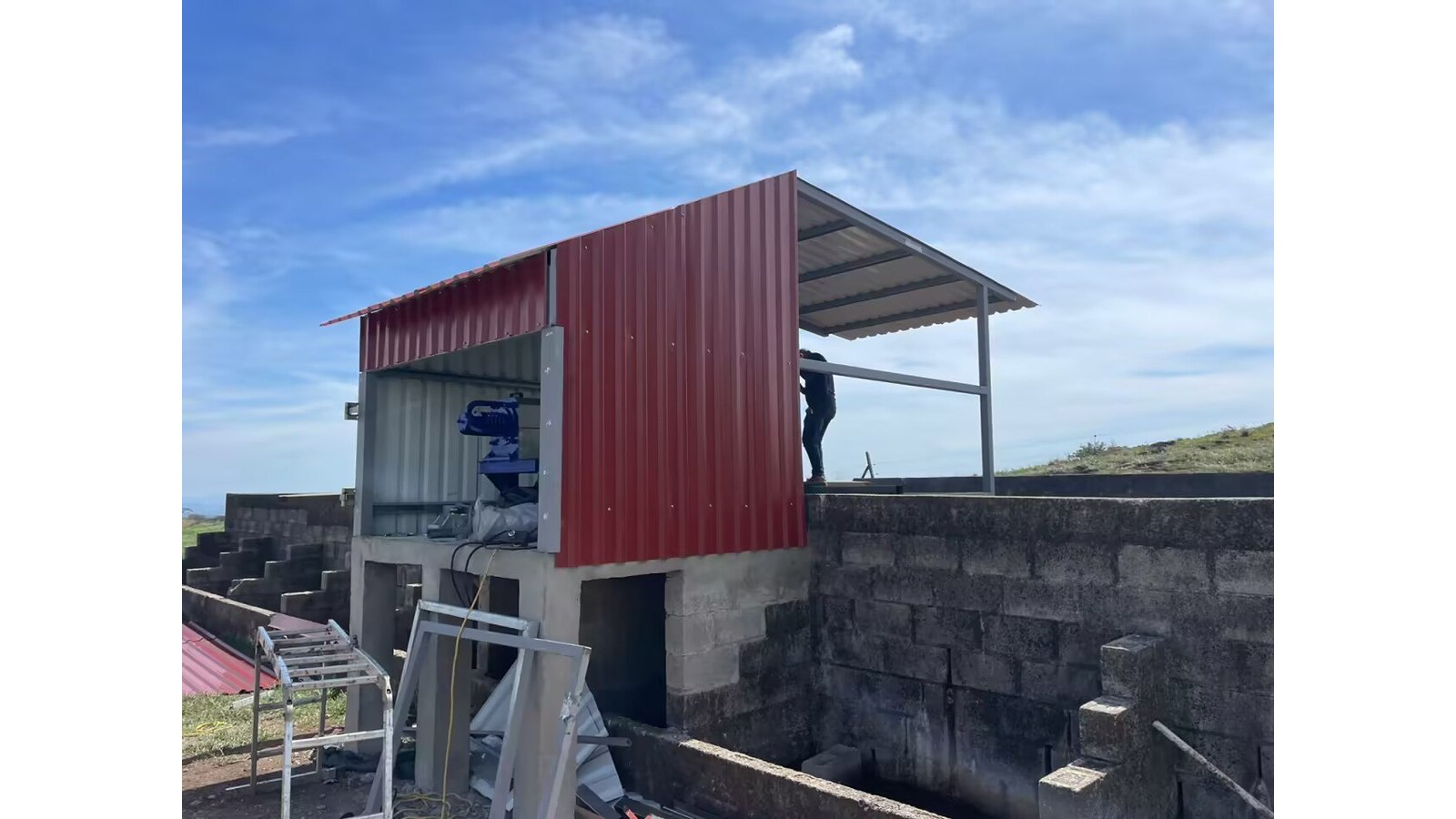
أنظمة الفصل الفيزيائي لمياه الصرف الحيوانية | YUSHUNXIN Fertilizer Machinery
اطلب قوائم الأسعار وعروض الأسعار عبر البريد نصدّر إلى أكثر من 60 دولة
القائمة
Home/Solutions/أنظمة الفصل الفيزيائي لمياه الصرف الحيوانية

أنظمة الفصل الفيزيائي لمياه الصرف الحيوانية

فصل فيزيائي صلب-سائل بمرحلتين لمزارع الخنازير والأبقار والدواجن — غربال مائل وفاصل دقيق عالي التردد وجهاز تجفيف ومكبس لولبي.

Southeast AsiaLatin AmericaAfricaMiddle EastEurope
Solution at a glance

أنظمة الفصل الفيزيائي لمياه الصرف الحيوانية

تقلل مجموعة YUSHUNXIN حمل المواد الصلبة العالقة في بداية خط المعالجة: غربال مائل يزيل الألياف الخشنة والجزيئات الكبيرة، وفاصل دقيق عالي التردد (مرجع 0.3 مم / شبكة 150) يلتقط المواد الصلبة الدقيقة عند 30–50 م³/ساعة، ومكبس لولبي يجفف المواد الصلبة المركزة. هذا فصل فيزيائي وتقليل للمواد الصلبة — وليس بديلاً عن معالجة بيولوجية أو كيميائية كاملة لمعايير التصريف.

وحدة فصل دقيق مرجعية 30–50 م³/ساعة

شبكة 304 فولاذ مقاوم، 0.3 مم / 150

اعتراض المواد الصلبة ~95% في الظروف المرجعية

حدود واضحة: فصل فيزيائي، وليس معالجة تصريف

Why This Line

Why choose this line

Livestock wastewater separation is one of the company's fastest-growing new lines and the honest front-end of manure management: reduce suspended-solids load, recover solids for composting, and shrink the biological or chemical treatment you still need. The engineering boundary is explicit — physical separation, not discharge treatment.

Reference 30–50 m³/h fine separation unit
0.3 mm / 150-mesh 304 stainless screen
~95% solids interception at reference conditions
Two-stage coarse + fine separation
Who this solution is for

Is this solution for you?

Read this first: the solution fits specific customers, scenarios and project stages. If you are not the target, the configuration and quote will not be right.

Suitable for

  • Pig, cattle and poultry farms facing high solids load in wastewater
  • Farms connecting manure solids to composting or organic fertilizer lines
  • Environmental projects that need a reliable front-end load reduction before biological treatment
  • Contractors integrating separation into existing treatment trains

Not suitable / confirm first

  • Customers expecting discharge-compliant water from separation alone (that is biological/chemical treatment scope)
  • Projects without flow, TS/SS data or a defined solids destination
  • Sites with no access for solids removal and dewatering disposal
The problems

What customers face before this solution

These are the real operating problems this line is designed to solve - and why they happen.

Typical problems

  • Raw wastewater carries high suspended solids that clog pumps, pipes and downstream treatment
  • Solids are not recovered, so nutrients and fiber that could feed composting are lost
  • Manual screening is labor-intensive and inconsistent
  • Fine particles pass coarse screens, overloading downstream biological treatment
  • Separated solids are too wet to compost or transport economically
  • Equipment corrodes and clogs because the system was not designed for manure characteristics

Why they happen

  • Only a coarse screen is installed, so fines pass through
  • No primary settling or fine separation stage matched to flow peaks
  • Solids are removed manually with no dewatering, so they are heavy and messy
  • Flow and TS content were never measured, so the system is sized on guesses
  • Dewatering and composting interfaces are not planned, so separated solids have no route
  • Carbon steel contact parts corrode in the aggressive liquid environment

Why a complete line, not single machines

Separation is a chain of particle-size reduction: coarse solids, fine suspended solids and bound water each need a different stage. A single screen or press cannot do all three. A two-stage physical system with dewatering is designed around your flow, TS and fiber profile, and it turns a wastewater problem into a recoverable solids stream.

Process

How the line works

1

التجميع والتجانس

مضخة روث وحزمة تحكم توفّران تدفقاً ثابتاً من الأحواض.

2

الفصل الخشن

غربال مائل يزيل الألياف والجزيئات الكبيرة لحماية الوحدات اللاحقة.

3

الفصل الدقيق

فاصل دقيق عالي التردد يلتقط المواد الصلبة الدقيقة (مرجع 0.3 مم).

4

التجفيف

مكبس لولبي يركز المواد الصلبة والحمأة برطوبة أقل.

5

الإخراج

يمكن تسميد المواد الصلبة؛ ويستمر السائل إلى معالجتك أو تخزينك.

Solution structure

What is inside the line

Each module solves one part of the chain. Open any module to see its parameters and options.

Configuration logic

Why we configure it this way

Equipment is not a list - it is a response to your conditions. This is how your conditions change the configuration:

When your project is...We configure...
High coarse solidsInclined coarse screen or drum screen as first stage
Fine suspended solidsHigh-frequency fine separator (0.3-0.5 mm) as second stage
Wet solids for compostingVolute screw press or screw dewaterer to reduce moisture
High flow variabilityEqualization tank + variable-speed pumps with flow control
Corrosive environmentStainless or coated contact parts and sealed bearings
Scenario differences

Different projects get different configurations

We do not apply one template to every customer. Here are three common scenarios and how the configuration changes.

Large pig farm

Focus: Reliable load reduction and solids recovery

Coarse screen + fine separator + screw press, solids to composting

Cattle farm with bedding

Focus: Fiber and grit handling

Heavy-duty screen + settling + dewatering with fiber-tolerant design

Integrated treatment project

Focus: Downstream protection

Two-stage separation sized to protect the biological plant

Implementation

From inquiry to commissioning

This is the delivery path we follow for every complete line project.

1

Confirm requirements

Raw materials, formula, capacity, bag size, utilities and site conditions are confirmed in a technical questionnaire.

2

Process design & layout

We produce a process flow, line layout and foundation drawings sized to your material data.

3

Quotation with scope

You receive a quotation with an itemized delivery scope - what is included and what is excluded.

4

Order & fabrication

Fabrication starts with progress updates; long-lead items are ordered first.

5

Factory testing

Machines are assembled and no-load tested; weighing and control systems are calibrated.

6

Export packing

Equipment is export-packed with anti-rust treatment and a packing list for customs.

7

Delivery & installation

Machines ship FOB/CIF/door-to-door; installation is supervised on site or via video guidance.

8

Commissioning & training

We commission the line, train your operators and stabilize process parameters.

9

Acceptance & after-sales

Acceptance is based on agreed metrics; spares and remote support continue after handover.

Pre-purchase checklist

What to prepare before requesting a quote

The better your information, the closer the first quote is to the final one. Prepare these items:

  • Animal type and housing/collection method
  • Wastewater flow in m3/h or m3/day and peak factor
  • TS/SS content and fiber/grit characteristics (or samples)
  • Target solids removal and downstream liquid destination
  • Solids destination (composting, transport, disposal) and moisture target
  • Site power, space and access
  • Environmental or discharge requirements for context

Request a separation system scoping

To scope your separation system, send: animal type and collection method, flow (m3/h) and peaks, TS/SS data or samples, target solids removal, solids destination and site conditions.

Product Inquiry

Tell us about your project — we reply within 24 hours (24/7).

Fields marked * are required. Your inquiry goes directly to our engineering team.

Risk boundaries

When this solution does not apply

Honest boundaries make a proposal credible. These conditions must be confirmed before the configuration is valid:

  • This is a physical separation system: it reduces solids load, it does not achieve discharge compliance by itself
  • Performance depends on real flow and TS data; without samples, quotes are preliminary only
  • High-fiber or high-grit streams may need heavier-duty internals
  • Solids disposal and composting are customer scope, but we design the interface
Effect verification

How we verify the solution works

Performance is checked with measurable indicators, not adjectives. These are the acceptance checks for this type of line:

IndicatorHow it is verified
SS removalMeasure TS/SS before and after each stage over a full day
Dewatered solids moistureCheck solids moisture at the press outlet
Hydraulic capacityRecord m3/h at design and peak flow
UptimeTrack clogging events and cleaning time over the first month
Delivery scope

What is included - and what is not

Compare quotes on the same scope. This is exactly what the project price covers.

Included

  • Screens, separators, dewatering press, pumps and control as one system
  • Flow and solids design basis
  • Layout, installation guidance, commissioning and training
  • Spare parts and after-sales support

Not included (separate scope)

  • Biological or chemical treatment stages (we size the interface for them)
  • Civil works, lagoons and disposal logistics
  • Composting equipment (separate scope; we coordinate)
  • Environmental permits
Scenario FAQ

Questions buyers ask about this solution

هل يجعل هذا النظام الماء مطابقاً لمعايير التصريف؟
لا. يقوم بفصل فيزيائي صلب-سائل وتقليل المواد الصلبة العالقة. لتحقيق معايير التصريف يلزم معالجة بيولوجية أو كيميائية لاحقة — نصمم نظامنا وفق ذلك.
ما المعلومات اللازمة للتسعير؟
نوع الحيوان، طريقة التجميع، التدفق (م³/ساعة)، محتوى TS/SS، الألياف والرمل، هدف الإزالة، وجهة المواد الصلبة والسائل، وظروف الموقع.
What solids reduction can I expect?
At reference conditions the fine separator intercepts about 95% of suspended solids at 0.3 mm / 150 mesh. Your actual result depends on flow, fiber and grit content — we confirm with a sample-based engineering assessment.
Can the separated solids feed my compost line?
Yes. Dewatered solids can be co-composted with bedding or straw, turning a waste stream into organic-fertilizer feedstock — many customers pair this system with an organic fertilizer line.
What solids removal can I expect?
A well-designed two-stage physical system typically removes 60-85% of suspended solids depending on particle size and fiber content. We confirm the expected range after your TS/SS data - and we never claim discharge compliance.
Can the separated solids go into an organic fertilizer line?
Yes - that is the recommended route. Dewatered solids at the right moisture feed composting, and the organic line turns them into granular or powder fertilizer.
Do I need a lagoon before the separator?
An equalization or settling structure is strongly recommended for flow peaks and solids load stability. We can design the interface and advise on sizing.
Deep-dive guide

Ten angles buyers must understand before investing

Each angle is a self-contained chapter with a line illustration. Read the ones that match your project stage, then send us the data each angle asks for.

1. Livestock wastewater feedstock: solids, fiber and the front-end load

Livestock wastewater is a high-solids, high-fiber stream that must be reduced before biological treatment, because the solids and fiber would otherwise overload the downstream stages. The front-end separation removes the large and medium solids first, which is the physical stage that makes the rest of the treatment work. The solids content and the fiber type decide the screen and the dewatering duty, and we characterise them before configuring the system. A system built for a pig farm behaves differently from one for a dairy, so the feedstock is the first input.
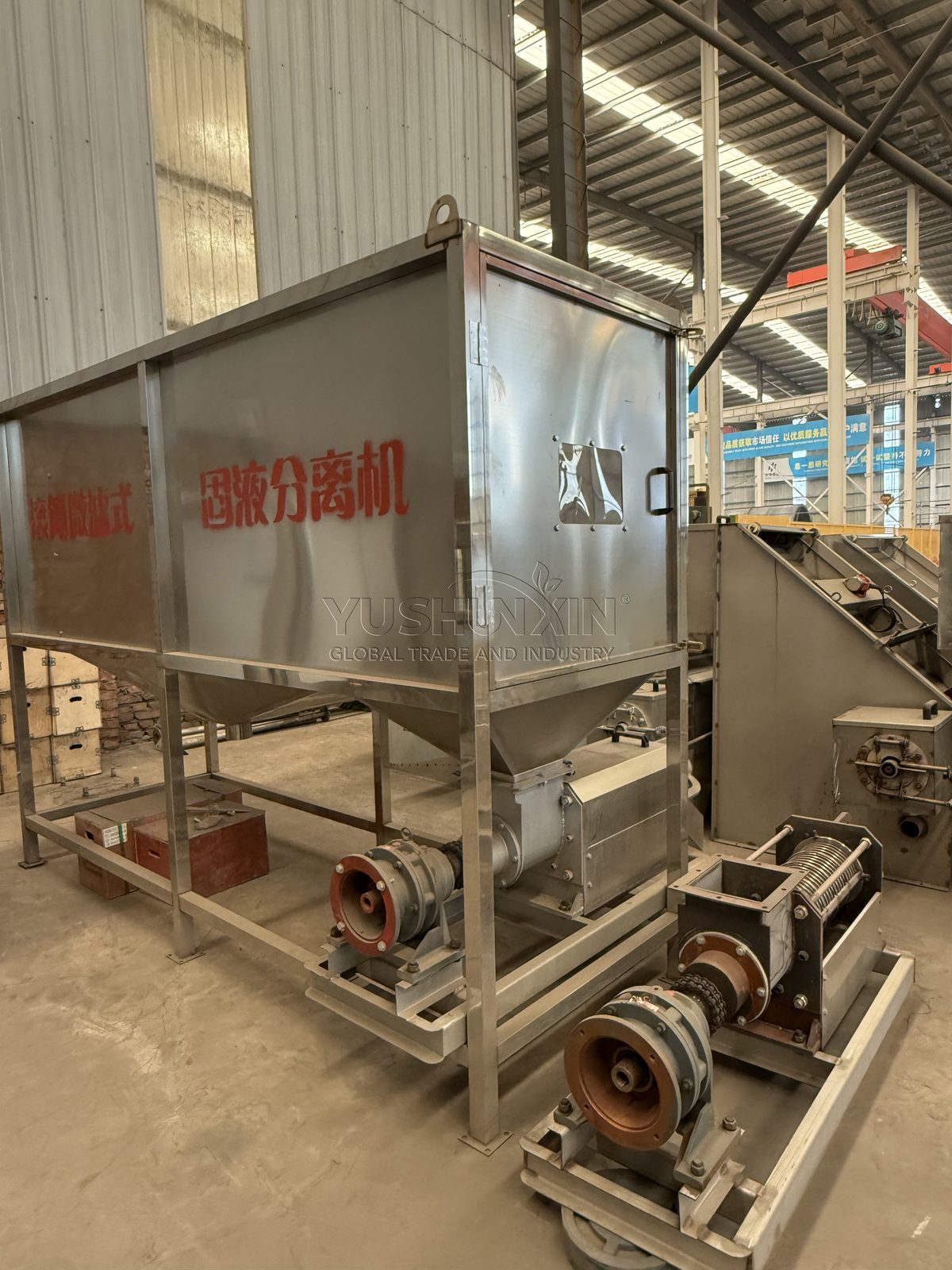
Livestock wastewater feedstock: solids, fiber and the front-end load

2. Coarse screening for fiber and large particle removal

The coarse stage removes the long fiber and the large particles that would blind or wear the fine stages, using an inclined screen or a vibrating separator. This stage is the cheapest insurance on the front end, because it protects the dewatering machine and the screw press downstream. The mesh is set for the fiber length and the particle size, and the solids slide off the screen for collection. A front end without this coarse stage wears the fine stages fast.

Coarse screening for fiber and large particle removal

3. Dewatering machine for large and medium solids

The dewatering machine uses high-frequency vibration to separate the large and medium solids from the liquid, reducing the suspended-solids load at the front end. The vibration keeps the screen from blinding, and the solids discharge dry enough to handle. This is the workhorse of the physical separation, and it is sized for the daily wastewater volume and the solids load. The output quality sets the load on the next stage.

Dewatering machine for large and medium solids

4. Fine separation and screw press for sludge dewatering

After the coarse and medium solids are removed, the fine separator and the volute screw press finish the liquid and dewater the concentrated sludge. The screw press squeezes the thin sludge into a handleable cake, often without polymer, and the self-cleaning volute runs continuously. This is the finishing stage that turns the remaining fines into a solid the farm can use and a liquid that is ready for the next treatment step.

Fine separation and screw press for sludge dewatering

5. Two-stage and three-stage configuration for solids load reduction

The physical separation is staged, because one screen cannot do the whole job. A two-stage system removes the coarse and the fine solids, and a three-stage system adds the screw press for the sludge. The stages are sized together so the solids load decreases at each step and no stage is overloaded. We configure the stages for the wastewater composition, and the staging is what gets the most water out with the least wear.

Two-stage and three-stage configuration for solids load reduction

6. Separated solids use and liquid quality for downstream treatment

The separated solids are a product, not a disposal problem: they can be composted or used as a soil amendment, and the clarified liquid is ready for biological treatment or land application. The dryness and the liquid quality are stated against the feed, because the separation result follows the manure type. This is the economic point of the front-end separation, and it is why the stages are configured for the farm's use of both fractions.

Separated solids use and liquid quality for downstream treatment

7. Pump and control package for stable slurry transfer

The separation system depends on a steady slurry feed, and the manure pump and control package moves the slurry from the collection to the separator with level, blockage and overload protection. The cutting pump handles the fiber and the solids, and the control cabinet manages the start-stop interlock. A stable feed is what keeps the screens and the press working, and the pump package is sized with the separation stages.

Pump and control package for stable slurry transfer

8. Corrosion resistance and wet-duty construction

The whole separation system runs in a wet, corrosive manure environment, so the contact parts are selected for corrosion resistance. The screens, the screw and the pump are built for the ammonia and the moisture, and the frames are coated for the shed environment. This material discipline is what keeps the system running for years rather than rusting through, and it is stated in the quotation.

Corrosion resistance and wet-duty construction

9. Footprint, utilities and farm layout for separation systems

The separation system is compact and is laid out at the collection point or ahead of the biological treatment, with the feed, the liquid outlet and the solids collection in one flow. The utilities - power for the screens and the press - are modest, and the footprint follows the daily volume. We draw the layout for the farm's existing channels and sheds, so the system drops into the current flow rather than forcing a rebuild.

Footprint, utilities and farm layout for separation systems

10. Commissioning and acceptance for livestock wastewater separation

Commissioning proves the separation with the actual farm wastewater, not a clean sample. We run the system to the agreed solids removal, check the separated solids dryness and the liquid quality against the acceptance list, and train the farm staff on the screens and the press. The acceptance criteria are measurable, and after handover we keep the wear-parts list and remote support, because a front end that stops in the rainy season floods the farm.

Commissioning and acceptance for livestock wastewater separation
error: Content is protected !!