خط تحبيب الكربون الأسود | YUSHUNXIN Fertilizer Machinery
اطلب قوائم الأسعار وعروض الأسعار عبر البريد نصدّر إلى أكثر من 60 دولة
القائمة
Home/Solutions/خط تحبيب الكربون الأسود

خط تحبيب الكربون الأسود

حوّل كربون التحلل الحراري والمساحيق المعدنية إلى حبيبات قابلة للتسويق — تحبيب منخفض الطاقة مع تحكم بالغبار.

Global pyrolysis & environmental market
Solution at a glance

خط تحبيب الكربون الأسود

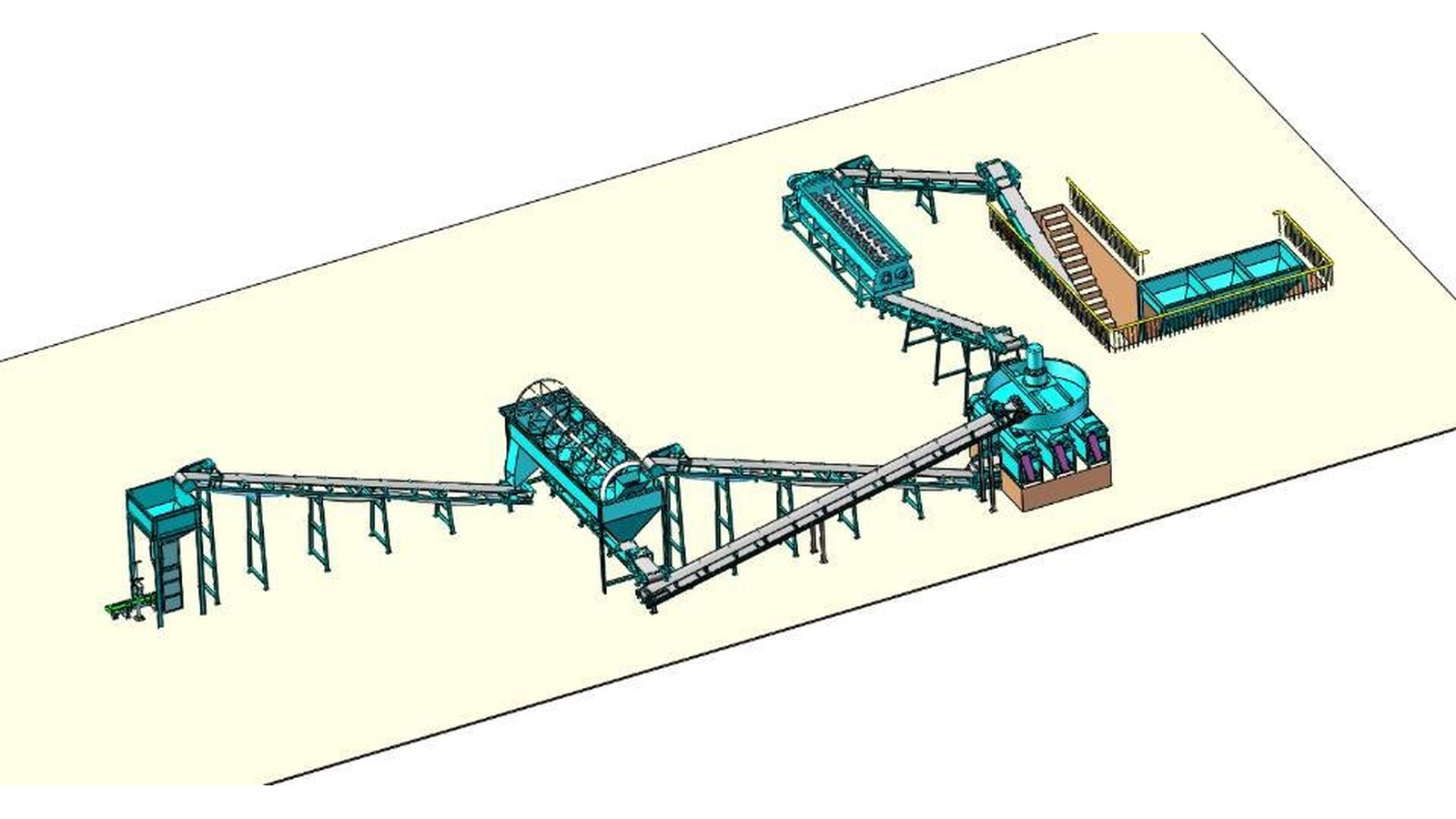
دعماً لمحفظة مجموعة YOTO البيئية، يحوّل خط YUSHUNXIN كربون التحلل الحراري إلى حبيبات مستقرة عبر مسار البكرتين أو القرص، بما يشمل الجرعات والخلط والتحبيب والغربلة والتعبئة.

تحبيب كربون التحلل الحراري

عملية مع تحكم بالغبار

تحبيب جاف بالبكرتين

تكامل بيئي على مستوى المجموعة

Why This Line

Why choose this line

Carbon black granulation supports the YOTO Group's pyrolysis and environmental portfolio — one of the company's declared growth tracks. It turns dusty pyrolysis carbon black into stable, dust-controlled granules that are easier to handle, transport and sell.

Low-energy dry granulation route
Dust-controlled material transfer
Screening & recycle integration
Group-level pyrolysis & environmental synergy
Who this solution is for

Is this solution for you?

Read this first: the solution fits specific customers, scenarios and project stages. If you are not the target, the configuration and quote will not be right.

Suitable for

  • Tire pyrolysis and carbon black recyclers converting fine carbon black into saleable granules
  • Carbon black producers and traders needing dust-free handling and densification
  • Environmental projects processing carbon black from pyrolysis plants
  • Companies integrating granulation with bagging for the rubber, pigment and ink markets

Not suitable / confirm first

  • Projects without a defined carbon black quality target (ash, sulfur, pH, particle size)
  • Customers expecting standard fertilizer equipment to handle untreated pyrolysis carbon black without modification
  • Sites without dust collection and explosion-safety review for fine carbon dust
The problems

What customers face before this solution

These are the real operating problems this line is designed to solve - and why they happen.

Typical problems

  • Pyrolysis carbon black is extremely fine and dusty, causing material loss and hazardous working conditions
  • Loose carbon black is difficult to dose, convey and pack accurately
  • Granules from standard granulators are weak or dusty because binder and moisture are not controlled
  • Carbon black clogs standard conveying and filling equipment
  • No stable granule size, so customers reject inconsistent product
  • Explosion risk from carbon dust is not addressed in design

Why they happen

  • Particle size and surface chemistry of pyrolysis carbon black differ from standard fertilizer powders
  • Binder selection and dosing are not matched to the carbon black properties
  • Conveying is open or uses equipment that allows dust accumulation
  • No moisture conditioning before granulation
  • Granulation, drying and screening are not balanced as one process
  • No ATEX-style dust control and grounding review

Why a complete line, not single machines

Carbon black granulation is a specialty line, not a generic fertilizer line. The binder system, moisture conditioning, granulator type, drying, screening and dust handling must be engineered together for this specific material. A single granulator without the conditioning and dust chain will produce dusty, weak granules and a hazardous plant.

Process

How the line works

1

Metering & Dosing

Pyrolysis carbon black is metered from storage with dust control at transfer points.

2

Mixing & Conditioning

Mixer conditions feedstock and binder for consistent granule quality.

3

Dry Granulation

Double-roller extrusion compacts material into granules with low energy demand.

4

Screening & Recycle

Rotary screener classifies product; off-size material returns to the circuit.

5

Packing

Automatic bagging or ton-bag packing completes the line.

Solution structure

What is inside the line

Each module solves one part of the chain. Open any module to see its parameters and options.

Configuration logic

Why we configure it this way

Equipment is not a list - it is a response to your conditions. This is how your conditions change the configuration:

When your project is...We configure...
Fine pyrolysis carbon blackHigh-shear or disc granulation with matched binder dosing and moisture conditioning
Dust controlEnclosed conveying, negative-pressure de-dusting and grounding
Market quality (rubber/ink)Controlled granule size range, low fines, optional densification
Explosion safetyDust-tight equipment, pressure relief and grounding review with your site EHS
High throughputMulti-unit granulation trains with automatic bagging
Scenario differences

Different projects get different configurations

We do not apply one template to every customer. Here are three common scenarios and how the configuration changes.

Tire pyrolysis operator

Focus: Convert dusty by-product to saleable granules

Conditioning + granulation + drying + screening + bagging

Carbon black trader

Focus: Consistent granule quality and low fines

Tight size control + dust-free packing + QC sampling

Ink/pigment producer

Focus: Specified particle behavior

Process validation + customized binder and granulation parameters

Implementation

From inquiry to commissioning

This is the delivery path we follow for every complete line project.

1

Confirm requirements

Raw materials, formula, capacity, bag size, utilities and site conditions are confirmed in a technical questionnaire.

2

Process design & layout

We produce a process flow, line layout and foundation drawings sized to your material data.

3

Quotation with scope

You receive a quotation with an itemized delivery scope - what is included and what is excluded.

4

Order & fabrication

Fabrication starts with progress updates; long-lead items are ordered first.

5

Factory testing

Machines are assembled and no-load tested; weighing and control systems are calibrated.

6

Export packing

Equipment is export-packed with anti-rust treatment and a packing list for customs.

7

Delivery & installation

Machines ship FOB/CIF/door-to-door; installation is supervised on site or via video guidance.

8

Commissioning & training

We commission the line, train your operators and stabilize process parameters.

9

Acceptance & after-sales

Acceptance is based on agreed metrics; spares and remote support continue after handover.

Pre-purchase checklist

What to prepare before requesting a quote

The better your information, the closer the first quote is to the final one. Prepare these items:

  • Carbon black source and production process (pyrolysis, furnace, thermal)
  • Ash, sulfur, pH, particle size and moisture of the material
  • Target granule size, strength and fines tolerance
  • Capacity in t/h and operating hours
  • Binder preference and availability
  • Dust/explosion safety requirements for your site
  • Packing and destination market

Request carbon black granulation validation

To validate your carbon black line, send: material source and process, ash/sulfur/pH/particle data or samples, target granule specs, capacity, binder availability and site safety requirements.

Product Inquiry

Tell us about your project — we reply within 24 hours (24/7).

Fields marked * are required. Your inquiry goes directly to our engineering team.

Risk boundaries

When this solution does not apply

Honest boundaries make a proposal credible. These conditions must be confirmed before the configuration is valid:

  • Granulation parameters are material-specific; process validation with samples is required before performance guarantees
  • Explosion safety is a joint responsibility - we design dust-tight equipment and you complete the site ATEX review
  • Ash and sulfur content affect granule quality and may limit some markets
  • Binder cost is a recurring operating cost; we help you compare options
Effect verification

How we verify the solution works

Performance is checked with measurable indicators, not adjectives. These are the acceptance checks for this type of line:

IndicatorHow it is verified
Granule strengthCompression or drop test on sampled granules
Size distributionSieve analysis across a full shift
Fines/dustMeasure fines after screening and dust collector loading
ThroughputRecord t/h at design conditions
SafetyVerify dust-tightness and grounding points in the pre-commissioning walk-down
Delivery scope

What is included - and what is not

Compare quotes on the same scope. This is exactly what the project price covers.

Included

  • Conditioning, granulation, drying, screening, conveying, dust collection and bagging
  • Process validation support with material samples
  • Layout, installation, commissioning and training
  • Spare parts and documentation

Not included (separate scope)

  • Pyrolysis reactor and upstream carbon black handling
  • Binder supply and cost
  • Site ATEX certification and third-party safety audit
  • Civil works and utilities
Scenario FAQ

Questions buyers ask about this solution

Why granulate carbon black at all?
Raw pyrolysis carbon black is dusty and difficult to handle, transport and dose. Granulation improves flowability, reduces dust loss and makes the material a marketable, specification-friendly product.
Which granulator suits carbon black?
Double-roller dry extrusion is the typical route for carbon black because it avoids drying energy and works with low-moisture feedstock. The final machine and binder are confirmed by a feedstock trial.
Can you handle wet or high-ash carbon black?
Moisture and ash content affect the binder and compaction settings. Share a feedstock sample and target granule size, and we will engineer the conditioning and granulation stages to match.
Can you test my carbon black before I invest?
Yes - we recommend sending 5-20 kg samples so we can validate binder, moisture and granulation parameters before you commit to the full line.
Is the line explosion-proof?
We design dust-tight equipment, grounding and dust collection for carbon black, and we document the safety basis. Site-level ATEX classification and certification are completed with your local authority.
Can the same line handle different carbon black grades?
Grades with similar particle size and surface chemistry can share a line with parameter changeover. Very different grades may need separate binder recipes and cleaning between runs.
Deep-dive guide

Ten angles buyers must understand before investing

Each angle is a self-contained chapter with a line illustration. Read the ones that match your project stage, then send us the data each angle asks for.

1. Carbon black feedstock characterisation for granulation

Carbon black granulation turns the fine, low-bulk-density carbon black powder into a denser, dust-free granule that is easier to handle and transport. The feedstock's ultra-fine particle size and low density are what make it hard to granulate, because the powder dusts heavily and does not wet easily. We characterise the powder before configuring the line, because the mixer, the granulator and the dust system are all sized from it. This is the variable no downstream machine can correct.
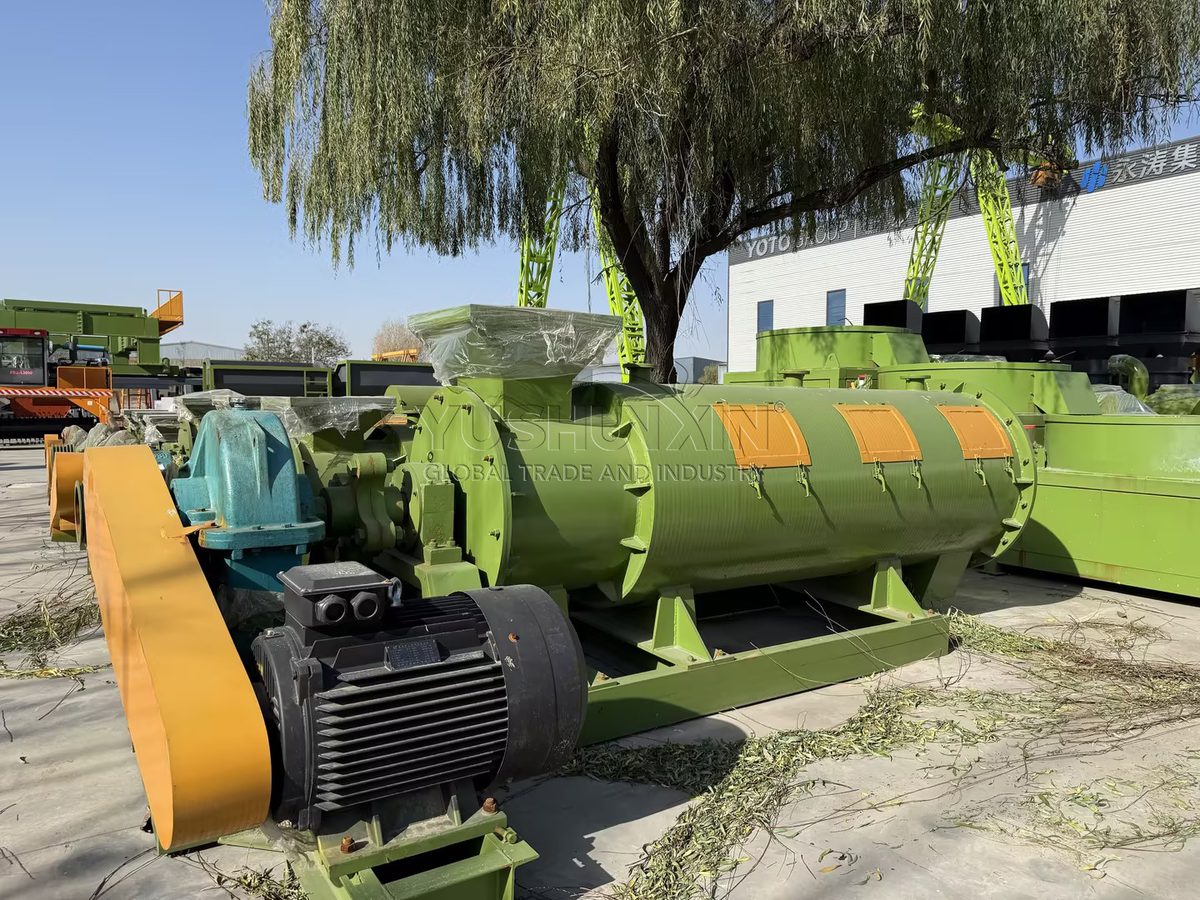
Carbon black feedstock characterisation for granulation

2. Dust control and containment for carbon black handling

Carbon black is extremely dusty and stains everything it touches, so the line is built for containment. The receiving, conveying and granulation stages are enclosed, and the dust collection is sized for the ultra-fine powder with the collected dust returned to the process. This is both a product-recovery and a plant-hygiene measure, and it is the single most important design decision on a carbon black line. A line that does not contain the dust cannot operate cleanly.

Dust control and containment for carbon black handling

3. Mixing and wetting for carbon black granule formation

Carbon black powder is granulated by wetting and mixing, because the dry powder has no natural binding. The mixer wets the powder to the narrow moisture band and kneads it into a granulation-ready mass, and the wetting is controlled so the powder balls without becoming paste. This stage is where the fine, dusty powder becomes a workable granulation feed, and it is specified for the carbon black's low density and high surface area.

Mixing and wetting for carbon black granule formation

4. Granulation route for carbon black: pin mixer and pelletizer

Carbon black is typically granulated in a pin mixer or a pelletizer, because the ultra-fine powder needs the kneading action that a pin mixer provides. The route is a low-energy mechanical granulation, and the granule size is set by the residence and the wetting. We select the granulation route for the carbon black grade and the granule the customer buys, and the route is a capital decision that tuning cannot fix.

Granulation route for carbon black: pin mixer and pelletizer

5. Drying and cooling carbon black granules to handling stability

The wetted carbon black granules are dried to the storage-stable moisture and cooled before screening and packing, because a wet granule cakes and a hot granule re-dusts. The dryer is sized for the granule moisture and the powder's sensitivity, and the cooler brings the granules down for handling. The drying and cooling are one heat balance, and we size them as a pair.

Drying and cooling carbon black granules to handling stability

6. Screening and recycle for carbon black granule size

The screen classifies the carbon black granules and returns the undersize to the granulator as recycle, which stabilises the granulation and keeps the size uniform. The recycle provides the nuclei the new granules grow on, and the ratio is balanced in the process design. A well-balanced recycle keeps the product band tight, while a poorly balanced one consumes capacity in re-circulation.

Screening and recycle for carbon black granule size

7. Packing and dust-free bagging for carbon black granules

The carbon black granules are packed in a dust-controlled bagging line, because the product must leave the plant without releasing the dust it was granulated to contain. The packing machine fills and seals the bags with dust extraction at the fill point, and the checkweigher verifies the weight. This is the stage where the granulation's purpose is realised - a dust-free, handleable product.

Packing and dust-free bagging for carbon black granules

8. Safety and emission basis for carbon black processing

Carbon black dust is both a respiratory hazard and a combustible risk, so the line is built with dust collection, grounding and the emission basis set with the site permit. The enclosed handling and the dust system are part of the safety design, not an add-on. We state the emission and safety basis so the plant operates inside its permit, and the buyer's permit determines the final interfaces.

Safety and emission basis for carbon black processing

9. Investment and operating cost for carbon black granulation

The investment for a carbon black line is driven by the dust containment and the granulation route, and the operating cost is dominated by energy for drying and the wear on the mixer and the granulator. The ultra-fine powder is the cost driver, because it demands the enclosed handling. We publish the cost guide and itemise the quotation, so the buyer sees where the money goes.

Investment and operating cost for carbon black granulation

10. Commissioning and acceptance for carbon black granulation

Commissioning proves the line with the actual carbon black feed. We run to the agreed output, check the granule size and the dust level against the acceptance list, and train the operators on the wetting and the containment. The acceptance criteria are measurable, and after handover we keep the wear-parts list and remote support, because a carbon black line that dusts or stops is a plant-wide problem.

Commissioning and acceptance for carbon black granulation
error: Content is protected !!