خط تحبيب الأسمدة المعدنية | YUSHUNXIN Fertilizer Machinery
اطلب قوائم الأسعار وعروض الأسعار عبر البريد نصدّر إلى أكثر من 60 دولة
القائمة
Home/Solutions/خط تحبيب الأسمدة المعدنية

خط تحبيب الأسمدة المعدنية

تحبيب جاف للمساحيق المعدنية والزيوليت والمواد الخام المعدنية دون طاقة تجفيف عالية.

Southeast AsiaAfricaLatin America
Solution at a glance

خط تحبيب الأسمدة المعدنية

للأسمدة المعدنية ومحسّنات التربة، تقدم YUSHUNXIN مسارات ضغط جاف بالبكرتين وتحبيباً قرصياً يتجنبان طاقة التجفيف العالية ويناسبان المواد الخام المعدنية المسحوقة.

تحبيب جاف منخفض الطاقة

معالجة الزيوليت والمساحيق المعدنية

غربلة وتكامل إعادة التدوير

تعبئة حسب المواصفات

Why This Line

Why choose this line

Mineral fertilizer and soil-amendment granulation is a company growth track that turns mineral powders, zeolite and ore-based materials into handleable granules without high drying energy — opening low-cost production for regional mineral fertilizer brands.

No/low drying energy route
Zeolite & ore-based powder handling
Screening & recycle integration
Binder system engineered per material
Who this solution is for

Is this solution for you?

Read this first: the solution fits specific customers, scenarios and project stages. If you are not the target, the configuration and quote will not be right.

Suitable for

  • Producers granulating zeolite, bentonite, dolomite, limestone and other mineral powders
  • Slow-release and soil-conditioner brands needing consistent granules
  • Mining and mineral processors adding value to fine powder by-products
  • Organic-mineral fertilizer producers blending mineral powders with organic inputs

Not suitable / confirm first

  • Projects needing chemical granulation with high moisture and drying (use NPK wet route)
  • Customers without a defined target particle size and strength
  • Single-machine needs (a disc granulator alone) - see product pages
The problems

What customers face before this solution

These are the real operating problems this line is designed to solve - and why they happen.

Typical problems

  • Mineral powders are fine and abrasive, wearing out standard fertilizer equipment quickly
  • Granules are weak or dusty without the right binder and moisture control
  • Drying high-moisture mineral granules is energy-intensive and slow
  • Granule size distribution is inconsistent, causing customer complaints
  • Abrasive dust damages bearings, screws and seals
  • Standard fertilizer lines are over-engineered for simple dry minerals, raising cost

Why they happen

  • Equipment is selected from a general fertilizer catalog without wear review
  • Binder and moisture are not tuned to the mineral's particle surface
  • A wet granulation route is chosen where dry compaction would be cheaper
  • No screening loop, so fines and oversize are not returned
  • Wear parts are not hardened or easily replaceable
  • Line design does not match the mineral's specific density and flow behavior

Why a complete line, not single machines

Mineral granulation is a wear- and binder-engineering problem. The right route (disc, roller compaction or extrusion) depends on the mineral's plasticity, moisture and target granule. A complete line matches conditioning, granulation, screening and handling to the mineral, so granules are consistent and the equipment survives abrasive dust.

Process

How the line works

1

Feeding & Metering

Mineral powder is metered from silos or bag-dumping stations.

2

Crushing / Grinding (Optional)

Lumps and coarse fractions are reduced before mixing.

3

Mixing with Binder

Binder and additives are homogenized for consistent granulation.

4

Dry Granulation

Double-roller compaction or disc granulation forms granules with minimal drying.

5

Screening & Packing

Classification, recycle of fines and automatic packing.

Solution structure

What is inside the line

Each module solves one part of the chain. Open any module to see its parameters and options.

Configuration logic

Why we configure it this way

Equipment is not a list - it is a response to your conditions. This is how your conditions change the configuration:

When your project is...We configure...
Dry, non-plastic mineralsDouble-roller compaction with dynamic batching - no drying required
Moisture-tolerant mineralsDisc or drum granulation with matched binder and low-temperature drying
High abrasionHardened wear plates, sealed bearings and easily replaceable liners
Tight size rangeScreening loop with fines and oversize return
Low energy requirementDry route prioritized; drying only when granule strength requires it
Scenario differences

Different projects get different configurations

We do not apply one template to every customer. Here are three common scenarios and how the configuration changes.

Zeolite producer

Focus: Consistent granules, low dust

Roller compaction + screening loop + bagging

Soil conditioner brand

Focus: Organic-mineral blends

Batching + gentle granulation + drying/cooling as required

Mining by-product valorization

Focus: Turn fine powder into saleable granules

Validation-first design with hardened equipment

Implementation

From inquiry to commissioning

This is the delivery path we follow for every complete line project.

1

Confirm requirements

Raw materials, formula, capacity, bag size, utilities and site conditions are confirmed in a technical questionnaire.

2

Process design & layout

We produce a process flow, line layout and foundation drawings sized to your material data.

3

Quotation with scope

You receive a quotation with an itemized delivery scope - what is included and what is excluded.

4

Order & fabrication

Fabrication starts with progress updates; long-lead items are ordered first.

5

Factory testing

Machines are assembled and no-load tested; weighing and control systems are calibrated.

6

Export packing

Equipment is export-packed with anti-rust treatment and a packing list for customs.

7

Delivery & installation

Machines ship FOB/CIF/door-to-door; installation is supervised on site or via video guidance.

8

Commissioning & training

We commission the line, train your operators and stabilize process parameters.

9

Acceptance & after-sales

Acceptance is based on agreed metrics; spares and remote support continue after handover.

Pre-purchase checklist

What to prepare before requesting a quote

The better your information, the closer the first quote is to the final one. Prepare these items:

  • Mineral type, particle size, hardness and moisture
  • Target granule size, strength and dust tolerance
  • Capacity in t/h and operating hours
  • Binder availability and cost
  • Energy availability (drying route) and site utilities
  • Destination market and packing requirements

Request a mineral granulation assessment

To assess your mineral granulation project, send: mineral type, particle size, hardness, moisture, target granule specs, capacity, binder options and site utilities.

Product Inquiry

Tell us about your project — we reply within 24 hours (24/7).

Fields marked * are required. Your inquiry goes directly to our engineering team.

Risk boundaries

When this solution does not apply

Honest boundaries make a proposal credible. These conditions must be confirmed before the configuration is valid:

  • Granule strength depends on the mineral-binder combination; validation with samples is required before guarantees
  • Abrasive minerals increase wear-part consumption - we specify hardened parts and realistic maintenance intervals
  • Some minerals are hygroscopic and require dry storage outside equipment scope
  • Drying energy can dominate cost for wet routes; we present the dry alternative first
Effect verification

How we verify the solution works

Performance is checked with measurable indicators, not adjectives. These are the acceptance checks for this type of line:

IndicatorHow it is verified
Granule strength and sizeDrop/compression test and sieve analysis per shift
Fines contentMeasure after screening and at the bagger
Wear-part lifeTrack liner and roller wear over the first 500 operating hours
ThroughputRecord t/h at design conditions
Energy per tonCompare kWh/t for wet vs dry route options
Delivery scope

What is included - and what is not

Compare quotes on the same scope. This is exactly what the project price covers.

Included

  • Batching, conditioning, granulation, screening, conveying and bagging
  • Wear-engineered contact parts
  • Layout, installation, commissioning and training
  • Spare parts and after-sales support

Not included (separate scope)

  • Binder supply
  • Mining, milling and upstream powder processing
  • Civil works and utilities
  • Third-party product certification
Scenario FAQ

Questions buyers ask about this solution

Why choose dry granulation for minerals?
Dry routes avoid the drying drum and its energy cost, which is usually the largest operating expense in mineral granulation. Double-roller compaction is the standard low-energy choice for powder mineral feedstocks.
Which binder should I use for mineral granules?
Binder selection depends on the mineral, fineness, target hardness and market specification. We evaluate binders in a feedstock trial and recommend the lowest-cost workable option.
Can zeolite be granulated?
Yes — zeolite and other ore-based powders granulate well on the dry double-roller or disc route. Share your particle fineness and target granule size for a machine recommendation.
Is dry compaction cheaper than wet granulation for minerals?
Usually yes - no dryer or boiler means lower energy and operating cost. It suits non-plastic minerals that bind under pressure. We compare both routes with your samples before recommending.
How abrasive is mineral granulation on equipment?
More abrasive than most fertilizer materials. We specify hardened wear parts and sealed bearings, and we give you a realistic maintenance schedule so wear cost is planned, not a surprise.
Can I use one line for several minerals?
Minerals with similar hardness and plasticity can share a line with parameter changeover and cleaning. Very different materials may need separate binder recipes or wear setups.
Deep-dive guide

Ten angles buyers must understand before investing

Each angle is a self-contained chapter with a line illustration. Read the ones that match your project stage, then send us the data each angle asks for.

1. Mineral fertilizer feedstock: which ores and powders can be granulated

A mineral granulation line turns crushed mineral powders and ores into dense, free-flowing granules for soil amendment and fertilizer use. The feedstock decides the whole route, because hard minerals such as phosphate rock and limestone behave differently from softer clays and zeolites. We first characterise the particle size, hardness and moisture of the powder, because the crusher, mixer and granulator are all sized from that. A line built for a soft clay will wear fast on a hard ore, and a line built for a dry powder will clog on a wet clay. The feedstock is the one variable no machine can be changed to fix afterwards.
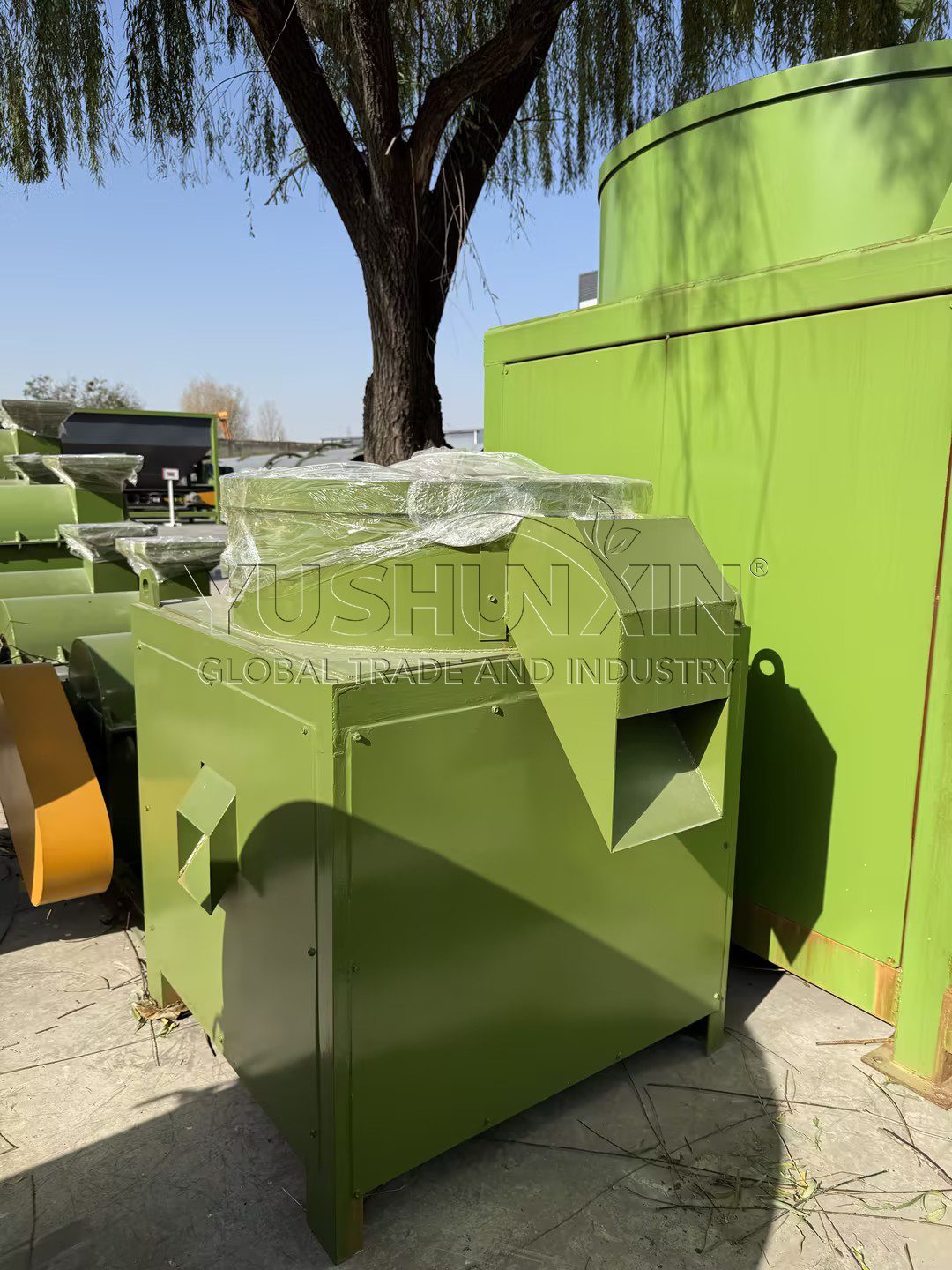
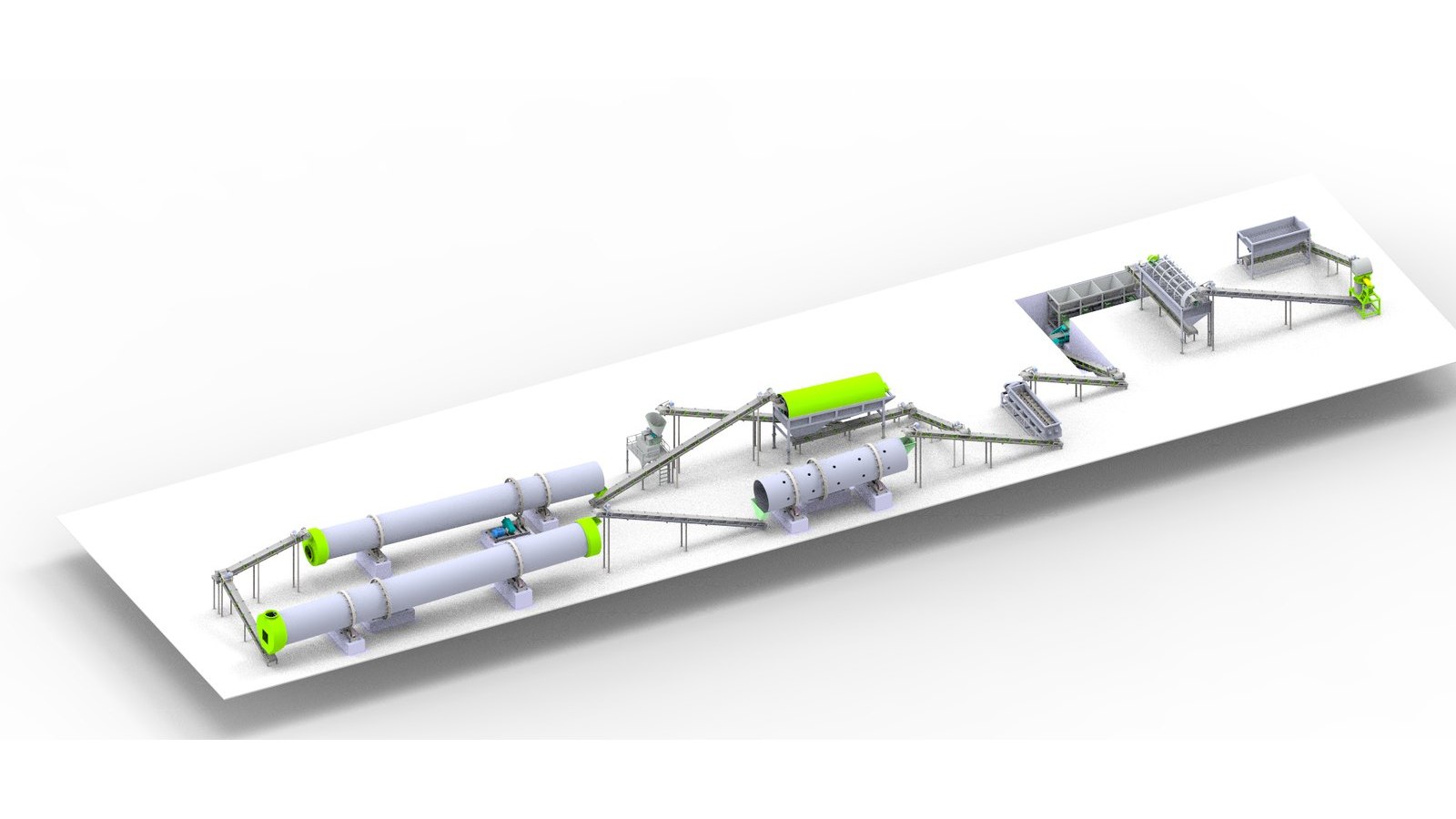
Mineral fertilizer feedstock: which ores and powders can be granulated

2. Crushing and milling for mineral powder preparation

The mineral powder must be reduced to a uniform, granulation-ready size before the granulator, and the crushing and milling stage is what does it. Hard ores go through a crusher and then a mill such as a Raymond system to reach the fine band, while softer minerals may only need a crusher. The target particle size is set by the granulation route and the final granule strength, and a uniform feed is what keeps the granulator stable. We select the crushing and milling equipment for the ore hardness and the target fineness, and the dust from this stage is collected and returned.

Crushing and milling for mineral powder preparation

3. Mixing and binder addition for mineral granule formation

Mineral powders are granulated with a binder, because dry minerals do not stick on their own. The mixing stage blends the powder with the binder - water, lignosulfonate or a clay slurry - to the moisture band the granulator needs. The binder dose is controlled, because too little binder gives weak granules and too much makes the granulator paste up. The mixer distributes the binder evenly so every granule forms from the same base. This stage is what turns a loose mineral powder into a granulation-ready mix.

Mixing and binder addition for mineral granule formation

4. Granulation route for minerals: disc, drum or extrusion

The granulation route follows the mineral's behaviour and the granule the market buys. A disc granulator is open and flexible for small-to-medium mineral lines, a rotary drum is continuous for high output, and a double-roller extrusion suits a dry route for moisture-sensitive minerals. The disc and drum need the binder and a dryer, while extrusion makes an angular granule without water. We select the route after the feedstock and the product shape are known, because the route is a capital decision that tuning cannot fix.

Granulation route for minerals: disc, drum or extrusion

5. Drying and cooling mineral granules to a stable moisture

Wet granulation adds binder water that must be removed, so the mineral line includes a dryer and a cooler. The dryer evaporates the binder moisture down to the storage-stable level, and the cooler brings the granules down for screening and packing. The drying temperature is set for the mineral, because some minerals decompose or change at high heat. We size the dryer and cooler as a pair, because the drying duty and the cooling duty are one heat balance, and an undersized cooler leaves the product warm and caking.

Drying and cooling mineral granules to a stable moisture

6. Screening and recycle loop for mineral granule size control

No granulator makes a perfect size band, so the screen and the recycle loop are what stabilise the line. On-size granules go to packing, undersize returns to the granulator as seed, and oversize is crushed and returned. The recycle is deliberate - it provides the nuclei the new granules grow on and keeps the bed density steady. We balance the recycle ratio in the process design, because a high recycle load reduces the useful output and a low one makes the granulation unstable.

Screening and recycle loop for mineral granule size control

7. Dust collection and emission control in mineral granulation

Mineral granulation is dusty, because the crushing, milling and screening stages all release fine mineral dust. The line is fitted with cyclones and bag filters at each dust point, and the collected dust returns to the process. The emission basis is set with the site permit, and the dust system is sized for the total air volume so the plant operates inside its limit. This is both a product-recovery and a worker-safety measure, and it is designed into the line from the start.

Dust collection and emission control in mineral granulation

8. Plant layout and utilities for a mineral granulation facility

A mineral granulation plant needs space for raw material storage, crushing and milling, the granulation hall, the dryer and cooler, and the packing and warehouse. The utilities - power, water for the binder and the dust system - are confirmed with the layout before quoting. We draw the flow so the material moves in one direction from ore intake to loaded truck, without backtracking. The footprint follows the capacity and the ore type, and it is the first check against the buyer's plot.

Plant layout and utilities for a mineral granulation facility

9. Investment and operating cost structure for mineral granulation

The investment for a mineral line is driven by the crushing and milling duty, the granulation route and the dust system, and the operating cost is dominated by energy and wear parts. Hard ores wear the crusher and mill faster and use more energy, which is why the ore hardness is confirmed before quoting. We publish the cost guide ranges and itemise the quotation, so the buyer can see where the investment goes. The cheapest line is rarely the best value on an abrasive mineral.

Investment and operating cost structure for mineral granulation

10. Commissioning and acceptance for mineral granulation lines

Commissioning proves the line with the actual mineral feed, not an ideal sample. We run the line to the agreed output, check the granule size and strength against the acceptance list, and train the operators on the binder and the recycle control. The acceptance criteria are measurable, so both sides know when the line is handed over. After handover we keep the wear-parts list and remote support, because an abrasive mineral line needs the spare parts on hand to stay in production.

Commissioning and acceptance for mineral granulation lines
error: Content is protected !!