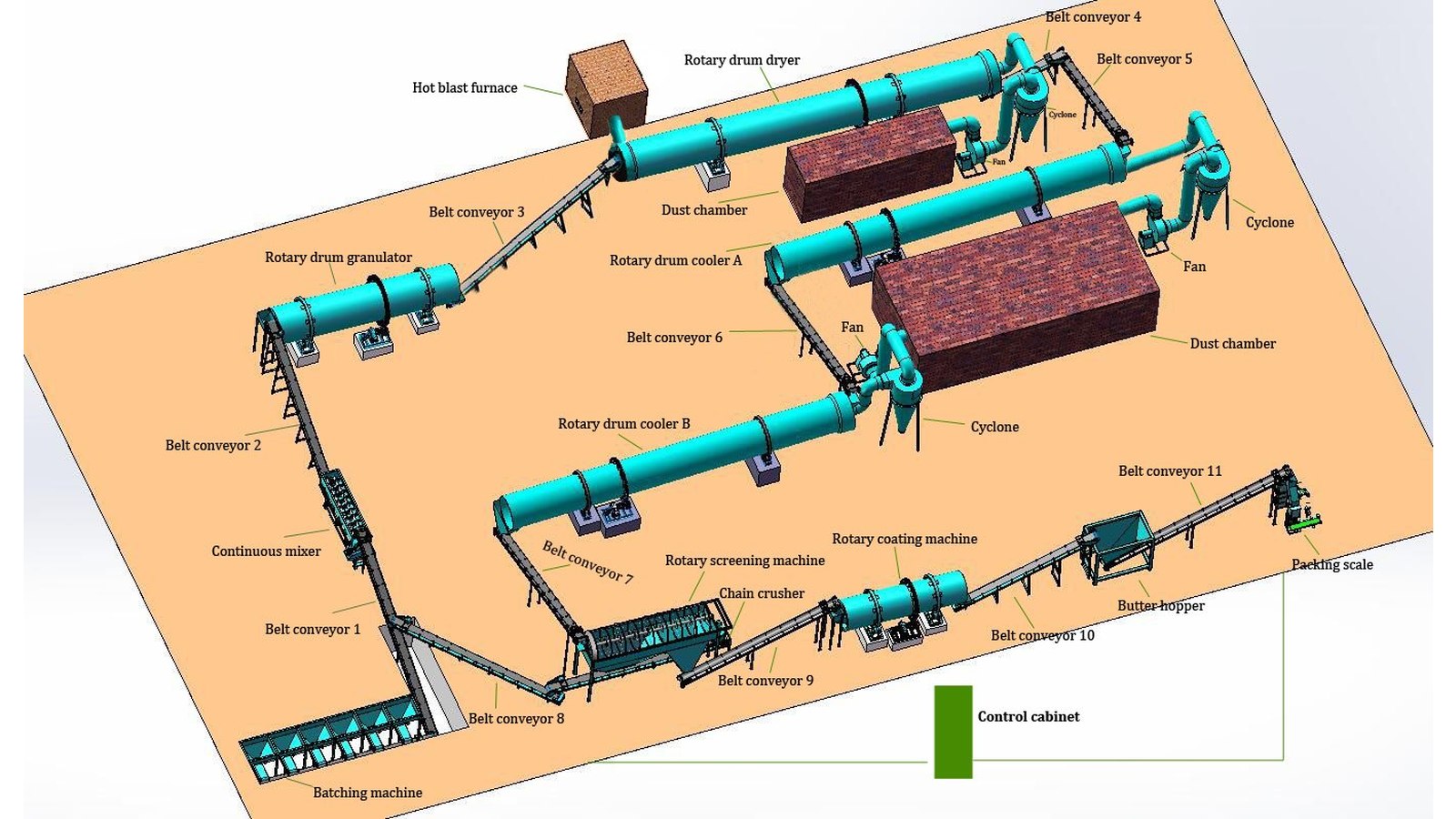
Bentonite Granulation Line | YUSHUNXIN Fertilizer Machinery
اطلب قوائم الأسعار وعروض الأسعار عبر البريد نصدّر إلى أكثر من 60 دولة
القائمة
Home/Solutions/Bentonite Granulation Line

Bentonite Granulation Line

Granulate bentonite powder for soil conditioners, carriers, binder additives and moisture-holding granules.

Southeast AsiaMiddle EastEuropeNorth America
Solution at a glance

Bentonite Granulation Line

For bentonite and sodium/calcium bentonite powders, YUSHUNXIN engineers milling, granulation and drying into stable, swell-resistant granules used in soil conditioning, fertilizer binding and industrial applications.

Swelling-clay material handling

Gentle mixing to protect binder properties

Matched drying and cooling

Screening with fines recycle

Why This Line

Why choose this line

Bentonite granulation converts a widely available swelling clay into stable, high-value granules for soil conditioning and fertilizer binding - with matched mixing, drying and cooling for reliable hardness.

Swelling-clay handling
Matched drying
Binder-grade mixing
Screening & recycle
Who this solution is for

Is this solution for you?

Read this first: the solution fits specific customers, scenarios and project stages. If you are not the target, the configuration and quote will not be right.

Suitable for

  • Bentonite processors
  • Soil conditioner and organic fertilizer brands
  • Feed and litter granule producers

Not suitable / confirm first

  • High-moisture chemical granulation (choose the NPK wet route)
  • Projects without a defined granule size and strength target
  • Single-machine needs - see equipment pages
The problems

What customers face before this solution

These are the real operating problems this line is designed to solve - and why they happen.

Typical problems

  • Bentonite Granulation Line powder is fine and abrasive, wearing standard parts
  • Granules are weak or dusty without the right binder
  • Granule size is inconsistent without a screening loop
  • Standard fertilizer lines are over- or under-engineered for this mineral

Why they happen

  • Equipment selected without an abrasion and flow review
  • Binder and fineness not matched to the mineral
  • Wrong granulation route for the material moisture
  • No screening loop, so fines and oversize are not returned

Why a complete line, not single machines

The right route depends on the mineral's hardness, fineness, moisture and target granule. We match milling, granulation, screening and handling to the mineral so granules are consistent and equipment survives the material.

Process

How the line works

1

Milling & Conditioning

Cage or semi-wet crusher breaks lumps and conditions the clay.

2

Mixing & Binder

Ribbon or disc mixer homogenizes bentonite with additives.

3

Granulation

Disc or new-type granulator forms granules with matched moisture.

4

Drying & Cooling

Rotary dryer and cooler stabilize granule moisture.

5

Screening & Packing

Classification returns fines; packing to bag or FIBC.

Solution structure

What is inside the line

Each module solves one part of the chain. Open any module to see its parameters and options.

Configuration logic

Why we configure it this way

Equipment is not a list - it is a response to your conditions. This is how your conditions change the configuration:

When your project is...We configure...
Dry, non-plastic powderDouble-roller compaction - no drying required
Moisture-tolerant materialDisc or drum granulation with matched drying
High abrasionHardened wear plates and replaceable liners
Tight size rangeScreening loop with fines and oversize return
Scenario differences

Different projects get different configurations

We do not apply one template to every customer. Here are three common scenarios and how the configuration changes.

Bentonite Granulation Line producer

Focus: Consistent granules, low dust

Granulation + screening + bagging

Soil amendment brand

Focus: Stable market-ready granules

Conditioning + granulation + packing

Mining by-product valorization

Focus: Turn powder into saleable granules

Validation-first design with hardened equipment

Implementation

From inquiry to commissioning

This is the delivery path we follow for every complete line project.

1

Confirm requirements

Raw materials, formula, capacity, bag size, utilities and site conditions are confirmed in a technical questionnaire.

2

Process design & layout

We produce a process flow, line layout and foundation drawings sized to your material data.

3

Quotation with scope

You receive a quotation with an itemized delivery scope - what is included and what is excluded.

4

Order & fabrication

Fabrication starts with progress updates; long-lead items are ordered first.

5

Factory testing

Machines are assembled and no-load tested; weighing and control systems are calibrated.

6

Export packing

Equipment is export-packed with anti-rust treatment and a packing list for customs.

7

Delivery & installation

Machines ship FOB/CIF/door-to-door; installation is supervised on site or via video guidance.

8

Commissioning & training

We commission the line, train your operators and stabilize process parameters.

9

Acceptance & after-sales

Acceptance is based on agreed metrics; spares and remote support continue after handover.

Pre-purchase checklist

What to prepare before requesting a quote

The better your information, the closer the first quote is to the final one. Prepare these items:

  • Material type, fineness, hardness and moisture
  • Target granule size, strength and dust tolerance
  • Capacity in t/h and operating hours
  • Binder availability and cost
  • Packing size and destination market

Request a bentonite granulation line granulation assessment

Send material type, fineness, hardness, moisture, target granule specs, capacity and binder options for a recommendation.

Product Inquiry

Tell us about your project — we reply within 24 hours (24/7).

Fields marked * are required. Your inquiry goes directly to our engineering team.

Risk boundaries

When this solution does not apply

Honest boundaries make a proposal credible. These conditions must be confirmed before the configuration is valid:

  • Granule strength depends on the material-binder combination - validate with samples
  • Abrasive material increases wear-part consumption - hardened parts specified
  • Moisture-sensitive material may need dry storage outside equipment scope
Effect verification

How we verify the solution works

Performance is checked with measurable indicators, not adjectives. These are the acceptance checks for this type of line:

IndicatorHow it is verified
Granule strength and sizeDrop/compression test and sieve analysis per shift
Fines contentMeasure after screening and at the bagger
ThroughputRecord t/h at design conditions
Delivery scope

What is included - and what is not

Compare quotes on the same scope. This is exactly what the project price covers.

Included

  • Milling / conditioning, granulation, screening, conveying and packing
  • Wear-engineered contact parts
  • Layout, installation, commissioning and training
  • Spares and after-sales support

Not included (separate scope)

  • Binder supply
  • Upstream mining / milling
  • Civil works and utilities
  • Third-party certification
Scenario FAQ

Questions buyers ask about this solution

Does bentonite need drying after granulation?
Usually yes. Bentonite holds moisture well, so a matched dryer and cooler stabilize granule hardness and prevent caking in storage.
Why is bentonite used as a fertilizer granulation binder?
Its swelling and binding properties improve granule strength in small doses, reducing the need for other binders.
Can bentonite granulate with organic material?
Yes - bentonite is frequently blended with compost or manure to form organic-mineral granules.
Deep-dive guide

Ten angles buyers must understand before investing

Each angle is a self-contained chapter with a line illustration. Read the ones that match your project stage, then send us the data each angle asks for.

1. Bentonite feedstock characterisation for granulation

Bentonite granulation turns the sodium or calcium bentonite powder into a dense granule for cat litter, drilling fluid and industrial filler use, and the feedstock's swelling and moisture behaviour decide the route. The bentonite is milled to the granulation band, and the binder is set for the clay's swelling. We characterise the powder before configuring the line, because the clay's water absorption is the variable that shapes every stage.
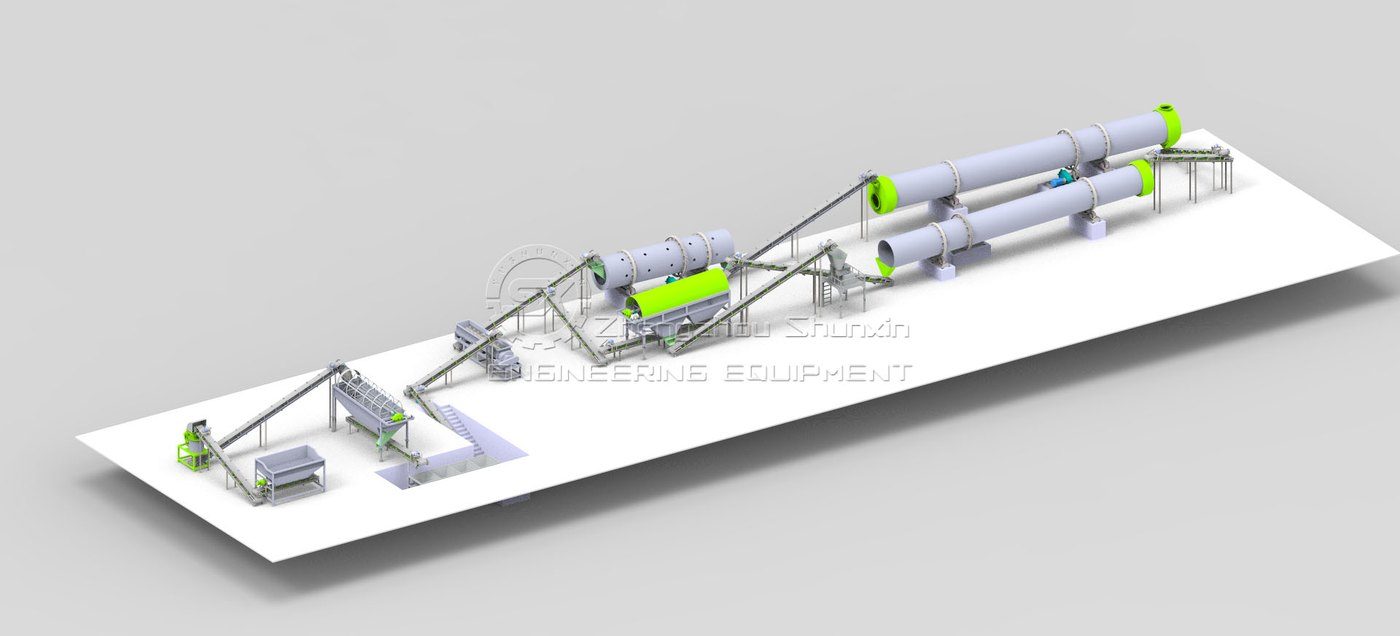
Bentonite feedstock characterisation for granulation

2. Milling bentonite to granulation fineness

The bentonite powder is milled to the fine band the granulation route needs, and the milling energy is a large part of the line's cost. The mill is selected for the clay's hardness and the target fineness, and the dust from the milling is collected and returned. A uniform feed is what keeps the granulator stable, and the fineness sets the granule strength and the drying load.

Milling bentonite to granulation fineness

3. Mixing and binder control for bentonite granule formation

Bentonite swells in water, so the binder and the moisture are controlled carefully to form granules without the clay turning to paste. The mixer wets the powder to the narrow band and kneads it into a granulation-ready mass, and the dose is set for the sodium or calcium bentonite's absorption. This stage is where the swelling clay becomes a workable granulation feed, and it is specified for the clay grade.

Mixing and binder control for bentonite granule formation

4. Granulation route for bentonite: disc, drum or extrusion

The bentonite granulation route follows the product the market buys and the clay's behaviour. A disc granulator is flexible for small-to-medium bentonite lines, a rotary drum is continuous for high output, and an extrusion route suits a denser, higher-strength granule. The route is a capital decision, and it is selected from the feedstock and the granule shape. We recommend the route with the energy and product-shape comparison.

Granulation route for bentonite: disc, drum or extrusion

5. Drying and cooling bentonite granules

The wet bentonite granules are dried and cooled, because the clay holds moisture and a wet granule softens in storage. The dryer is sized for the clay's moisture retention and the granule's sensitivity, and the cooler brings the granules down for screening and packing. The drying and cooling are one heat balance, and we size them as a pair so the granules leave stable and free-flowing.

Drying and cooling bentonite granules

6. Screening and recycle for bentonite granule size

The screen classifies the bentonite granules and returns the undersize and crushed oversize to the granulator as recycle, which stabilises the granulation and keeps the size uniform. The recycle provides the nuclei the new granules grow on, and the ratio is balanced in the process design. A well-balanced recycle keeps the product band tight, while a poorly balanced one consumes capacity in re-circulation.

Screening and recycle for bentonite granule size

7. Dust collection and emission control for bentonite processing

Bentonite milling and screening are dusty, and the line is fitted with cyclones and bag filters at each dust point with the collected dust returned to the process. The emission basis is set with the site permit, and the dust system is sized for the air volume. This is a product-recovery and safety measure, and it is designed into the line from the start.

Dust collection and emission control for bentonite processing

8. Plant layout and utilities for a bentonite facility

A bentonite granulation plant needs the raw clay intake, the milling, the granulation hall, the dryer and cooler, and the packing and warehouse, with the utilities confirmed with the layout. We draw the flow so the material moves in one direction from clay intake to loaded truck, and the footprint follows the capacity and the clay type. The layout is drawn before quoting, and it is the first check against the plot.

Plant layout and utilities for a bentonite facility

9. Investment and operating cost for bentonite granulation

The investment is driven by the milling duty, the granulation route and the dust system, and the operating cost is dominated by milling energy and the drying of the moisture-holding clay. The bentonite's water absorption is the cost driver, and it is confirmed before quoting. We publish the cost guide and itemise the quotation, so the buyer sees where the money goes.

Investment and operating cost for bentonite granulation

10. Commissioning and acceptance for bentonite granulation

Commissioning proves the line with the actual bentonite feed. We run to the agreed output, check the granule size and strength against the acceptance list, and train the operators on the binder and the recycle control. The acceptance criteria are measurable, and after handover we keep the wear-parts list and remote support, because a bentonite line that goes off-spec loses its industrial customers.

Commissioning and acceptance for bentonite granulation
error: Content is protected !!