
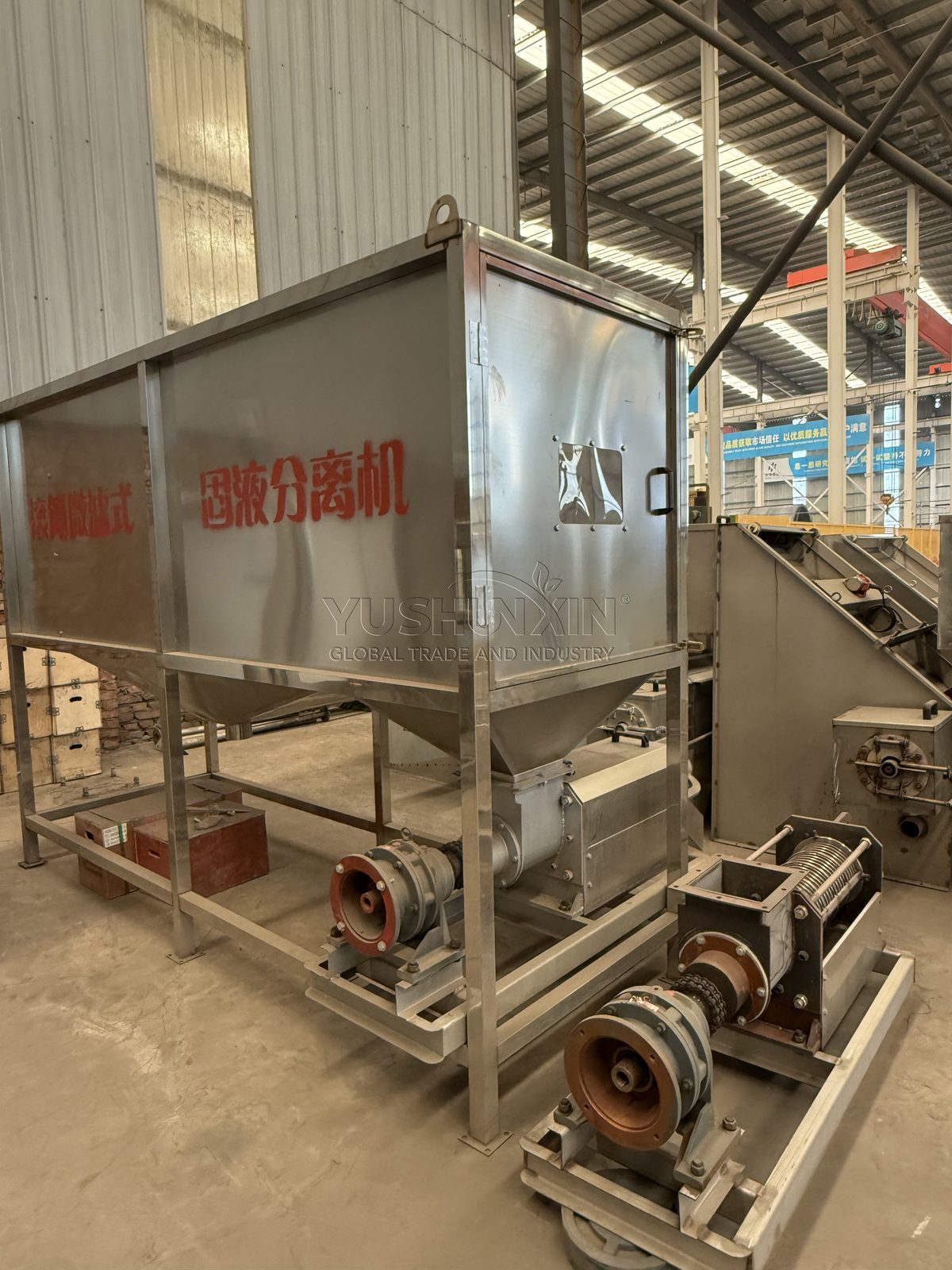
نظام فيزيائي من مرحلتين — غربال خشن مائل وفاصل دقيق عالي التردد ومكبس لولبي — يزيل جزءاً كبيراً من المواد الصلبة العالقة من مياه مزارع الخنازير والأبقار ويستعيد مواد صلبة يمكن أن تغذي التسميد. لكنه لا يجعل الماء مطابقاً لمعايير التصريف وحده. نصمم أنظمتنا كتخفيض حمل أمامي، ونُعد الواجهة لتكون المعالجة البيولوجية أو الكيميائية اللاحقة أصغر وأكثر موثوقية.
A two-stage physical system - coarse inclined screen, high-frequency fine separator and volute screw press - removes a large share of suspended solids from pig and cattle farm wastewater and recovers solids that can feed composting. It does not make water discharge-compliant on its own. We scope our systems as front-end load reduction and design the interface so downstream biological or chemical treatment can be sized smaller and operate more reliably.
Event background
Farm environmental projects often begin with a vague goal: treat the wastewater. The first engineering question is which treatment boundary the project actually needs. Physical separation is the lowest-cost, most reliable front-end stage, but it has a clear boundary - it removes solids, not dissolved nutrients or pathogens.
Key facts
- A two-stage system typically removes 60-85% of suspended solids depending on particle size and fiber content
- Dewatered solids typically reach 55-70% moisture with a volute screw press - suitable for composting and transport
- Physical separation does not remove dissolved nitrogen, phosphorus, COD or pathogens to discharge standards
- Downstream biological or chemical treatment is still required for discharge compliance; separation makes it smaller and more stable
What this means for customers
For farms, the practical impact is on scope and budget: if you buy separation expecting compliance, you will be disappointed; if you buy it as front-end load reduction, it pays for itself by protecting downstream treatment and recovering compostable solids. The interface design - flow, solids route and bypass during installation - is what makes it reliable. The physical separation boundary is the useful starting point for a wastewater project, because it tells the buyer what the equipment can do and what the biological stage must finish. The practical way to use this article is to carry its three angles into your specification discussion. First, fix the feedstock and the product target before the machine, because the line is sized from the material, not from a catalogue number. Second, ask the supplier to state the delivery scope item by item, including the conveying, the dust system, the installation and the training, so competing offers are compared on the same basis. Third, agree the acceptance points before the order, so the capacity, the accuracy and the product quality are measured rather than assumed. When all three are written down, the quotation becomes a project plan, and the supplier who can answer them clearly is usually the one who can also deliver the plant on time and keep it running afterwards.
How we support this
YUSHUNXIN designs and supplies two-stage physical separation systems with equalization, variable-speed pumping, coarse and fine screening, dewatering and corrosion-resistant contact parts, including the interface to composting and downstream treatment.
We always ask about the solids destination first. If there is no composting or disposal route for dewatered solids, the separation system will fail regardless of how well the screens work.
Next steps
Before scoping, measure or estimate your flow (m3/h), TS/SS content, fiber level and solids destination. With those four inputs we can size a system and confirm the realistic SS removal range.
Related pages
Scope your separation system
Send your flow, TS/SS data (or samples), animal type and solids destination - we will confirm what physical separation can achieve for your farm.