
Technical capability - coming soon
The liquid fertilizer production line is being prepared as a YUSHUNXIN technical offering. Pilot and project discussions are welcome; full commercial launch will be announced.
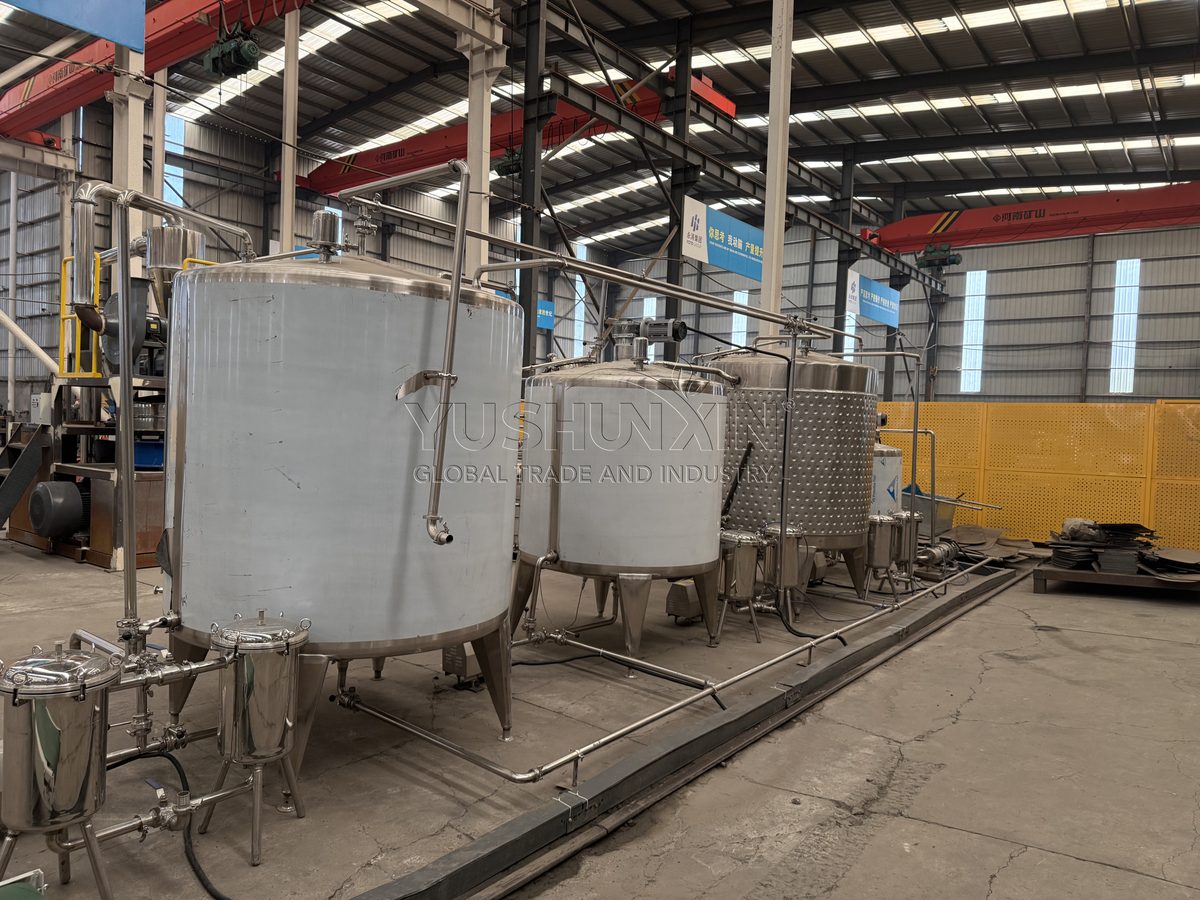
Liquid Fertilizer Production Line
As the second water-soluble route, the liquid fertilizer line covers raw-material dosing, dissolution/reaction, filtration, heating/cooling, storage and filling. It is a clean complement to powder WSF production for customers serving foliar and fertigation markets.
1–20 t/h typical plant capacity
Dissolution, reaction, filtration & filling modules
Corrosion-resistant contact materials
CIP / cleaning interfaces available
Is this solution for you?
Read this first: the solution fits specific customers, scenarios and project stages. If you are not the target, the configuration and quote will not be right.
Suitable for
- Liquid NPK, amino-acid, humic-acid and foliar fertilizer producers
- Agrochemical brands adding liquid fertilizer SKUs to an existing portfolio
- Farms and distributors producing fertigation liquids for local markets
- Producers needing automatic filling, capping, labeling and batch documentation
Not suitable / confirm first
- Projects expecting suspension fertilizers with heavy clay or gum systems without process validation
- Customers needing only a mixing tank (single-tank purchases belong on product pages)
- Sites without water treatment or consistent water quality for clear liquid products
What customers face before this solution
These are the real operating problems this line is designed to solve - and why they happen.
Typical problems
- Manual dissolution leaves undissolved particles that clog drip and sprinkler systems
- Batch temperature and mixing time vary, so viscosity and solubility change between batches
- Foaming during production slows filling and causes volume errors
- Filling accuracy drifts, so bottle/container volumes are inconsistent
- No batch traceability for labels or COA
- Corrosion from salts and acids damages standard tanks and pumps
Why they happen
- Dissolution tanks lack controlled heating, agitation and dissolution time
- No process recipe, so operators change mixing parameters by habit
- No anti-foam or vacuum de-foaming step before filling
- Filling is manual or the filler is not matched to container size and viscosity
- No batching log or lot number linkage
- Carbon steel or standard plastic parts are used in contact with corrosive liquids
Why a complete line, not single machines
Liquid fertilizer quality is set by the dissolution and homogenization step, and lost at the filling step. Temperature, agitation, de-foaming and filling speed are one process, not separate machines. A complete liquid line gives you a repeatable recipe, consistent containers and a batch record - the minimum for a credible label.
How the line works
Dosing & Dissolution
Metered raw materials dissolved in heated/agitated vessels.
Reaction & Conditioning
Reaction, chelation and pH conditioning per recipe.
Filtration
Filtration removes insolubles for clear product.
Filling
Liquid filling, capping and labeling lines.
Why we configure it this way
Equipment is not a list - it is a response to your conditions. This is how your conditions change the configuration:
| When your project is... | We configure... |
|---|---|
| Clear liquid NPK | Stainless dissolution tank with heating + high-shear mixing + filtration |
| Amino/humic acid concentrates | Temperature-controlled dissolution + viscosity-matched pumps + de-foaming |
| High filling output | Multi-head automatic filler + capper + labeler + inkjet batch coding |
| Traceability | PLC batch recipe + lot number printing + COA export |
| Corrosive formulas | 304/316 stainless or chemical-grade plastic contact parts |
Different projects get different configurations
We do not apply one template to every customer. Here are three common scenarios and how the configuration changes.
Foliar brand (small bottles)
Focus: Filling accuracy and labels
500-1,000 L dissolution + semi-auto filling + capping/labeling
Fertigation liquid (IBC/drum)
Focus: High throughput and consistent viscosity
Large dissolution tanks + inline mixing + IBC filling station
Contract producer
Focus: Fast product changeover
Dedicated tanks per formula family + CIP cleaning
From inquiry to commissioning
This is the delivery path we follow for every complete line project.
Confirm requirements
Raw materials, formula, capacity, bag size, utilities and site conditions are confirmed in a technical questionnaire.
Process design & layout
We produce a process flow, line layout and foundation drawings sized to your material data.
Quotation with scope
You receive a quotation with an itemized delivery scope - what is included and what is excluded.
Order & fabrication
Fabrication starts with progress updates; long-lead items are ordered first.
Factory testing
Machines are assembled and no-load tested; weighing and control systems are calibrated.
Export packing
Equipment is export-packed with anti-rust treatment and a packing list for customs.
Delivery & installation
Machines ship FOB/CIF/door-to-door; installation is supervised on site or via video guidance.
Commissioning & training
We commission the line, train your operators and stabilize process parameters.
Acceptance & after-sales
Acceptance is based on agreed metrics; spares and remote support continue after handover.
What to prepare before requesting a quote
The better your information, the closer the first quote is to the final one. Prepare these items:
- Product type (liquid NPK, amino acid, humic acid, suspension) and target analysis
- Raw material form (powder, prill, liquid) and solubility behavior
- Batch size and daily output
- Container type and size (bottle, jerry can, drum, IBC)
- Filling accuracy requirement and labeling/COD requirements
- Water quality and available heating source
- Corrosion requirements and site utilities
Request a liquid line configuration
To configure your liquid fertilizer line, send: product type and target analysis, raw material forms, batch size and output, container types, filling accuracy, water quality and site utilities.
Product Inquiry
Tell us about your project — we reply within 24 hours (24/7).
When this solution does not apply
Honest boundaries make a proposal credible. These conditions must be confirmed before the configuration is valid:
- Suspension and gel-type products require process validation before line design - we will tell you honestly if a standard line is not the answer
- Water quality affects clarity and stability; we design assuming your supplied water analysis
- Some concentrated acids require specialized chemical-grade materials and safety measures quoted separately
- Labeled nutrient content is the formulator's responsibility; we provide process and batch evidence
How we verify the solution works
Performance is checked with measurable indicators, not adjectives. These are the acceptance checks for this type of line:
| Indicator | How it is verified |
|---|---|
| Solubility/clarity | Filter check and visual clarity test on each batch |
| Batch consistency | Compare viscosity, density and pH across 5 consecutive batches |
| Filling accuracy | Weigh 30 consecutive containers against the target fill volume |
| Throughput | Record containers filled per hour at steady state |
| Traceability | Generate batch report with raw materials, process time and lot code |
What is included - and what is not
Compare quotes on the same scope. This is exactly what the project price covers.
Included
- Dissolution tanks, agitation, heating, filtration and de-foaming
- Filling, capping, labeling and batch coding equipment
- PLC recipe and batch log
- Layout, installation guidance, commissioning and training
- Spare parts and documentation
Not included (separate scope)
- Chemical formulation and raw materials
- Water treatment plant (interface only)
- Container supply and packaging design
- Civil works and site utilities