
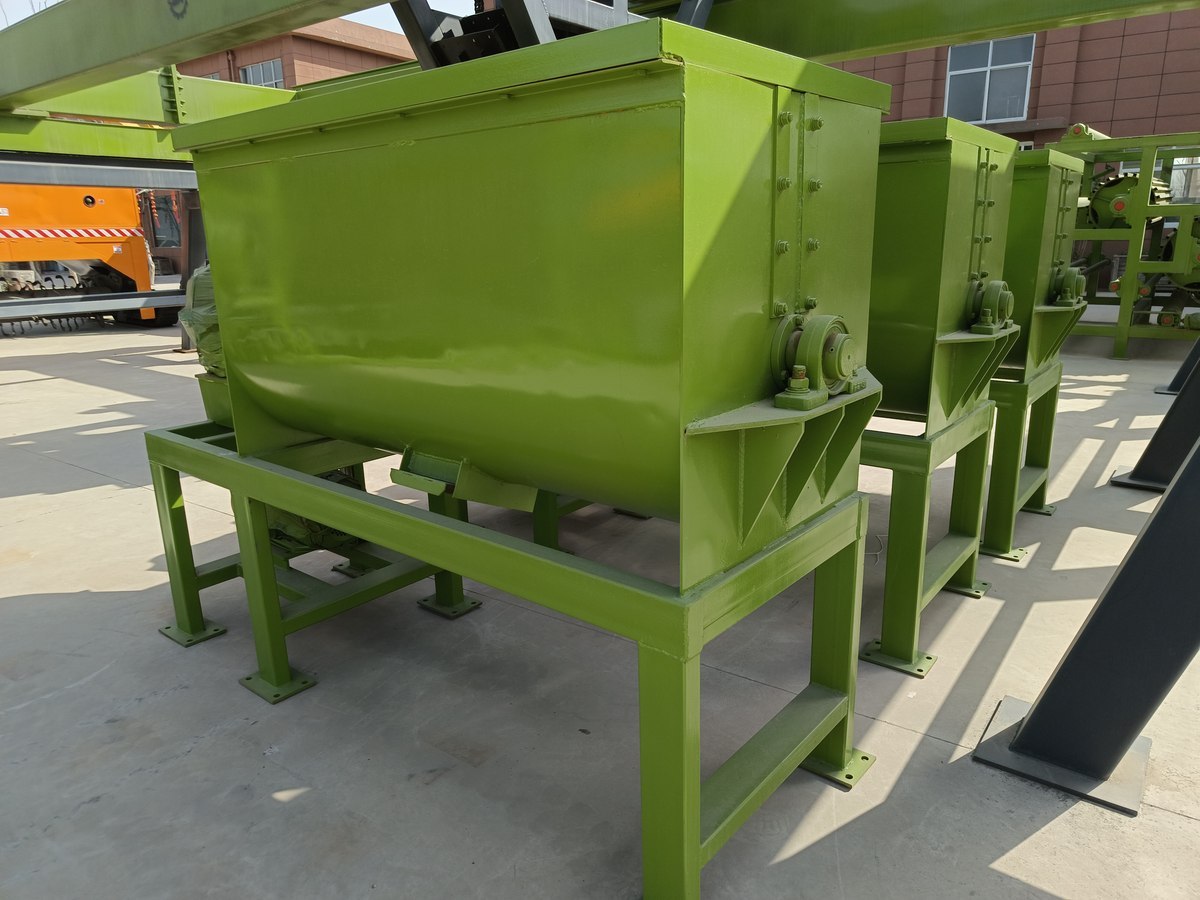
Mixer selection is not about brand or price - it is about material behavior, uniformity target and cleaning frequency. Powder WSF needs gentle, fast-cleaning mixing; granule BB blending needs preservation; high-fiber organic material needs robust, high-torque mixing. This guide explains the trade-offs and the information you must provide for an accurate selection.
Event background
Buyers often ask for 'a mixer' without specifying material, batch size, uniformity target or cleaning constraints. The result is either an under-powered mixer that cannot homogenize trace elements, or an over-aggressive mixer that breaks granules and creates fines. Both mistakes surface after commissioning, when they are expensive to fix.
Key facts
- Ribbon mixers suit free-flowing powders with fast cleanout and moderate shear
- Twin-shaft (paddle) mixers suit higher shear, sticky or high-fiber materials and shorter cycle times
- Rotary drum mixers suit granule blending where preservation matters more than speed
- Uniformity is verified by sampling multiple points per batch and measuring the target nutrient CV, not by visual inspection
- Batch size, not just t/h, decides mixer volume: a 1 t batch needs a mixer rated for that batch with headroom
What this means for customers
The wrong mixer type shows up as CV failure, broken granules or slow changeover - all of which increase operating cost and reduce sellable output. The right mixer reduces cycle time, cleaning time and rework, and gives you the uniformity your label claims. The mixer selection is a material-driven decision, and the guide's value is in separating the needs of powder, granules and organic blends before comparing machines. The practical way to use this article is to carry its three angles into your specification discussion. First, fix the feedstock and the product target before the machine, because the line is sized from the material, not from a catalogue number. Second, ask the supplier to state the delivery scope item by item, including the conveying, the dust system, the installation and the training, so competing offers are compared on the same basis. Third, agree the acceptance points before the order, so the capacity, the accuracy and the product quality are measured rather than assumed. When all three are written down, the quotation becomes a project plan, and the supplier who can answer them clearly is usually the one who can also deliver the plant on time and keep it running afterwards.
How we support this
YUSHUNXIN supplies horizontal ribbon mixers, twin-shaft mixers, paddle mixers and rotary drum mixers sized for fertilizer duty, with options for stainless contact parts, dust-tight covers, fast cleanout and PLC cycle control.
Tell us the material, the batch weight, the trace-element dosing method and how often you change recipes. Those four answers select the mixer family; everything else is sizing.
Next steps
Prepare material type and bulk density, batch weight, cycle-time target, uniformity requirement and cleaning frequency. Send these with your inquiry and we will recommend the mixer family and model with a uniformity test plan.
Related pages
Get a mixer recommendation
Send material type, batch weight, cycle target and cleaning frequency - our engineers will recommend the mixer family and confirm sizing.
Explore complete production lines
Линия производства порошковых водорастворимых удобренийЛиния производства органических удобренийЛиния производства сложных NPK-удобренийАвтоматизация фасовки и паллетирования удобренийСистемы физического разделения животноводческих стоковЛиния грануляции технического углеродаAll production lines