Zeolite Granulation Line | YUSHUNXIN Fertilizer Machinery
Получите прайс-листы и расчёт проекта по e-mail Экспорт в более чем 60 стран
Меню
Home/Solutions/Zeolite Granulation Line

Zeolite Granulation Line

Granulate zeolite powder into low-dust, porous granules for soil conditioners and slow-release carriers.

Southeast AsiaEuropeMiddle EastNorth America
Solution at a glance

Zeolite Granulation Line

For natural zeolite and clinoptilolite powders, YUSHUNXIN offers a low-energy dry granulation route with screening and packing that preserves porosity and produces uniform, dust-free granules.

Low-energy dry granulation

Porosity-preserving process

Low-dust handling

Screening and recycle

Why This Line

Why choose this line

Zeolite granulation turns a low-density porous mineral into dust-free granules for soil conditioning and slow-release carriers - a dry, energy-efficient route that protects the mineral's adsorption performance.

Low-energy dry route
Porosity preserved
Low-dust granules
Screening & recycle
Who this solution is for

Is this solution for you?

Read this first: the solution fits specific customers, scenarios and project stages. If you are not the target, the configuration and quote will not be right.

Suitable for

  • Zeolite mining and processing companies
  • Soil amendment and slow-release fertilizer brands

Not suitable / confirm first

  • High-moisture chemical granulation (choose the NPK wet route)
  • Projects without a defined granule size and strength target
  • Single-machine needs - see equipment pages
The problems

What customers face before this solution

These are the real operating problems this line is designed to solve - and why they happen.

Typical problems

  • Zeolite Granulation Line powder is fine and abrasive, wearing standard parts
  • Granules are weak or dusty without the right binder
  • Granule size is inconsistent without a screening loop
  • Standard fertilizer lines are over- or under-engineered for this mineral

Why they happen

  • Equipment selected without an abrasion and flow review
  • Binder and fineness not matched to the mineral
  • Wrong granulation route for the material moisture
  • No screening loop, so fines and oversize are not returned

Why a complete line, not single machines

The right route depends on the mineral's hardness, fineness, moisture and target granule. We match milling, granulation, screening and handling to the mineral so granules are consistent and equipment survives the material.

Process

How the line works

1

Feeding & Metering

Zeolite powder is metered from silos or bag dump stations.

2

Conditioning & Binder

A low-dose binder is homogenized with the powder.

3

Dry Granulation

Double-roller compaction forms granules without drying.

4

Screening & Recycle

Fines and oversize return to the feed.

5

Packing

Automatic 25-50 kg bagging or FIBC ton bags.

Solution structure

What is inside the line

Each module solves one part of the chain. Open any module to see its parameters and options.

Configuration logic

Why we configure it this way

Equipment is not a list - it is a response to your conditions. This is how your conditions change the configuration:

When your project is...We configure...
Dry, non-plastic powderDouble-roller compaction - no drying required
Moisture-tolerant materialDisc or drum granulation with matched drying
High abrasionHardened wear plates and replaceable liners
Tight size rangeScreening loop with fines and oversize return
Scenario differences

Different projects get different configurations

We do not apply one template to every customer. Here are three common scenarios and how the configuration changes.

Zeolite Granulation Line producer

Focus: Consistent granules, low dust

Granulation + screening + bagging

Soil amendment brand

Focus: Stable market-ready granules

Conditioning + granulation + packing

Mining by-product valorization

Focus: Turn powder into saleable granules

Validation-first design with hardened equipment

Implementation

From inquiry to commissioning

This is the delivery path we follow for every complete line project.

1

Confirm requirements

Raw materials, formula, capacity, bag size, utilities and site conditions are confirmed in a technical questionnaire.

2

Process design & layout

We produce a process flow, line layout and foundation drawings sized to your material data.

3

Quotation with scope

You receive a quotation with an itemized delivery scope - what is included and what is excluded.

4

Order & fabrication

Fabrication starts with progress updates; long-lead items are ordered first.

5

Factory testing

Machines are assembled and no-load tested; weighing and control systems are calibrated.

6

Export packing

Equipment is export-packed with anti-rust treatment and a packing list for customs.

7

Delivery & installation

Machines ship FOB/CIF/door-to-door; installation is supervised on site or via video guidance.

8

Commissioning & training

We commission the line, train your operators and stabilize process parameters.

9

Acceptance & after-sales

Acceptance is based on agreed metrics; spares and remote support continue after handover.

Pre-purchase checklist

What to prepare before requesting a quote

The better your information, the closer the first quote is to the final one. Prepare these items:

  • Material type, fineness, hardness and moisture
  • Target granule size, strength and dust tolerance
  • Capacity in t/h and operating hours
  • Binder availability and cost
  • Packing size and destination market

Request a zeolite granulation line granulation assessment

Send material type, fineness, hardness, moisture, target granule specs, capacity and binder options for a recommendation.

Product Inquiry

Tell us about your project — we reply within 24 hours (24/7).

Fields marked * are required. Your inquiry goes directly to our engineering team.

Risk boundaries

When this solution does not apply

Honest boundaries make a proposal credible. These conditions must be confirmed before the configuration is valid:

  • Granule strength depends on the material-binder combination - validate with samples
  • Abrasive material increases wear-part consumption - hardened parts specified
  • Moisture-sensitive material may need dry storage outside equipment scope
Effect verification

How we verify the solution works

Performance is checked with measurable indicators, not adjectives. These are the acceptance checks for this type of line:

IndicatorHow it is verified
Granule strength and sizeDrop/compression test and sieve analysis per shift
Fines contentMeasure after screening and at the bagger
ThroughputRecord t/h at design conditions
Delivery scope

What is included - and what is not

Compare quotes on the same scope. This is exactly what the project price covers.

Included

  • Milling / conditioning, granulation, screening, conveying and packing
  • Wear-engineered contact parts
  • Layout, installation, commissioning and training
  • Spares and after-sales support

Not included (separate scope)

  • Binder supply
  • Upstream mining / milling
  • Civil works and utilities
  • Third-party certification
Scenario FAQ

Questions buyers ask about this solution

Why dry granulation for zeolite?
Zeolite is a low-moisture, porous mineral. Dry double-roller compaction avoids drying energy and preserves porosity, which matters for adsorption and water retention.
Can zeolite granules carry fertilizer nutrients?
Yes. Zeolite granules are commonly blended with or loaded with nutrients as a slow-release carrier.
What granule size is typical for zeolite?
Common targets are 1-4 mm for soil application, but we set the roller and screening specs to your market requirement.
Deep-dive guide

Ten angles buyers must understand before investing

Each angle is a self-contained chapter with a line illustration. Read the ones that match your project stage, then send us the data each angle asks for.

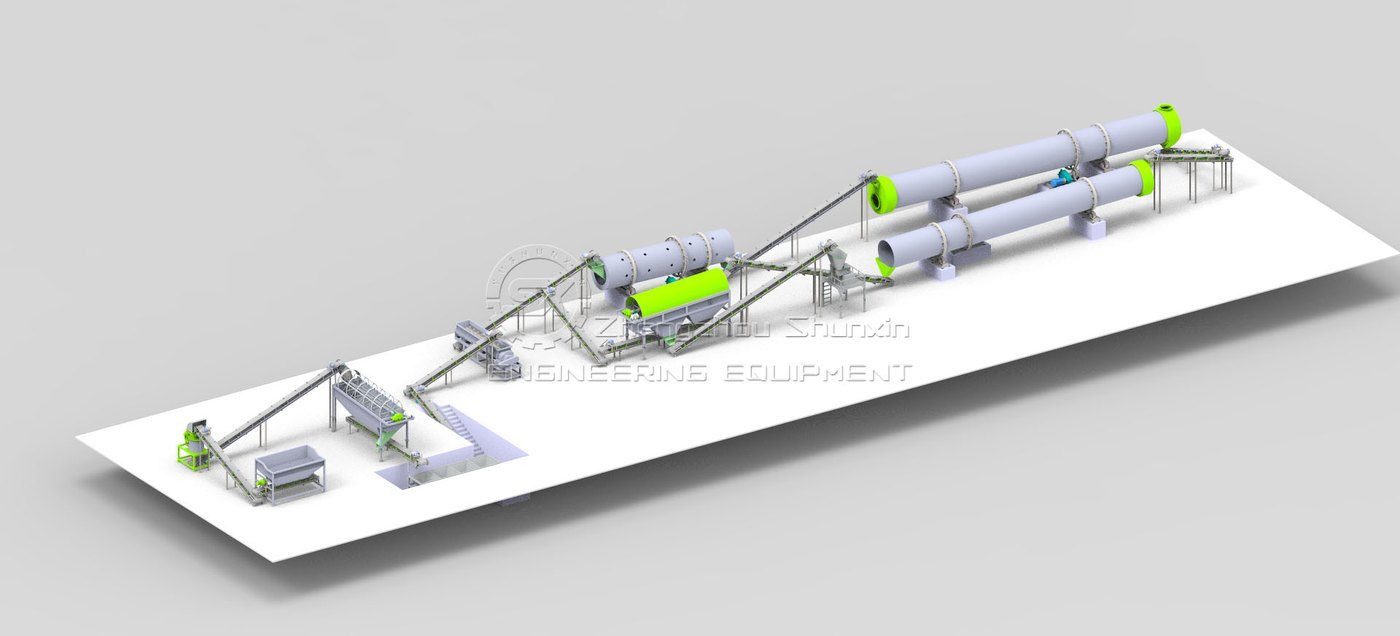
1. Zeolite feedstock characterisation for granulation

Zeolite granulation turns natural zeolite and clinoptilolite powders into a dense granule for water treatment, soil amendment and industrial adsorption use, and the feedstock's hardness and particle size decide the route. The zeolite is crushed and milled to the granulation band, and the binder is set for the mineral's low reactivity. We characterise the powder before configuring the line, because the hardness sets the wear and the energy.
Zeolite feedstock characterisation for granulation

2. Crushing and milling zeolite to granulation fineness

The zeolite is reduced in two stages: a crusher breaks the coarse stone and a mill reaches the fine powder band. The fineness sets the granule strength and the milling energy, and the dust from the stage is collected and returned. We select the crushing and milling equipment for the zeolite hardness, and a uniform feed is what keeps the granulator stable.

Crushing and milling zeolite to granulation fineness

3. Mixing and binder control for zeolite granule formation

Zeolite is granulated with a binder, and the low-energy dry route uses the minimum water to form the granule without a heavy drying load. The mixer blends the powder and the binder to the moisture band the granulator needs, and the dose is controlled so the granules form without pasting. This stage is specified for the zeolite's low reactivity, and it is what turns the loose powder into a granulation-ready mix.

Mixing and binder control for zeolite granule formation

4. Low-energy dry granulation route for zeolite

The zeolite line uses a low-energy dry granulation route, because the mineral's low reactivity and the energy cost of drying favour a route that adds minimal water. A compaction or extrusion route makes the granule without a heavy drying stage, which keeps the energy and the footprint low. We select the route for the zeolite grade and the granule the market buys, and the low-energy requirement is what sets the method.

Low-energy dry granulation route for zeolite

5. Drying and cooling zeolite granules to handling stability

The zeolite granules are dried to the storage-stable moisture and cooled before screening and packing, and the light drying load is the benefit of the low-water route. The dryer and cooler are sized as one heat balance, and the temperature is set for the mineral. We size the pair so the granules leave at a moisture and temperature that keep them free-flowing to the packing stage.

Drying and cooling zeolite granules to handling stability

6. Screening and recycle for zeolite granule size

The screen classifies the zeolite granules and returns the undersize and crushed oversize to the granulator as recycle, which stabilises the granulation and keeps the size uniform. The recycle provides the nuclei the new granules grow on, and the ratio is balanced in the process design. A well-balanced recycle keeps the product band tight, while a poorly balanced one consumes capacity in re-circulation.

Screening and recycle for zeolite granule size

7. Dust collection and emission control for zeolite processing

Zeolite crushing and milling are dusty, and the line is fitted with cyclones and bag filters at each dust point with the collected dust returned to the process. The emission basis is set with the site permit, and the dust system is sized for the air volume. This is a product-recovery and safety measure, and it is designed into the line from the start.

Dust collection and emission control for zeolite processing

8. Plant layout and utilities for a zeolite facility

A zeolite granulation plant needs the stone intake, the crushing and milling, the granulation hall, the dryer and cooler, and the packing and warehouse, with the utilities confirmed with the layout. We draw the flow so the material moves in one direction from stone intake to loaded truck, and the footprint follows the capacity and the stone type. The layout is drawn before quoting, and it is the first check against the plot.

Plant layout and utilities for a zeolite facility

9. Investment and operating cost for zeolite granulation

The investment is driven by the milling duty, the granulation route and the dust system, and the operating cost is dominated by milling energy and the wear on the abrasive mineral. The low-water route keeps the drying cost low, which is part of the zeolite line's appeal. We publish the cost guide and itemise the quotation, so the buyer sees where the money goes.

Investment and operating cost for zeolite granulation

10. Commissioning and acceptance for zeolite granulation

Commissioning proves the line with the actual zeolite feed. We run to the agreed output, check the granule size and strength against the acceptance list, and train the operators on the binder and the recycle control. The acceptance criteria are measurable, and after handover we keep the wear-parts list and remote support, because an abrasive zeolite line needs spares on hand to stay running.

Commissioning and acceptance for zeolite granulation
error: Content is protected !!