Granular Water-Soluble Fertilizer Production Line | YUSHUNXIN Fertilizer Machinery
Получите прайс-листы и расчёт проекта по e-mail Экспорт в более чем 60 стран
Меню
Home/Solutions/Granular Water-Soluble Fertilizer Production Line

Granular Water-Soluble Fertilizer Production Line

Fully soluble granular NPK+TE water-soluble fertilizer production — batching, granulation, drying, cooling, screening, anti-caking coating and packaging with complete solubility control.

Middle EastNorth AfricaTürkiyeCentral AsiaSoutheast AsiaLatin America
Solution at a glance

Granular Water-Soluble Fertilizer Production Line

Granular water-soluble fertilizers combine the handling convenience of a solid granule with the fast, complete solubility that drip, sprinkler and foliar programs require. YUSHUNXIN engineers the line as one continuous train: precise PLC batching with micro-dosing, granulation by rotary drum (or roller extrusion for a dry route), drying and cooling matched to hygroscopic salts, screening, anti-caking coating, then automatic bagging and palletizing. Every unit is selected so the finished granule dissolves quickly in cold and warm water, holds formulation accuracy batch to batch, and stores and ships without caking.

PLC recipe batching with micro-dosing for trace elements

Rotary drum or roller-extrusion granulation matched to your formula

Drying, cooling and screening engineered for fast, complete solubility

Anti-caking coating plus automatic bagging and palletizing

Who this solution is for

Is this solution for you?

Read this first: the solution fits specific customers, scenarios and project stages. If you are not the target, the configuration and quote will not be right.

Suitable for

  • Water-soluble fertilizer brands that need a solid, low-dust granule with fast solubility
  • Fertigation programs adding broadcast + drip dual-use products
  • Producers upgrading from powder-only WSF to a granule line
  • OEM/private-label manufacturers standardizing granule quality

Not suitable / confirm first

  • Customers who expect the supplier to own the chemical formulation
  • Projects without confirmed raw materials, bulk density or target granule size
The problems

What customers face before this solution

These are the real operating problems this line is designed to solve - and why they happen.

Typical problems

  • Powder WSF dusts during handling and cannot be broadcast uniformly
  • Granules from generic NPK lines dissolve too slowly and block drip emitters
  • Granules cake in storage because drying, cooling or coating is skipped
  • Trace elements are not dosed accurately batch to batch

Why they happen

  • Granulation is added without matched drying and cooling, so residual moisture binds salts
  • Binder is overused to hold the granule, reducing solubility
  • Micro-ingredients are weighed on one scale, losing trace accuracy
  • Coating and packaging are treated as optional instead of part of the train

Why a complete line, not single machines

A granulator alone cannot deliver a marketable granular WSF: solubility is decided by the whole chain — batching accuracy, granulation binder control, drying profile, cooling, screening and anti-caking coating. We engineer them as one train so the granule dissolves fast and stores without caking.

Process

How the line works

1

Raw Material Receiving & Bag Dumping

Bag / FIBC dumping stations with de-dusting and magnetic separation, screw or vacuum conveying to buffer silos.

2

Pre-Crushing & Conditioning

QL stainless urea crusher reduces caked salts; moisture conditioning prepares the feed for stable granulation.

3

Automatic Batching & Mixing

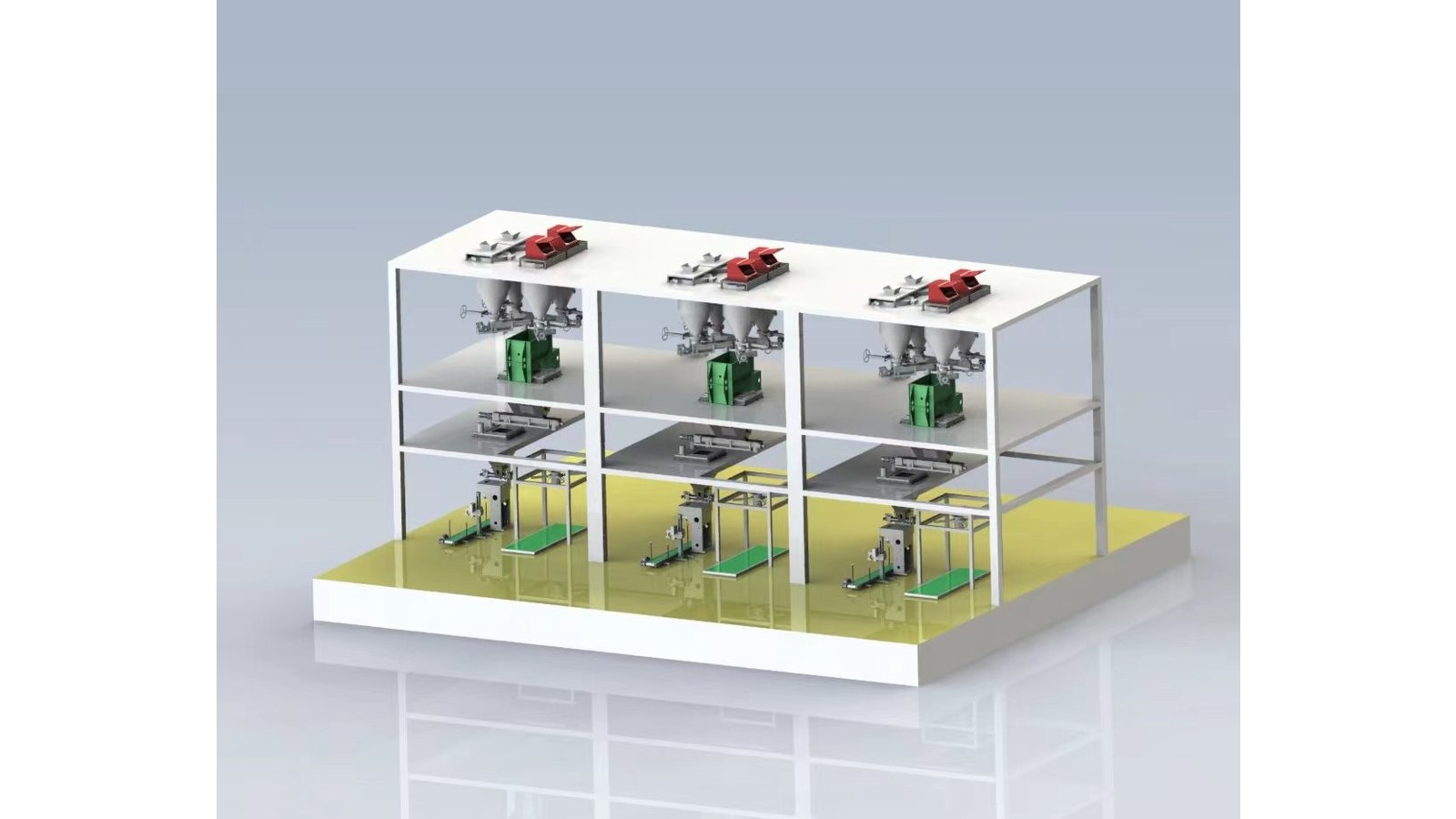
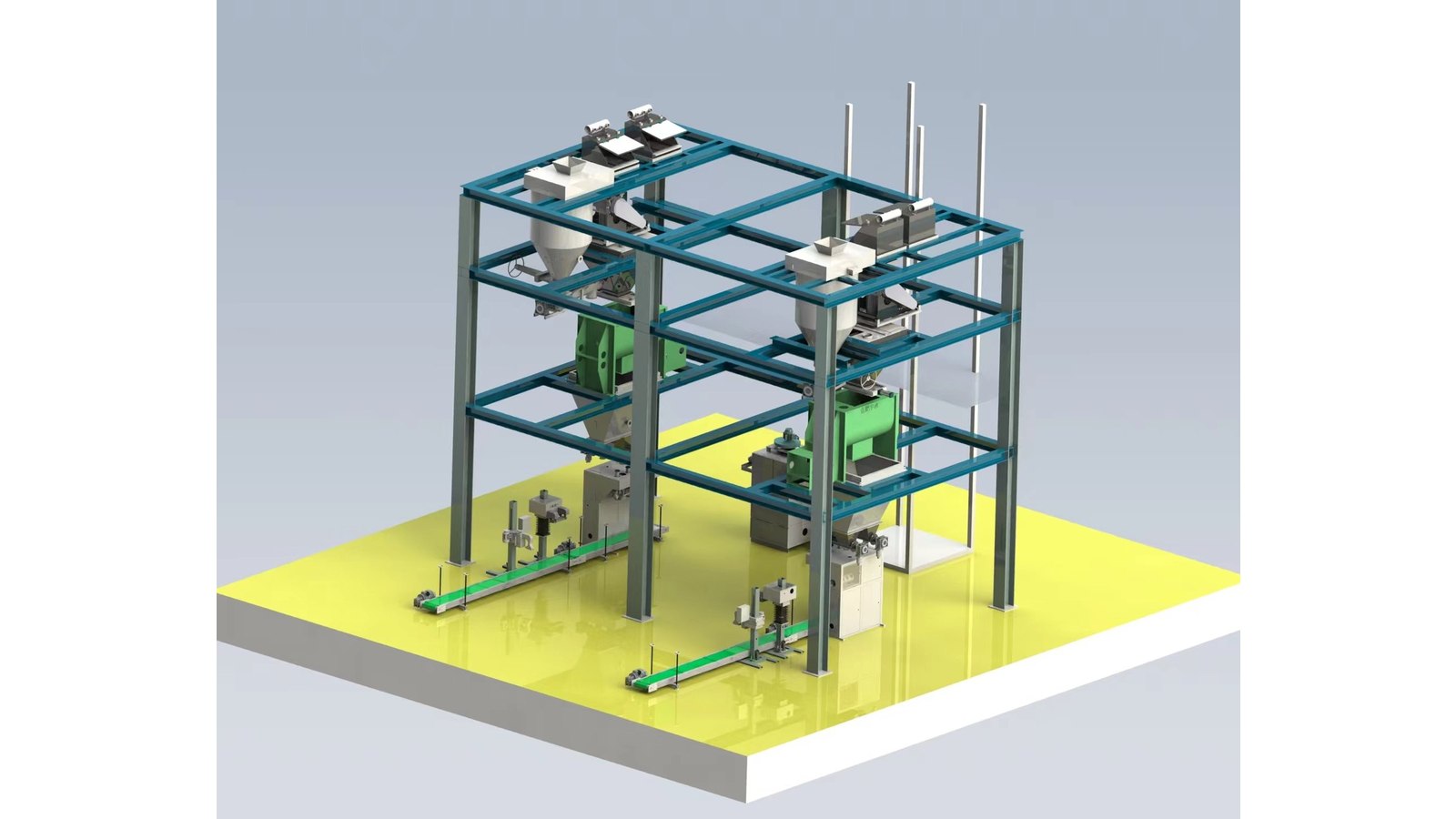
PLC per-ingredient weighing with micro-scales for trace elements; high-uniformity mixer homogenizes the batch.

4

Granulation

Rotary drum granulator (steam/binder controlled) or double-roller extrusion for a dry route; granule size and strength tuned to your product.

5

Drying

Rotary dryer with matched temperature profile to preserve salt solubility and avoid surface melting.

6

Cooling

Rotary cooler stabilizes granule temperature before screening and packing.

7

Screening & Coating

Rotary screener classifies on-size granules; anti-caking coating drum applies a thin moisture-barrier film.

8

Packaging & Palletizing

Net-weight bagging, checkweighing, metal detection and robotic palletizing complete the train.

Configuration logic

Why we configure it this way

Equipment is not a list - it is a response to your conditions. This is how your conditions change the configuration:

When your project is...We configure...
High moisture, steam-conditioned formulaRotary drum granulator with steam/binder conditioning and matched dryer/cooler
Dry, low-moisture formulaDouble-roller extrusion route with minimal drying
Drip-only distributionTighter granule size range (1-3 mm) and stricter screening
Broadcast + fertigation dual use1-4 mm granule with anti-caking coating and low-dust handling
Scenario differences

Different projects get different configurations

We do not apply one template to every customer. Here are three common scenarios and how the configuration changes.

Drip brand (high solubility)

Focus: Fast dissolution, tight size range, trace accuracy

Drum granulation + matched drying/cooling + 1-3 mm screening + coating

Dual-use producer

Focus: Broadcast + fertigation granule

1-4 mm granule, anti-caking coating, shared bagging/palletizing

OEM toll line

Focus: Multi-formula flexibility

PLC recipes, fast changeover, dedicated micro-scale

Implementation

From inquiry to commissioning

This is the delivery path we follow for every complete line project.

1

Confirm requirements

Raw materials, formula, capacity, bag size, utilities and site conditions are confirmed in a technical questionnaire.

2

Process design & layout

We produce a process flow, line layout and foundation drawings sized to your material data.

3

Quotation with scope

You receive a quotation with an itemized delivery scope - what is included and what is excluded.

4

Order & fabrication

Fabrication starts with progress updates; long-lead items are ordered first.

5

Factory testing

Machines are assembled and no-load tested; weighing and control systems are calibrated.

6

Export packing

Equipment is export-packed with anti-rust treatment and a packing list for customs.

7

Delivery & installation

Machines ship FOB/CIF/door-to-door; installation is supervised on site or via video guidance.

8

Commissioning & training

We commission the line, train your operators and stabilize process parameters.

9

Acceptance & after-sales

Acceptance is based on agreed metrics; spares and remote support continue after handover.

Pre-purchase checklist

What to prepare before requesting a quote

The better your information, the closer the first quote is to the final one. Prepare these items:

  • Formula and raw material list (including trace elements)
  • Target granule size and dissolution requirement
  • Capacity in t/h and bag size
  • Granulation route preference or open recommendation
  • Site utilities, space, height and voltage

Request a granular WSF line configuration

To configure your granular WSF line, send: formula and raw materials, target granule size and dissolution requirement, target t/h, bag sizes, automation level, site voltage and destination port.

Product Inquiry

Tell us about your project — we reply within 24 hours (24/7).

Fields marked * are required. Your inquiry goes directly to our engineering team.

Risk boundaries

When this solution does not apply

Honest boundaries make a proposal credible. These conditions must be confirmed before the configuration is valid:

  • Capacity claims depend on formula and bulk density; we confirm after material data
  • Solubility must be validated with your raw materials before acceptance
  • Hygroscopic salts require matched drying and packaging discipline
Effect verification

How we verify the solution works

Performance is checked with measurable indicators, not adjectives. These are the acceptance checks for this type of line:

IndicatorHow it is verified
Dissolution timeSample granules from continuous run; dissolve in cold water per your test method and record residue
Granule size distributionSieve analysis across a production run; confirm on-size yield
Batch uniformitySample 5-10 points per batch and compare N-P-K / trace content
Delivery scope

What is included - and what is not

Compare quotes on the same scope. This is exactly what the project price covers.

Included

  • Process design and line layout for your capacity
  • All equipment from batching to palletizing as one train
  • PLC recipe management with batch logging (optional level)
  • Dust collection at transfer points
  • Installation supervision, commissioning and training

Not included (separate scope)

  • Chemical formulation and raw material supply
  • Civil works, foundations, building and site wiring
  • Compressed air generation beyond the machine package
  • Local permits, certifications and third-party testing
Scenario FAQ

Questions buyers ask about this solution

Can one line produce both powder and granular WSF?
Yes with a designed changeover: the powder route shares batching and mixing, while the granular route adds granulation, drying, cooling, screening and coating. Confirm your expected split so the line is sized correctly.
Does granulation reduce solubility?
Only if drying or binder selection is wrong. We size drying and cooling to the salt mix and keep binder use minimal so granules dissolve quickly in cold and warm water.
How do you prevent granular WSF from caking in storage?
Moisture is controlled at drying and cooling, and an anti-caking coating is applied after screening. Packaging moisture barrier and warehouse conditions are documented in the operating manual.
Which granulation route fits my formula?
Rotary drum suits high-moisture, steam-conditioned formulas; double-roller extrusion suits dry, low-moisture routes. We recommend after receiving formula and raw material data.
Can we start with powder WSF and add granulation later?
Yes — the powder train is the foundation; granulation, drying, cooling, screening and coating are added as a second phase with shared batching, packing and palletizing.
How do you confirm solubility before we buy?
With your material samples we run small-scale granulation and dissolution validation, then freeze the configuration on measured data.
What granule sizes can the line make?
Typical 1-3 mm for drip and 1-4 mm for dual use; the screening section is sized to your target distribution.
Deep-dive guide

Ten angles buyers must understand before investing

Each angle is a self-contained chapter with a line illustration. Read the ones that match your project stage, then send us the data each angle asks for.

1. Granular water-soluble fertilizer feedstock and formulation

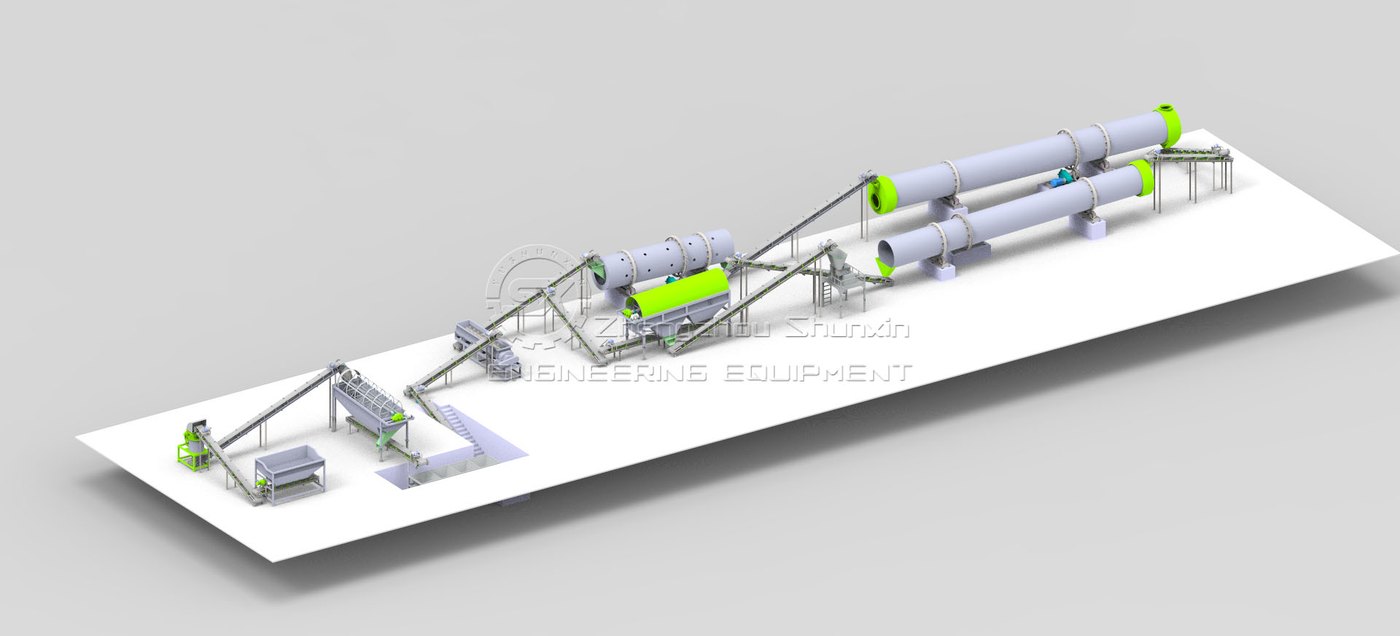
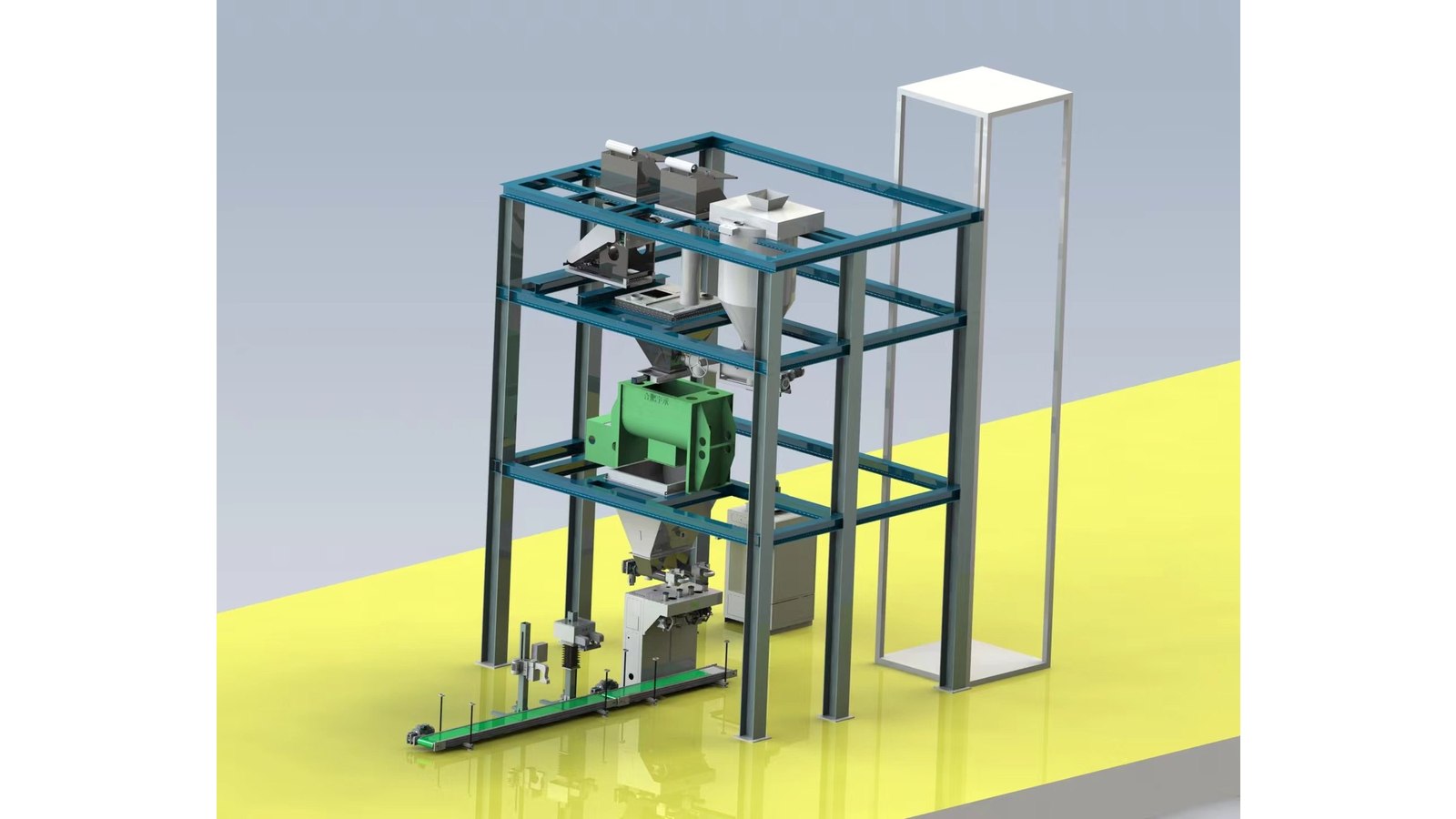
Granular water-soluble fertilizer combines the handling convenience of a solid granule with the solubility of a WSF, and the line is specified from the formulation. The ingredients are the soluble salts and the trace elements, and their particle size and solubility decide the batching, mixing and granulation. We characterise the formulation before configuring the line, because the granulation route and the solubility requirement are set by it. This is the variable no downstream machine can correct.
Granular water-soluble fertilizer feedstock and formulation

2. Precision batching and micro-dosing for granular WSF

The granular WSF line starts with precision batching, because the formulation must match the label to the gram. The main ingredients are weighed on main scales and the trace elements on micro-scales, and each batch is recorded for the Certificate of Analysis. This is the same precision discipline as the powder WSF line, and it is the stage that decides the product quality before any granulation happens.

Precision batching and micro-dosing for granular WSF

3. Mixing and anti-segregation for soluble granule uniformity

The mixed WSF blend must be uniform and stay uniform through the granulation, which is why the mixing and the anti-segregation transfer are specified together. A weak mix or a long free fall separates the ingredients and the granule ends up off-spec. We use high-uniformity mixing and low-drop transfer so the granulation feed is the same as the formula, which is what keeps the soluble granule consistent.

Mixing and anti-segregation for soluble granule uniformity

4. Granulation route for water-soluble granules

The soluble granules are formed by a dry or low-moisture route, because a wet granulation would dissolve the soluble salts and defeat the purpose. A compaction or extrusion route makes the granule without adding water, and the granule is then screened to the size band. We select the route for the formulation and the granule the market buys, and the low-moisture requirement is what sets the granulation method.

Granulation route for water-soluble granules

5. Screening and granule size for dissolution performance

The granule size is set by the dissolution performance the customer needs, because a granule that is too large dissolves slowly and one that is too small re-dusts. The screen classifies the granules and returns the fines and the oversize, and the size band is confirmed with the application. This is the quality gate that ties the granule to the solubility the product promises.

Screening and granule size for dissolution performance

6. Dust control and cleanability for soluble granules

The soluble granule is dust-sensitive, because the dust it sheds is the product being lost and a solubility promise being broken. The line is fitted with dust collection at the granulation and screening points, and the collected dust returns to the process. The contact parts are stainless for purity and cleanability, so the line can change formulas without cross-contamination.

Dust control and cleanability for soluble granules

7. Packing and moisture-proof bagging for granular WSF

The granular WSF is packed in moisture-proof bags, because the soluble product absorbs moisture and cakes if the bag leaks. The packing line seals the bags and the checkweigher verifies the weight, with the dust extraction at the fill point. This is the stage that protects the solubility from the plant to the customer, and it is specified with the bag film and the product moisture.

Packing and moisture-proof bagging for granular WSF

8. Batch traceability and export documentation for granular WSF

The granular WSF line records each batch with its formulation and the weighed quantities, which is the traceability the export Certificate of Analysis requires. The data is built into the control from the start, and the operator selects the recipe on the panel. This traceability is a selling point for the plant, and it is what export customers ask for before the order.

Batch traceability and export documentation for granular WSF

9. Investment and operating cost for granular WSF production

The granular WSF line costs more per ton of capacity than a granular NPK line because of the precision batching, the stainless contact parts and the low-moisture granulation, but the product margin is higher. The operating cost is driven by the raw material and the packaging, with energy a smaller share because there is no heavy drying. We publish the cost guide and itemise the quotation, so the buyer sees the precision the investment buys.

Investment and operating cost for granular WSF production

10. Commissioning and acceptance for granular WSF lines

Commissioning proves the line with the actual formulation. We run to the agreed output, check the granule size, the solubility and the batch records against the acceptance list, and train the operators on the recipe change and the traceability. The acceptance criteria are measurable, and after handover we keep the spare-parts list and remote support, because a soluble granule line that goes off-spec loses the export order.

Commissioning and acceptance for granular WSF lines
error: Content is protected !!